
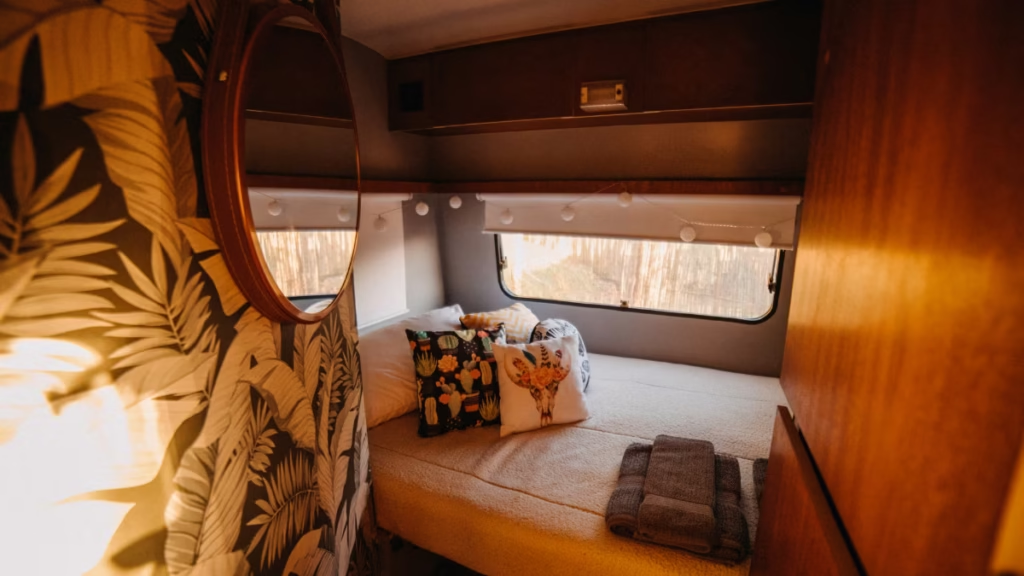
Can you live in a camper year-round? The short answer is yes. The longer answer is that the reality of full-time camper living requires swapping romanticized notions for hard, practical skills. You become your own property manager, plumber, and electrician. The freedom is real. So is the work that makes it possible.
Yes, You Can Live in a Camper Year-Round, But Here Is What That Actually Means
Without the right preparation, freezing winter temperatures will rupture your water lines, and summer heat will turn an aluminum shell into an oven. Year-round RV living is absolutely achievable, but it depends entirely on how well you adapt your rig and your daily habits to each season. The people who struggle are almost always the ones who moved in during mild weather and assumed the other seasons would be manageable. They are manageable. They require specific preparation that nobody hands you a manual for.
How Campers Handle the Four Seasons: Heat, Cold, Rain, and Snow
Every season brings a distinct set of seasonal camping challenges that traditional homeowners never have to think about. In a house, a thermostat adjustment handles most comfort issues. In a trailer or motorhome, climate control is an active, daily management task that becomes second nature only after you have gotten it wrong a few times.
Surviving Sub-Zero Winter Conditions
Winter is the ultimate test of any full-time camper living arrangement. Standard RV walls are thin, typically using basic two-inch aluminum framing with minimal fiberglass batting. When temperatures drop below freezing, the primary goal shifts from personal comfort to protecting your camper water systems.
A standard RV furnace runs through propane quickly, often emptying a thirty-pound tank in three days during a hard freeze. Many experienced full-timers install a secondary diesel heater as their primary heat source. Diesel contains more BTUs per gallon than propane, produces a dry efficient heat, and reduces interior moisture, which matters more than most people realize until they are dealing with the consequences.
Skirting the underside of your rig with RV skirting panels is one of the most effective cold-weather modifications you can make. It traps a pocket of warmer air around your holding tanks and plumbing, which is where most winter damage originates. If you plan to winter in northern states, skirting is not optional. It is essential.
According to the U.S. Forest Service’s dispersed camping guidelines, extended stays on public lands come with specific regulations and stay limits that affect where and how long you can park during winter months. Know these rules before you commit to a location for the cold season.
Managing Summer Heat Waves
Summer presents the opposite problem. High ambient temperatures turn a fiberglass or aluminum roof into a thermal conductor. Standard RV air conditioners are loud, power-hungry, and often struggle to lower interior temperature by more than twenty degrees compared to the outside air.
Parking under natural shade is the most effective passive cooling strategy, but it conflicts directly with collecting solar energy. The compromise most full-timers land on is positioning the rig to maximize afternoon shade while keeping the roof exposed to morning sun for solar collection. Managing your window coverings throughout the day and using reflective foil panels on south-facing windows blocks radiant heat before it passes through the glass and turns your living space into a greenhouse.
Rain, Snow, and Condensation Management
Rain and melting snow expose every microscopic failure in your roof sealant. Water intrusion is the silent killer of mobile rigs, rotting wood frames, and breeding mold behind decorative wall panels before you ever notice the smell. Regular inspection of lap sealant around vents, antennas, and seams is a non-negotiable part of camper maintenance. Do it at the start of every season, not when you suspect a problem.
Internal moisture is a separate battle entirely. A single adult exhales roughly four cups of water vapor every night. Add cooking and showering, and you have a significant daily moisture load in a very small space. When that warm, humid air hits a cold, uninsulated wall or window, it immediately liquefies.
Early on, when I first moved into my camper full-time, I had no idea how aggressive condensation could be inside a small space during a cold snap. By February, I was wiping down the walls every single morning with a chamois cloth just to keep the moisture from soaking into the wood paneling behind my bunk. The windows would be completely fogged by 7 am. Nobody warned me that it would be a daily chore. The fix was a small dehumidifier running on a timer overnight, which I wish someone had told me about on day one.
The University of Minnesota Extension guide on controlling moisture problems in enclosed spaces is one of the most practical resources available on managing condensation and humidity buildup in small structures during cold months, and the principles apply directly to camper living through winter.
The Real Costs of Full-Time Camper Living Compared to Traditional Housing
Many people pursue year-round RV living as a way to escape high rent or mortgage payments. A mobile lifestyle can reduce fixed housing costs significantly, but it introduces variable operational expenses that catch unprepared budgeters off guard within the first three months.
Fixed Versus Variable Expenses
A traditional mortgage gives you a predictable monthly baseline. In a camper, your fixed expenses might include a low monthly payment on the rig itself and a flat rate for a campground lease. Your variable expenses, however, can shift dramatically by season and location.
Winter heating fuel costs escalate fast. Summer electricity surcharges at RV parks can add hundreds of dollars to your monthly bill if you run cooling units continuously. Maintenance costs are equally unpredictable because RV components are built to be lightweight rather than durable. Water pumps, plastic faucets, and slide-out mechanisms all require more frequent attention than their residential equivalents.
Depreciation and Investment Reality
Unlike traditional real estate, a camper is a depreciating asset. The moment you take ownership, its financial value begins to decline. View your rig as a tool for affordable living and personal freedom rather than an investment vehicle. The money saved by living small needs to be actively redirected into savings or conventional investments if long-term financial security matters to you. Camper life can be financially liberating, but only if you are disciplined about where the savings actually go.
Comparing Camper Types for Year-Round Living
| Camper Type | Insulation Rating | Cold Climate Suitability |
|---|---|---|
| Four-Season Travel Trailer | High (R-11 to R-18) | Excellent with skirting |
| Standard Class C Motorhome | Medium (R-7 to R-11) | Moderate, requires modifications |
| Custom DIY Camper Van | Variable (up to R-20) | High if built specifically for winter |
Practical Setup Requirements: Power, Water, Waste, and Connectivity
To make a camper a functional permanent home, you need reliable systems for electricity, fresh water, sewage, and communication. This is where an off-grid camper setup diverges sharply from simply plugging into a campground pedestal and treating the experience like a long vacation.
RV Power Systems and Electrical Management
Living with standard RV power systems requires constant awareness of amperage limits. A typical campground pedestal provides either thirty or fifty amps. On a thirty-amp system, you cannot run a microwave, a space heater, and a hair dryer simultaneously without tripping the main breaker. Most people learn this within the first week.
Upgrading your house battery bank to lithium iron phosphate technology allows you to store significantly more usable energy and charge faster, particularly when paired with roof-mounted solar panels. This combination gives you genuine flexibility to park away from hookups for extended periods without rationing power aggressively.
Fresh Water and Waste Systems
Water management becomes a daily responsibility the moment you lack a direct municipal connection. In freezing weather, a standard freshwater hose will freeze solid within hours, cutting your water supply and splitting the hose’s vinyl in the process. A heated water hose paired with an insulated campground spigot cover solves this completely and costs very little compared to the inconvenience of losing water access in January.
Waste management deserves equal attention. Never leave your black tank valve open when connected to a sewer line at a park. Doing so allows liquids to drain continuously while solids accumulate at the bottom of the tank, creating a hardened mass that is genuinely difficult to clear. Let the tank fill to at least two-thirds capacity before flushing it at a dump station. That one habit prevents the single most common and least pleasant problem in full-time camper life.
Staying Connected on the Road
If you plan to earn an income while living in your rig, internet connectivity is not a convenience. It is infrastructure. Campground Wi-Fi is rarely sufficient for professional video calls or large data transfers because these networks are shared across dozens of simultaneous users.
A robust setup typically combines a cellular signal booster with multi-carrier data plans or a dedicated mobile satellite internet dish. Redundancy matters here. If one network drops in a remote valley, you need a secondary option ready without having to reconfigure anything under pressure.
The Lifestyle Realities Most People Do Not Talk About
The logistics of power and water are easy to quantify. The psychological and social shifts of this lifestyle are harder to measure, and almost nobody discusses them honestly before someone makes the move.
Spatial Awareness and Clutter Control
In a traditional home, a stray pair of shoes or a stack of mail on the counter is a minor annoyance. In a camper under three hundred square feet, three unwashed dishes and a jacket dropped on the dinette seat can make the entire living space feel unlivable within an hour. Every object needs a dedicated, secure storage location, or it becomes visual noise that compounds quickly.
This reality demands a genuine commitment to minimalism, not the aspirational kind people post about online, but the practical kind where you evaluate every purchase based on weight, size, and whether it serves at least two purposes. If it does not earn its space, it does not come inside.
Social Isolation and Community Shifts
When you live in a traditional neighborhood, community happens passively. You see the same faces at the mailbox and in the driveway. In the full-time RV lifestyle, community requires active effort.
If you travel frequently, relationships become transient by nature. You make genuine connections over a campfire and drive in opposite directions the next morning. If you park stationary in an RV community, you encounter a surprisingly diverse cross-section of people: traveling nurses, seasonal workers, retirees, remote workers, and young families all pursuing the same general idea through completely different circumstances. That community can be one of the richest parts of the lifestyle or one of the loneliest, depending almost entirely on the effort you put into it.
How to Choose the Right Camper for Year-Round Living
Selecting the wrong rig is the most expensive mistake an aspiring full-timer can make, and it is an extremely common one.
Look for True Four-Season Certification
Many manufacturers apply thermal packages or all-weather labels to their units as marketing rather than structural guarantees. A genuine four-season camping rig features an enclosed heated underbelly where furnace ducts actively circulate warm air around the holding tanks to prevent freezing from below. Look for dual-pane windows, substantial wall construction, and a roof rated for heavy snow load.
Check the actual insulation values rather than trusting the label. R-7 is standard in budget travel trailers. For serious winter use in northern states, you want a rig approaching R-15 or higher in the roof and floors. That difference is not marketing. It is the difference between a comfortable January and a miserable one.
Prioritize Interior Layout Over Passenger Capacity
Weekend campers shop for bunk beds and maximum sleeping capacity. Full-timers need to prioritize comfort for the people who actually live there every day. Look for residential-style seating rather than narrow foam dinette booths. Make sure the bathroom is large enough to use without contorting yourself. Prioritize wardrobe storage and exterior basement storage over extra beds that will sit empty most of the year.
Inspect the Electrical Infrastructure
Before signing any purchase agreement, verify that the factory electrical system matches your actual long-term goals. A fifty-amp service gives you the flexibility to run multiple high-draw appliances simultaneously, which becomes important if you later add a tankless water heater or a residential refrigerator. If you intend to spend significant time boondocking, confirm the battery compartment can accommodate at least two large batteries, and check whether the rig is pre-wired for solar to avoid drilling through the roof structure later.
The National Park Service’s guide to visiting Yosemite with an RV outlines the practical infrastructure realities of camping in an RV across federal locations, including length restrictions, parking limitations, and utility availability that directly affect which rigs work best for extended stays on public land.
Frequently Asked Questions
Is it legal to live in a camper year-round on private land?
Local zoning laws determine whether you can legally live in an RV on private property. Many municipalities prohibit long-term RV residency outside licensed campgrounds, even on land you own. Always verify county ordinances regarding code enforcement and waste management requirements before committing to a permanent parking location.
How do you prevent an RV toilet from smelling in summer?
Use enzyme-based tank treatments that break down solids and eliminate odors naturally. Flush with plenty of water each use and keep your black tank valve closed so liquid contents submerge solids and block sewer gas from entering the living space. Ensure roof vents are functional and unobstructed for adequate airflow.
What is the best way to heat a camper without electricity?
A direct-vent propane wall heater or a diesel heater is the most efficient off-grid option. Both draw minimal electrical current for ignition only and vent moisture and combustion gases safely outside. A vented propane furnace can also run on twelve-volt battery power for the fan, though fuel consumption is higher.
Can you use standard household appliances in a camper?
Yes, when connected to shore power or running through a high-output inverter paired with a substantial lithium battery bank. Standard RV appliances designed for twelve-volt direct current are generally more efficient for daily mobile use, but residential appliances are workable on a robust electrical system.
The First Winter Is the Hardest. Everything After That Gets Easier.
Can you live in a camper year-round and genuinely thrive? Yes. But it takes one full cycle of seasons before the lifestyle starts to feel truly fluent rather than constantly reactive.
A few winters back, I parked in a mountain valley during a cold snap I thought I was prepared for. I had the diesel heater, the skirting, and the heated water hose. What I had not done was insulate the campsite faucet at the pedestal. I woke up to no water pressure at 6 am in single-digit temperatures and spent the next hour outside with a hair dryer on an extension cord trying to thaw the spigot before it split. The heater inside the rig had done its job perfectly. The one thing I skipped outside undid all of it. That morning taught me that preparation in this lifestyle is only as strong as its weakest point, and the weakest point is almost always the one you assumed was fine.
When you control your own power, manage your water supply, and reinforce your shelter against what the weather actually delivers rather than what the forecast promised, you build a level of self-reliance that most people never develop. The discomfort of the learning curve is real. So is the satisfaction that comes after it. For detailed guidance on optimizing your rig for extreme temperatures and building a reliable four-season electrical system.


