Advanced off-grid water filtration is the bridge between simply camping and truly living sustainably. In a tiny home or remote cabin, you cannot afford to waste a single drop. By combining high-tech UV sterilization with low-tech biological greywater systems, you can create a closed-loop water cycle that provides safe drinking water while nourishing your surrounding landscape.
The Multi-Barrier Approach to Water Safety
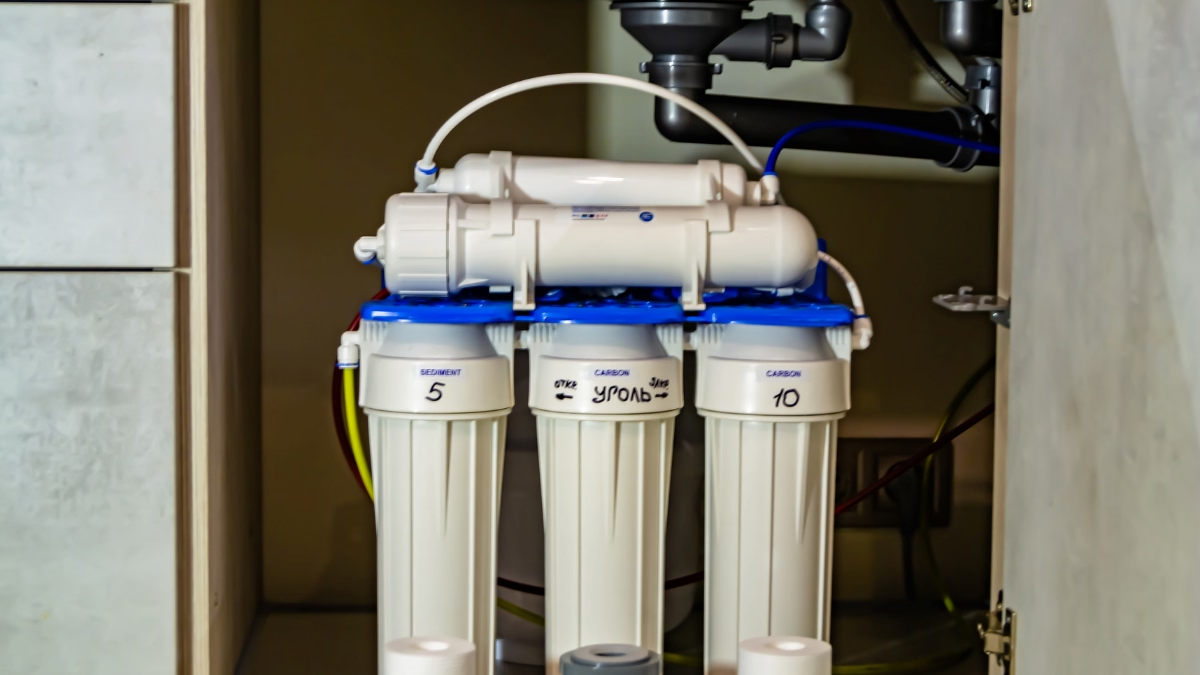
Relying on a single filter is a risk you shouldn’t take in a remote environment. Professionals use a multi-barrier system to ensure that if one stage fails, the others protect you.
-
Stage 1: Sediment Pre-Filtration: A 20-micron pleated filter removes large particles like sand, rust, and silt that can clog finer filters.
-
Stage 2: Carbon Block Filtration: A 5-micron activated carbon filter removes chlorine, volatile organic compounds (VOCs), and improves the taste and odor of your water.
-
Stage 3: Sub-Micron Protection: A 0.2-micron ceramic or hollow-fiber membrane mechanical filter captures bacteria and protozoa like Giardia and Cryptosporidium.
-
Stage 4: UV Sterilization: The final kill stage uses Ultraviolet light to scramble the DNA of viruses and bacteria, rendering them harmless.
Source Risk Assessment: Know Your Water Before You Filter It
Advanced off-grid water filtration begins long before a single drop reaches your sediment filter. The quality of your source water determines the strength and configuration of your entire system.
Rainwater, for example, is typically low in dissolved minerals but vulnerable to biological contamination from roof debris, bird droppings, and airborne pollutants. A first-flush diverter and UV sterilization become critical safeguards.
Surface water from rivers or lakes carries higher pathogen risk, especially after heavy rainfall. In these cases, sub-micron filtration combined with UV is essential, and additional carbon filtration may be required to manage agricultural runoff or organic tannins.
Groundwater from wells introduces a different challenge. While often lower in pathogens, it may contain dissolved minerals such as iron, manganese, or even arsenic depending on geography. Mechanical filters and UV will not remove dissolved metals. Periodic lab testing is non-negotiable when relying on well systems.
Even municipal backup connections can introduce chlorine, sediment, or aging pipe contaminants that alter water chemistry.
The key principle is simple: filter for your risk profile, not for a generic checklist. Advanced off-grid water filtration is most effective when designed around your specific water source, seasonal changes, and regional environmental pressures.
Water independence begins with water awareness.
UV Sterilization: The Off-Grid Game Changer
Unlike chemical treatments (like chlorine), UV sterilization adds nothing to your water and changes neither its taste nor its pH.
-
Energy Efficiency: Modern 12V DC UV sterilizers are designed for the Self-Sufficiency Lab. They pull very little power and can be wired to a flow sensor, so they only turn on when you open the tap.
-
Maintenance: The UV bulb must be replaced annually, even if it is still glowing, as the gas inside loses its effectiveness over time. Always keep a spare bulb in your off-grid security and safety kit.
Closing the Loop with Greywater Wetlands
Greywater is the wastewater from your shower, sink, and laundry. Instead of dumping it into a septic tank, you can use a constructed wetland to clean it for irrigation.
-
The Grease Trap: A simple box that allows oils and fats to float to the top so they don’t clog your filter bed.
-
The Multi-Stage Filter Bed: A lined trench filled with varying layers of gravel, sand, and biochar.
-
Phytoremediation: Water-loving plants like reeds and irises are planted in the gravel. Their roots host beneficial bacteria that break down soaps and organic matter.
-
Safe Discharge: The resulting water is clear and can be used to water non-edible plants or fruit trees in your sustainable food systems.
The Advanced Water Independence Checklist
-
First Flush Diverter: Does my rainwater system automatically dump the first 20 liters of roof-wash?
-
Pressure Check: Is my 12V pump strong enough to push water through multiple stages of filtration?
-
UV Monitor: Do I have a visual indicator to confirm the UV lamp is functioning correctly?
-
Soap Choice: Am I using 100% biodegradable, phosphate-free soaps to protect my greywater wetland?
-
Testing Kit: Do I perform a professional water quality test (checking for E. coli and heavy metals) at least twice a year?
Conclusion: The Liquid Gold Economy
Mastering advanced off-grid water filtration turns a scarce resource into an abundant one. By respecting the water that falls on your roof and recycling what you use in your home, you create a resilient system that thrives regardless of the local utility grid.