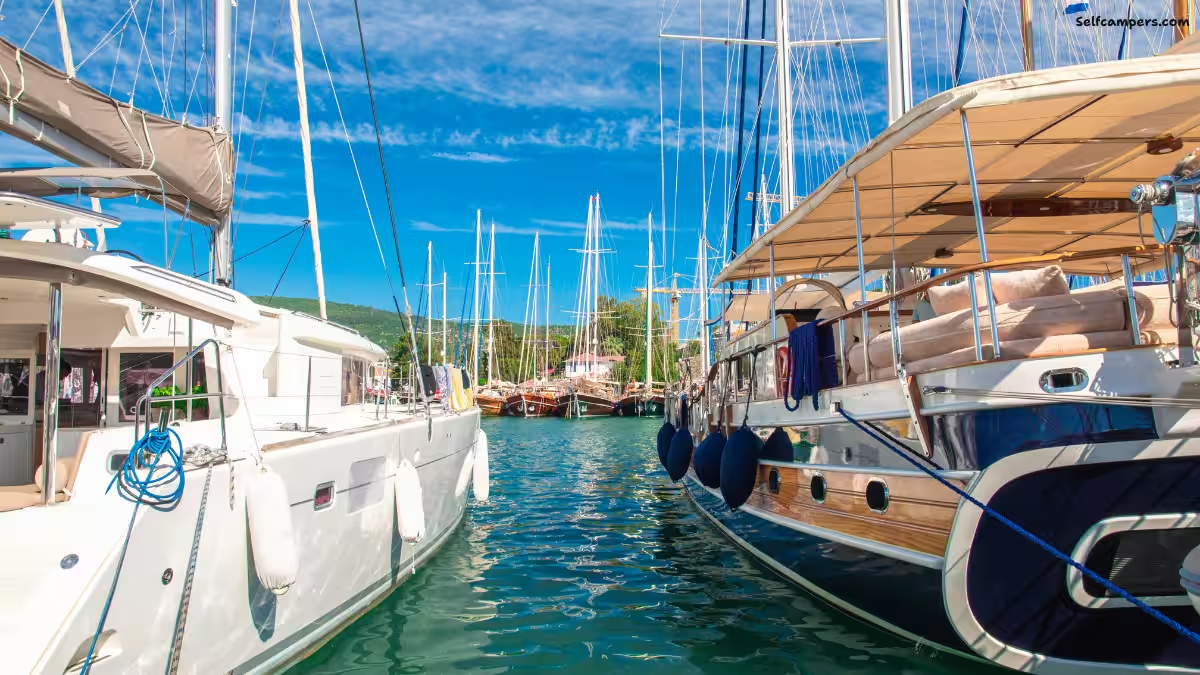
Finding the best liveaboard sailboats under 40 feet is about balancing the romance of life at sea with the practical realities of limited space, maintenance demands, and everyday functionality. For solo sailors and couples, the sub-40-foot category represents a true sweet spot. Boats in this range are large enough to include separate sleeping areas and a workable galley, yet compact enough to remain manageable without a crew and affordable in terms of marina fees and upkeep.
Whether you are searching for a rugged offshore cruiser or a comfortable coastal home on the water, these models represent some of the strongest choices for full-time living afloat.
Why Under 40 Feet Is the Liveaboard Sweet Spot
In sailing, every additional foot increases both comfort requirements and long-term cost. Staying below the 40-foot threshold offers several strategic advantages.
Slip Availability
Many marinas structure pricing tiers around length. Staying under 40 feet often means better availability and lower monthly dockage fees.
Ease of Handling
Most sailors can comfortably manage docking, sail handling, and maintenance tasks on boats between 35 and 38 feet. This makes solo sailing or couple-based cruising far more realistic.
Maintenance Economy
Haul-outs, bottom paint, rigging replacements, and storage fees are typically calculated by length. A 36-foot sailboat may cost significantly less to maintain compared to larger yachts.
The Science of Sub-40ft Layouts: Tiny House vs. Sailboat
When you look at a Tiny House Blueprint, you see a focus on vertical space and multi-purpose zones. Sailboat design under 40 feet has to do the same, but with the added challenge of curved walls (the hull).

The Lesson for Sailors: Notice how this tiny house blueprint utilizes dead space under the stairs for storage. On a liveaboard sailboat like the Catalina 36 or Tayana 37, you should look for settee storage and hanging lockers that mimic this architectural efficiency. If a boat doesn’t have at least three hidden storage zones, it isn’t a long-term home; it’s just a weekend camper
The Top Best Liveaboard Sailboats Under 40 Feet
Based on interior volume, build quality, and real-world livability, these sailboats consistently rank among the best choices for long-term living.
When you’re digging into the technical specs of a potential home, you need more than just a sales brochure. We recommend cross-referencing any boat you consider with the SailboatData.com database, which acts as a Wikipedia for boats, providing essential displacement and rigging ratios you won’t find on a listing page.
Catalina 36: The All-Rounder
The Catalina 36 remains one of the most popular production sailboats in this size category. Known for generous interior volume, it often includes a walk-through transom and a practical galley layout.
Best for: Coastal living and marina-based lifestyles.
Tayana 37: The Bluewater Legend
Designed by Robert Perry, the Tayana 37 is a heavy-displacement cruiser built for offshore travel. Its traditional wood interior creates a warm, cabin-like atmosphere that appeals to long-distance sailors.
Best for: Traditionalists seeking a sturdy ocean-capable vessel.
Beneteau Oceanis 38.1: The Modern Loft
The Oceanis 38.1 embraces contemporary design, offering open interior layouts that maximize light and space. Flexible configurations make it appealing for digital nomads and remote workers.
Best for: Sailors prioritizing aesthetics and modern comfort.
Hallberg-Rassy 372: The Quality King
This Swedish-built yacht is renowned for craftsmanship, safety, and insulation. Its design supports colder climates and extended cruising.
Best for: High-latitude sailing and serious offshore capability.
Island Packet 350: The Space Optimizer
With a full keel and protected rudder, the Island Packet 350 provides exceptional stability and storage solutions designed for long-term provisioning.
Best for: Couples seeking maximum storage and dependable handling.
Liveaboard Comparison: Monohull vs Small Catamaran
| Sailboat Model | Best Liveaboard Feature | The Insider Con |
| Catalina 36 | Huge aft cabin for the size. | Original wiring can be messy. |
| Tayana 37 | Incredible cozy cabin feel. | Lots of exterior wood to maintain. |
| Oceanis 38.1 | Massive light & airy saloon. | Not ideal for heavy offshore gales. |
| Island Packet 35 | Unbeatable storage capacity. | Slower upwind performance. |
Both designs offer advantages depending on lifestyle priorities.
What Daily Life Actually Feels Like on a Sub-40ft Liveaboard
Choosing a boat is not only about sailing performance. Daily life aboard shapes the real experience.
Cooking space tends to be compact, requiring efficient meal planning and storage rotation. Humidity management becomes part of routine maintenance, especially in warmer climates or colder seasons where condensation can form quickly.
Galley Design: The L-Shape Rule. In a tiny home, you have the luxury of a 90-degree corner. In a sailboat, your kitchen (the galley) needs to be a bracing zone so you can cook while the boat heels.
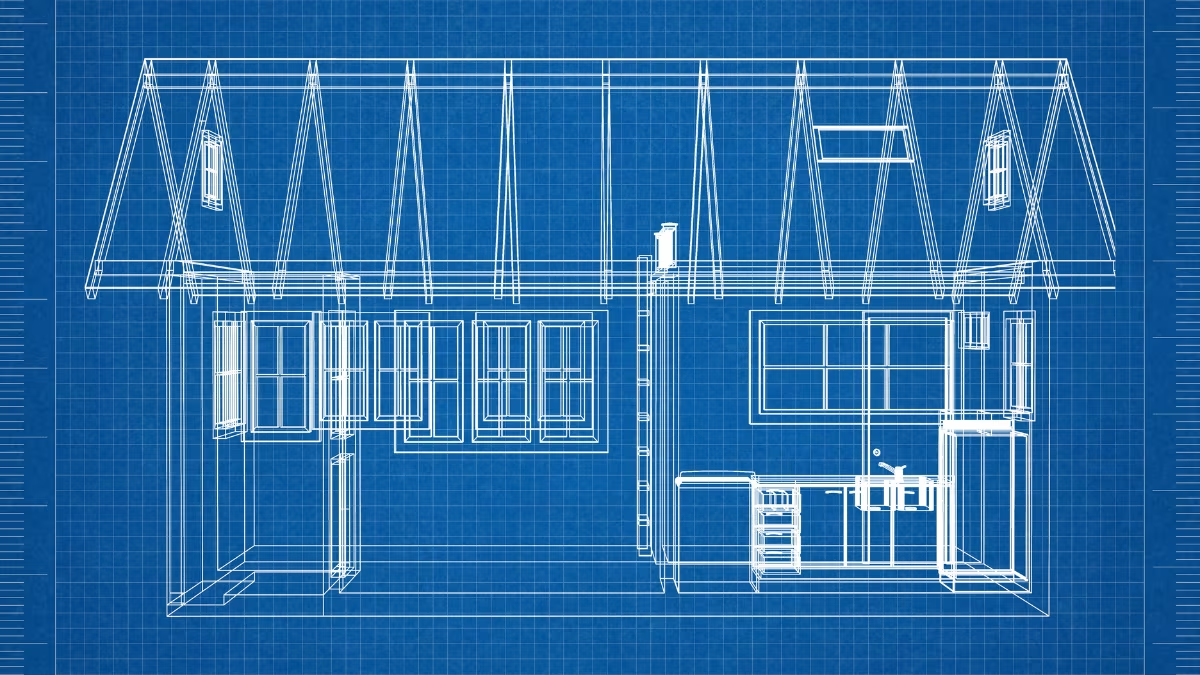
Why this matters: Look at the Work Triangle in this high-efficiency kitchen. When choosing a sailboat under 40 feet, prioritize a U-shaped or L-shaped galley. This allows you to wedge your body in place during rough weather, giving you two hands free to cook, a luxury you’ll miss if you choose a boat with a long, linear galley.
Workspace layout matters if you plan to work remotely. Many sailors modify seating areas or install foldable desks to create functional work zones.
Dock life and anchor life also feel very different. Marina living offers convenience and community, while anchoring provides independence but requires stronger systems for power, water, and waste management.
Understanding these lifestyle realities helps set expectations before committing to full-time living aboard.
Essential Systems Upgrades for Liveaboard Comfort
Turning a sailboat into a true home often involves upgrading core systems. Maintaining a home that lives in saltwater is a constant battle against corrosion. To ensure you aren’t wasting money on gimmick products, we rely on the unbiased, long-term gear tests from Practical Sailor. Their independent reviews are essential for choosing everything from bottom paint to solar controllers.
Power Independence
Install at least 400W of solar paired with a lithium battery bank of around 300Ah or more. This supports refrigeration, lighting, laptops, and daily electrical needs without constant engine use.
Water Independence
A compact 12V watermaker enables extended anchoring without frequent marina visits.
Climate Management
A diesel heater dramatically improves comfort, reduces moisture, and extends the sailing season.
Hidden Factors Most New Liveaboards Overlook
-
Storage planning for long-term provisioning.
-
Ventilation systems to prevent mold and condensation.
-
Tank capacity for water and waste.
-
Headroom and layout ergonomics.
-
Access to maintenance services in your cruising area.
These small factors often determine whether life aboard feels enjoyable or stressful over time.
The biggest challenge for any new sailor isn’t the wind; it’s the paperwork. Finding a marina that actually allows full-timers is much easier if you use the Waterway Guide marina comparison tools. Their filters allow you to search specifically for liveaboard-friendly facilities and check dock depths before you arrive.
Frequently Asked Questions
Can two people comfortably live on a 35-foot sailboat?
Yes, provided you are comfortable with close-quarters living. Many boats include both forward and aft cabins for privacy and storage.
What is the monthly cost of living aboard?
Typical expenses range between $1,200 and $2,500 per month, depending on location, marina fees, insurance, and maintenance habits.
What defines a bluewater sailboat?
Bluewater sailboats are designed for offshore travel, featuring stronger construction, heavier hulls, and motion characteristics suited to open-ocean conditions.
Final Thoughts: Choosing the Right Liveaboard Sailboat
The best liveaboard sailboats under 40 feet combine practicality, comfort, and manageable costs. Staying within this size range helps balance affordability with livable space, making full-time life aboard accessible to many sailors.
By understanding both technical features and daily living realities, you can select a sailboat that feels less like a compromise and more like a genuine floating home. Explore Our Selfcampers Resource Vault for your modern Checklist.