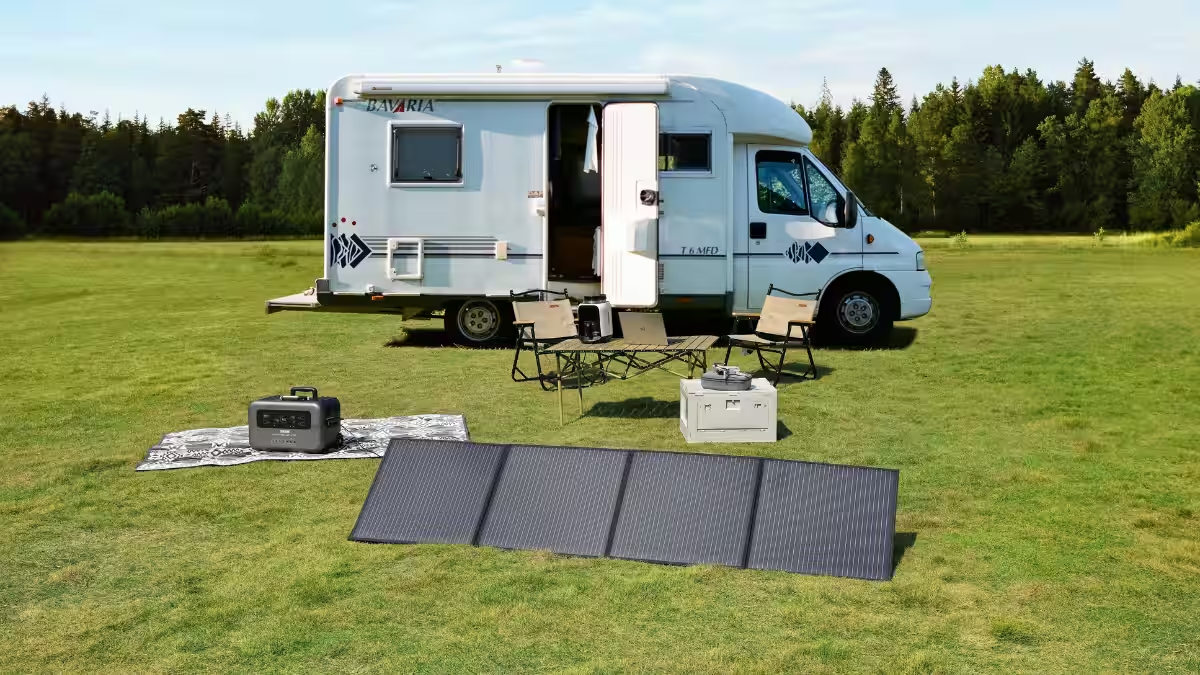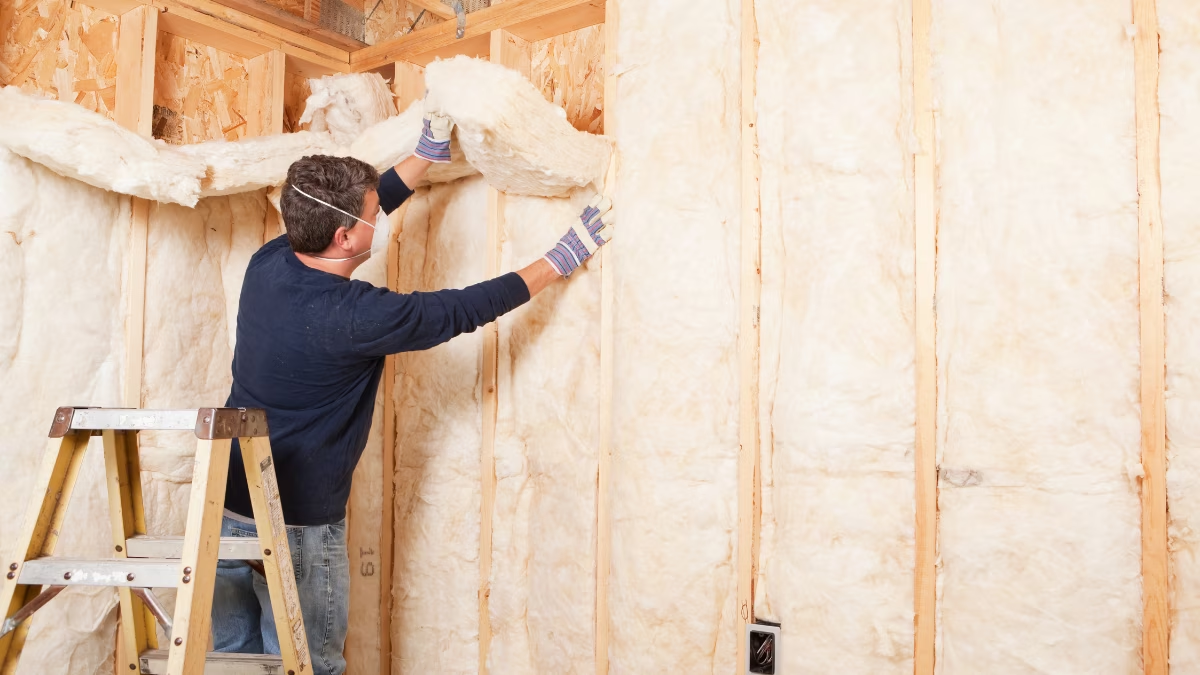
High-performance insulation materials are the critical first line of defense for any off-grid sanctuary, separating a cozy interior from the brutal reality of extreme temperatures. In a remote, non-grid-tied home, insulation isn’t just about comfort; it is your ultimate strategy for energy conservation. By matching advanced materials like polyiso or specialized mineral wool to your specific climate, you can radically reduce the power needed for heating and cooling, ensuring your battery bank and fuel stores last through the longest winters.
Understanding the R-Value and Why It Counts
To select the right high-performance insulation materials, you must first understand R-value, which measures a material’s thermal resistance.
-
Resistance to Flow: A higher R-value means better insulating performance.
-
Total Assembly R-Value: Your home’s final performance depends not just on the material itself, but on the installation quality and the entire wall assembly (studs, sheathing, and vapor barrier).
-
Regional Standards: The recommended R-value for your roof or walls will vary wildly depending on whether you are in a cold climate (like Canada) or a mixed climate (like the UK or Southern US).
Thermal Bridging: The Hidden Energy Leak
Even when using the best high-performance insulation materials, heat can still escape through structural framing such as wood or metal studs. This phenomenon, known as thermal bridging, creates pathways where heat bypasses the insulation layer and travels directly through the building structure.
Stud Conductivity: Wood studs insulate at roughly R-1 per inch, far lower than most insulation materials, meaning repeated framing can significantly reduce the effective wall R-value.
Continuous Insulation: Adding a continuous exterior layer of rigid foam or mineral wool board interrupts these thermal bridges and dramatically improves overall wall performance.
Real-World Impact: In many homes, thermal bridging can reduce the effective insulation performance of a wall by 20–30%, making continuous insulation one of the most powerful upgrades in extreme climates.
Addressing thermal bridging ensures your insulation system performs at its full rated capacity rather than only on paper.
High-Density Rigid Foam: Maximizing R-Value in Tight Spaces
When space is limited, such as in a tiny home or van conversion, rigid foam is often the preferred choice due to its exceptional R-value per inch.
-
Polyisocyanurate (Polyiso): Polyiso has one of the highest R-values (approx. R-6.0 per inch) among rigid foams. It often includes a foil facer that acts as a radiant barrier, perfect for reflecting heat back into the home.
-
Extruded Polystyrene (XPS): Known for its distinct blue or pink color, XPS offers a stable R-5.0 per inch and is highly resistant to moisture, making it ideal for insulating foundations, basements, or sub-floors.
-
Expanded Polystyrene (EPS): This beadboard foam is the least expensive rigid option (approx. R-3.8 per inch) but is vapor-permeable, meaning it allows moisture to breathe, which can be critical for preventing mold in certain wall designs.
Fibrous and Natural Materials: Breathability and Sound Dampening
For those seeking sustainable or traditional high-performance insulation materials, fibrous options offer excellent breathability and ease of installation.
-
Mineral Wool (Roxul): Made from spun rock (like basalt), mineral wool is highly fire-resistant, water-repellent, and excellent at dampening exterior sound. It has an R-value of approx. R-3.3 per inch.
-
Fiberglass (Batt): This is the most common material and, when properly installed, offers a reliable R-value (R-3.0 per inch). However, it must be protected from moisture and can sag over decades, potentially creating cold spots.
-
Hempcrete or Wool: For a purely natural approach, materials like sheep’s wool or hempcrete provide a hygroscopic (moisture-regulating) envelope. While their initial R-value is lower, their ability to regulate humidity can enhance perceived comfort without mechanical systems.
Managing Moisture: The Vapor Barrier and Air Sealing
Insulation performance can be completely ruined by moisture.
-
The Condensation Point: When warm, humid air from your home meets cold exterior surfaces, it condenses into water. If this happens inside your insulation, it destroys the R-value and invites rot.
-
Air Sealing: Up to 40% of an average home’s heat loss is through air leaks. Rigorous air sealing around windows, doors, and utility penetrations is just as critical as selecting the insulation material itself.
-
Vapor Permeance: Your wall must be designed to either be vapor-tight or vapor-open, allowing moisture to escape. The direction of the vapor drive changes depending on your climate, making a proper moisture management plan essential.
The Extreme Weather Insulation Audit
-
Target R-Value: Have I determined the correct recommended R-values for the walls, roof, and floor of my specific climate zone?
-
Moisture Plan: Have I installed the correct vapor barrier (e.g., poly sheeting or smart membrane) on the warm side of the insulation?
-
Thermal Bridging: Have I addressed thermal bridges (like wooden studs) by adding a continuous layer of rigid foam insulation over the framing?
-
Air Seal: Have I used caulk, expanding foam, and specialized tape to seal all air gaps and penetrations?
-
Ventilation: Do I have sufficient attic ventilation (if applicable) to allow moisture and excess heat to escape from above the insulation?
Conclusion: The Conserved Watt
In the Self-Sufficiency Lab, the most important energy is the energy you do not use. By investing in high-performance insulation materials and a perfectly sealed building envelope, you create a home that respects your limited resources. This silent, invisible system works 24/7 to guarantee your comfort, radically reducing your reliance on fuel or power and delivering true off-grid freedom.