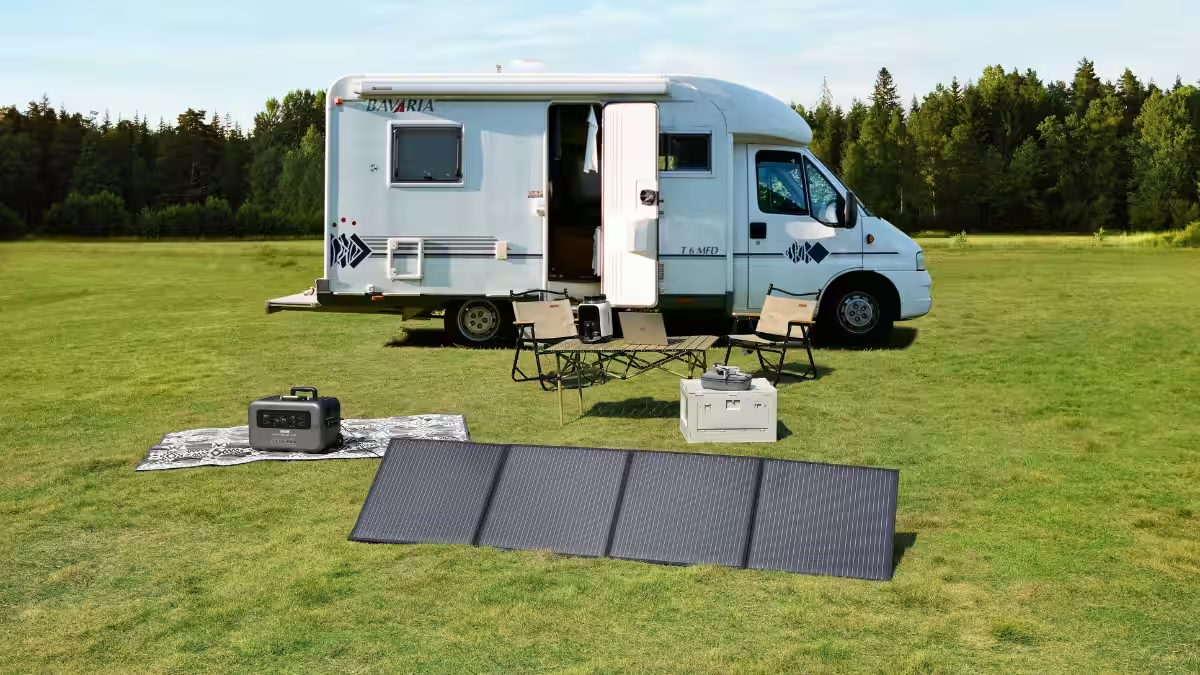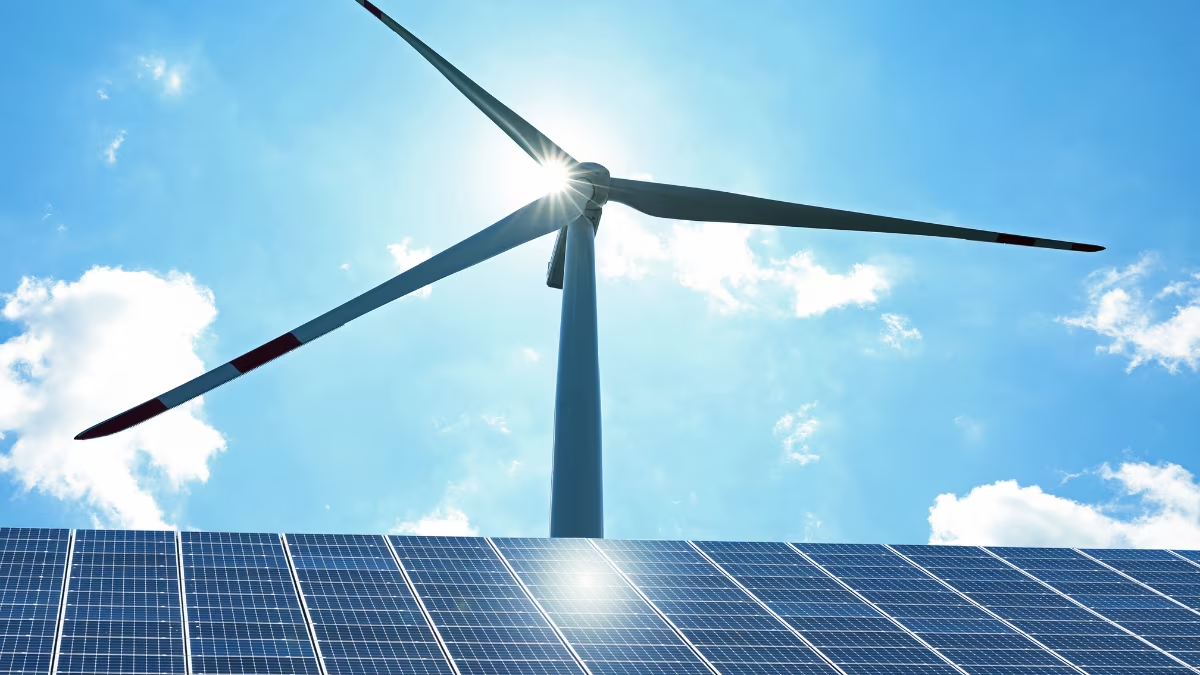
Hybrid off-grid power systems represent the next level of energy independence by solving the intermittency problem of single-source renewables. While solar is reliable during sunny days, wind often peaks at night and during stormy winter months, providing a natural balance that ensures a steady, round-the-clock energy supply. By combining these two forces, you can reduce your required battery storage by up to 30% and virtually eliminate the need for a backup diesel generator.
The Seasonal Hedge: Why One Source Isn’t Enough
In many regions, wind and solar have an inverse relationship. When solar output drops by 25–30% due to winter cloud cover, wind speeds typically reach their annual peak.
-
Solar Strength: High-yield production during summer and daylight hours.
-
Wind Strength: Continuous production (24/7) during stormy weather and nighttime hours.
-
The Result: A flatter energy profile that puts less stress on your batteries and provides a much higher Capacity Utilization Factor (CUF) than standalone systems.
Load Profiling: Designing Around Your Real Energy Demand
Hybrid off-grid power systems perform best when they are built around actual consumption patterns, not theoretical panel or turbine output.
Start by mapping your daily load profile. Identify when your highest energy draw occurs. Many off-grid homes peak in the evening when lights, cooking appliances, water pumps, and entertainment systems run simultaneously. Wind generation often aligns well with this pattern, especially in storm-prone regions where nighttime winds are stronger.
Seasonal demand matters just as much as seasonal production. Winter typically increases energy use due to longer lighting hours and additional heating loads, precisely when solar production drops. A properly sized turbine can offset that deficit and reduce battery cycling stress.
The goal is not maximum generation. It is balanced generation.
When your wind and solar inputs match your real-world usage curve, batteries cycle less deeply, system lifespan increases, and overall efficiency improves. Hybrid off-grid power systems are most effective when engineered around lifestyle rhythms rather than raw wattage.
Essential Components of a Hybrid Setup
To manage two different types of energy inflow, your system needs specialized brain components to prevent battery damage.
| Component | Function | Why It Matters |
| Hybrid Charge Controller | Regulates both inputs | Prevents solar and wind from fighting for battery access. |
| Diversion (Dump) Load | Directs excess wind energy | Unlike solar, a spinning turbine must have a place to send power when batteries are full to prevent over-speeding. |
| Hybrid Inverter | Converts DC to AC | Manages the flow between panels, turbines, and your home appliances seamlessly. |
| Battery Bank | Stores combined energy | Acts as a buffer for the variable nature of both sources. |
Siting Your Turbine: Height and Turbulence
While solar panels are relatively set and forget, a wind turbine’s performance is entirely dependent on its location.
-
The 20-Foot Rule: To capture laminar (smooth) air, a turbine should be mounted on a tower at least 20 feet high.
-
Obstruction Clearance: Ideally, the turbine should be 30 feet higher than anything within a 300-foot radius (trees, buildings, or hills) to avoid the dirty air of turbulence, which can vibrate and damage the blades.
-
Tower Selection: Pole-mounted standalone towers are far more effective and quieter than roof-mounted units, which can transmit vibrations directly into your living space.
Dealing with Excess: The Dump Load Advantage
One of the best utility features of hybrid off-grid power systems is how they handle excess energy. When your batteries are 100% full, but the wind is still blowing, you have free energy to burn.
-
Immersion Heaters: Divert the excess power to a water heating element in your solar hot water tank.
-
Space Heating: Use a simple resistive heater to take the chill off your cabin during a winter storm.
-
Dehumidification: Run an extra dehumidifier during wet, windy weather to protect your tiny home’s interior from mold.
The Hybrid System Integration Checklist
-
Controller Compatibility: Is my charge controller a true hybrid model, or do I need separate controllers with a shared battery bus?
-
Braking System: Does my wind turbine have an electronic or manual shorting switch for emergency braking during extreme gales?
-
Wiring Gauge: Have I accounted for the higher voltage drop often associated with the longer wire runs from a wind tower?
-
Local Zoning: Have I checked for height restrictions or noise ordinances regarding small wind turbines in my area?
-
Foundation: Is my tower anchored with a professional-grade concrete pad or specialized guy wires to handle high-wind loads?
Conclusion: The 24/7 Power Plant
Transitioning to hybrid off-grid power systems is the ultimate move for serious self-sufficiency. By acknowledging that the sun doesn’t always shine and the wind doesn’t always blow, you build a system that respects the rhythm of nature. The result is a more resilient, efficient, and cost-effective home that stays powered no matter the season.
A truly resilient homestead pairs hybrid off-grid power systems with solar hot water for off-grid living and advanced off-grid water filtration, creating a fully integrated energy and water ecosystem that operates independently of the utility grid.