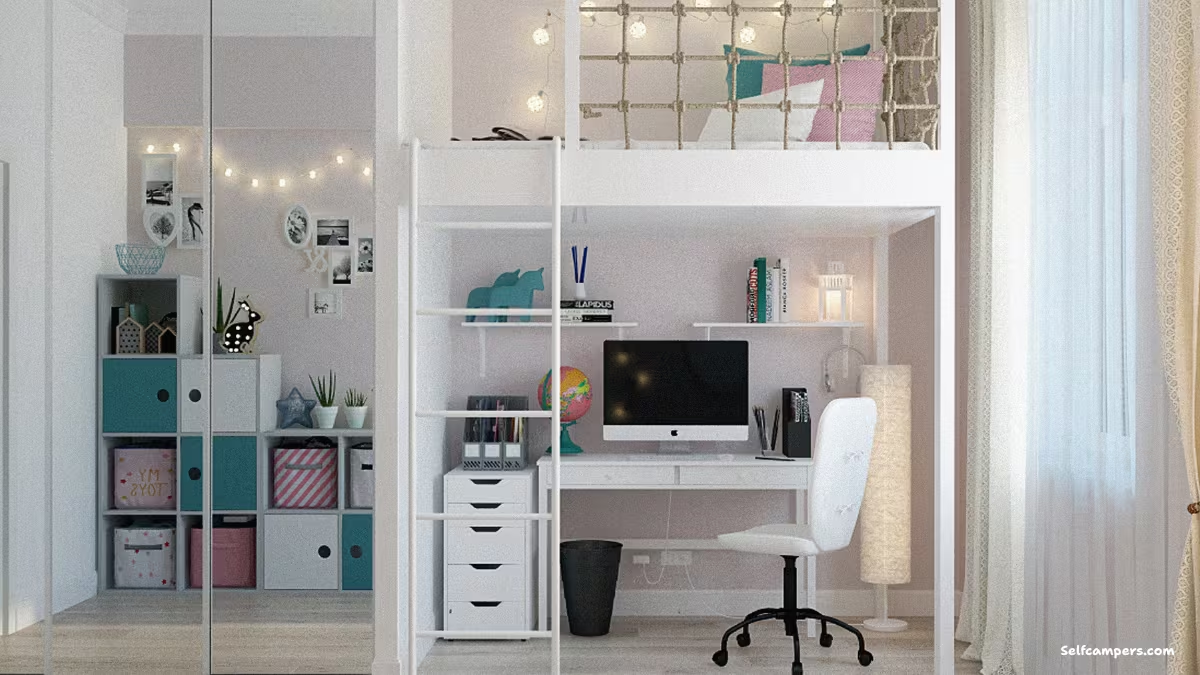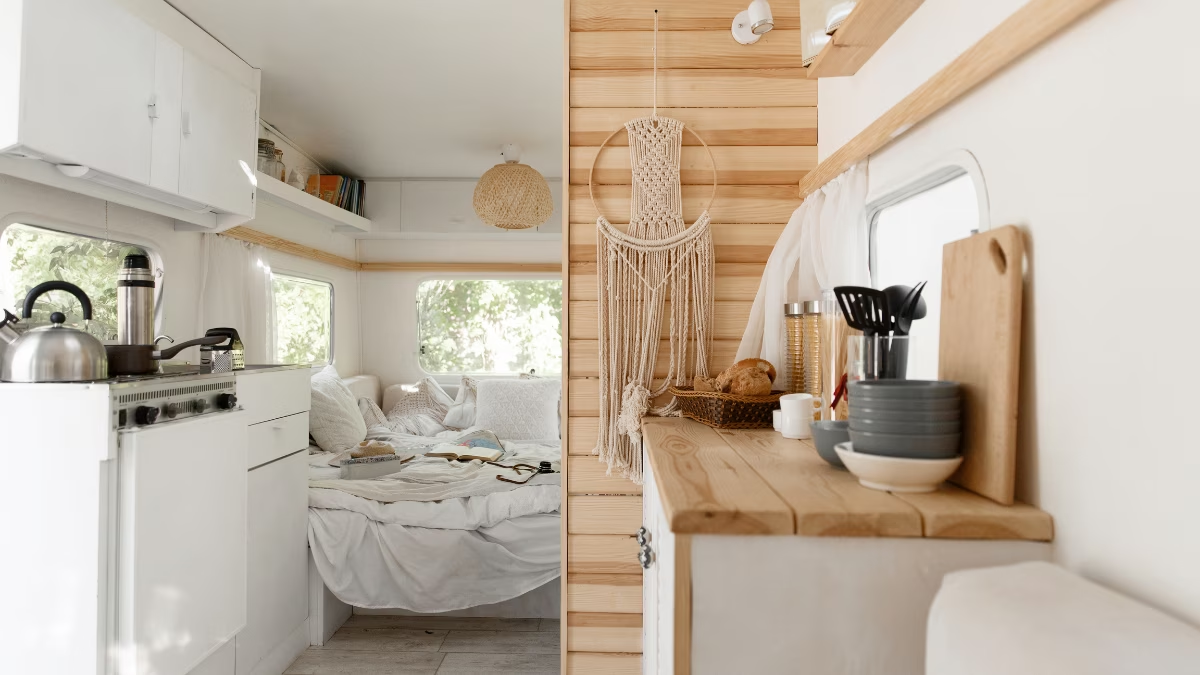
Minimalist organizing for small spaces isn’t just about aesthetics. It’s about survival.
When you live in under 300 square feet, clutter stops being a minor inconvenience and becomes friction. It slows your morning routine, creates mental noise, and quietly removes the freedom that probably inspired you to move into an RV or tiny home in the first place.
Most people think small-space living fails because of lack of storage. In reality, it fails because of lack of systems.
At Selfcampers, we use one simple rule that prevents clutter before it starts: the One-In, One-Out rule.
It sounds strict. But once you understand how it works, it becomes the easiest way to keep your space calm, functional, and ready for movement.
Why Minimalist Organizing for Small Spaces Actually Works
Let’s be honest. We all love gear.
A better multi-tool, a smarter kitchen gadget, a warmer blanket. Each new item feels like an upgrade.
But in a small space, every object carries a hidden cost:
-
Physical space
-
Time spent rearranging
-
Mental energy spent remembering where things live
If you spend twenty minutes moving items just to reach your coffee grinder, your space is working against you.
Minimalist organizing for small spaces shifts your mindset from accumulation to curation.
Instead of asking:
Where will this go?
You ask:
What is this replacing?
That single question transforms decision-making, reinforces intentional living systems, and prevents clutter from building in the first place.
The Behavioral Psychology Behind the One-In, One-Out Rule
Clutter is rarely caused by laziness. It is caused by frictionless accumulation.
Humans naturally struggle to remove items because of:
-
The endowment effect (we value things more simply because we own them)
-
Decision fatigue
-
Emotional attachment tied to identity
The One-In, One-Out (OIOO) rule bypasses these problems by shifting the decision to the moment of purchase.
Instead of massive decluttering sessions later, you maintain balance automatically.
This is why the rule of living with less works long-term.
The 3-Step Strategy for Better Minimalist Organizing
A good system should reduce friction, not create more chores. Here is how we apply the method inside the Self-Sufficiency Lab.
1. The Better Than Test
Before buying anything new, ask:
What is this replacing?
If the answer is nothing, then it is an addition, not an upgrade.
Examples:
-
A new jacket must outperform an existing one in warmth or versatility.
-
A new kitchen gadget should replace two tools, not sit beside them.
This stops slow clutter creep.
2. Manage High-Traffic Zones as Fixed Inventory
Certain areas accumulate clutter faster:
-
Kitchen drawers
-
Wardrobes
-
Tool storage
-
Entry bins
Treat these as fixed-capacity systems.
If the drawer is full, it is full.
This removes emotional decision-making because the system sets the limit. Explore the full guide, small space hack comparison: Quick Fix vs Pro Upgrade.
3. The Ethical Out Strategy
Minimalism is not about waste. It is about flow.
When something leaves:
-
Trade with fellow travelers
-
Sell locally
-
Donate to community groups or camp exchanges
Keeping items moving aligns with self-sufficient living values.
Real-Life Scenario: How the One-In, One-Out Rule Prevents Clutter
Imagine you find a compact French press designed for travel.
Without a system, you simply add it to your gear.
Two months later:
-
Storage becomes tighter.
-
Cleanup takes longer.
-
You now own multiple brewing setups.
Using One-In, One-Out changes the process.
You ask:
Is this better than my current setup?
If yes, the old coffee maker becomes the Out.
Result:
-
No clutter increase.
-
Immediate upgrade.
-
Storage remains balanced.
Where Small-Space Living Gets Tricky
Tools and Equipment
Emergency backups make sense.
But duplication without purpose adds weight and complexity.
Choose the best-performing tool and release the rest.
Books and Personal Items
Books carry emotional value, which makes them harder to manage.
Try this:
-
Keep reference guides used weekly.
-
Rotate leisure reading digitally.
-
Use Little Free Libraries to exchange rather than accumulate.
Screenshot Checklist: The One-In, One-Out Rule
-
Before buying, identify what leaves.
-
Replace, don’t accumulate.
-
Treat drawers as fixed inventory.
-
Choose quality over quantity.
-
Give items a meaningful exit.
-
Review high-traffic zones monthly.
The Hidden Benefits Most People Don’t Expect
Consistent use of the rule leads to:
-
Easier packing and travel transitions
-
Less rebuying forgotten items
-
Reduced decision fatigue
Most importantly, your space begins to feel calm instead of crowded.
Conclusion: Weightless Is Freedom
Minimalist organizing for small spaces is less about owning less and more about living intentionally.
The One-In, One-Out rule keeps your inventory lean, your environment functional, and your home ready for movement.
Start small this week. Choose one category and apply the rule consistently.
You may discover that what you really wanted was not more storage, but more freedom. Explore our free tools.