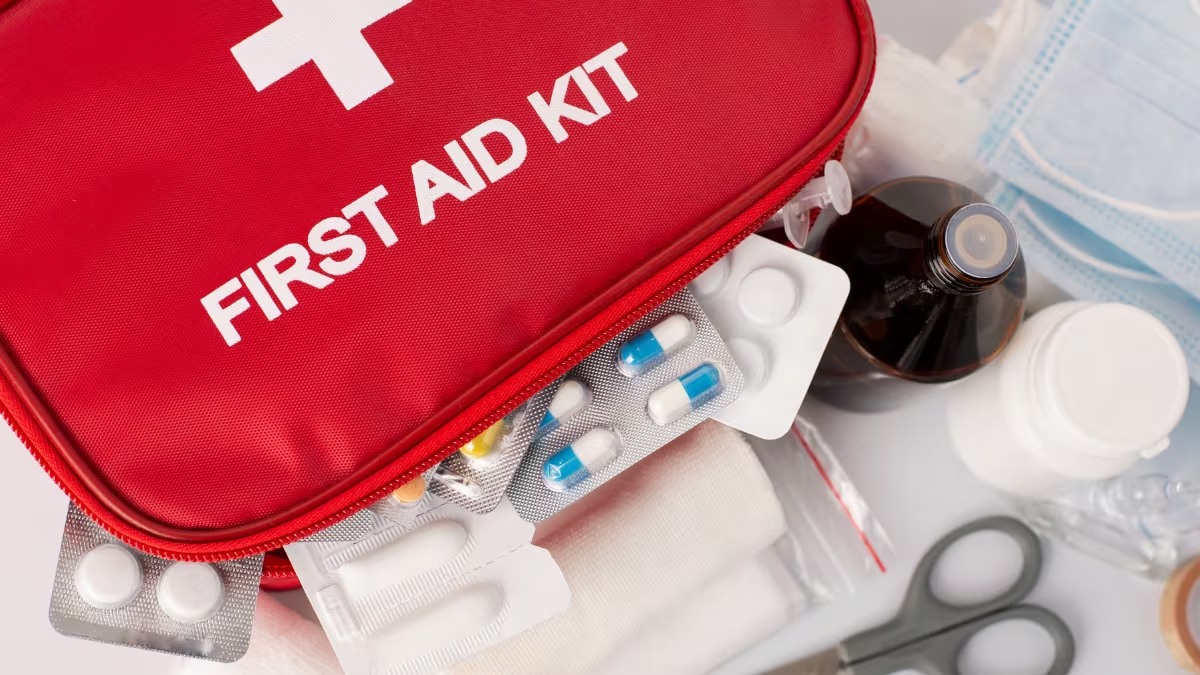
True off-grid first aid is not just about having a box of bandages; it is about extending the Golden Hour when professional medical help is miles away. In a remote setting, your medical kit must serve as a portable urgent care center, capable of managing everything from minor kitchen burns to major trauma. By building a customized, resilient medical system, you bridge the gap between an accident and professional recovery.
The Modular Approach: Organizing for Chaos
When an emergency happens, searching through a cluttered bag is not an option. Professional wilderness responders use a modular organization system to stay calm and efficient.
-
Color-Coded Pouches: Use red for trauma (bleeding), blue for airway/respiratory, and green for minor care (blisters/scrapes).
-
Waterproof Protection: Remote living often means damp environments. Store all soft goods in individual zip-locks or dry sacks to prevent mold and degradation.
-
The Grab-and-Go Layer: Keep a small, 1-liter personal kit on your person at all times, with the larger Base Station kit stored in a fixed, accessible location in your tiny home.
Essential Gear for Remote Medical Preparedness
| Category | Must-Have Items | Purpose |
| Wound Care | Sterile gauze, antiseptic wipes, antibacterial ointment | Prevent infection in the wild |
| Trauma | Tourniquet, pressure dressings, trauma shears | Control catastrophic bleeding |
| Diagnostic | Digital thermometer, blood pressure cuff, pulse oximeter | Monitor vitals during illness |
| Environment | Emergency foil blanket, sunscreen, rehydration salts | Manage exposure and dehydration |
Managing Your Medical Supply Environment
Off-grid homes often lack the climate control of traditional pharmacy shelves. High heat and humidity can cause bandages to lose their stick and medications to lose their potency.
-
Temperature Tracking: Use a simple digital thermometer to ensure your medical cabinet stays between 8°C and 30°C (46°F to 86°F).
-
The FIFO System: Implement a First-In, First-Out rotation. Check expiration dates every 3–6 months and move older stock to the front of your kit to ensure nothing goes to waste.
-
Insulated Storage: If your cabin or van experiences extreme temperature swings, consider storing your main medical kit in a high-quality insulated cooler to buffer against sudden swings.
Beyond the Gear: The Importance of Training
A $500 medical kit is useless if you don’t have the skills to use it.
-
Wilderness First Responder (WFR): This is the gold standard for off-grid dwellers, focusing on patient care in remote settings where help is more than 8 hours away.
-
Scenario-Based Learning: Look for courses that use realistic simulations rather than just classroom theory to build true muscle memory for emergencies.
Medical Evacuation Planning: When First Aid Isn’t Enough
Off-grid first aid is about stabilization, not definitive care. In serious emergencies, your goal is to preserve life long enough to reach higher-level medical treatment.
Start by mapping your evacuation options before you ever need them. Identify the nearest urgent care, hospital, and trauma center. Know the driving time in good weather and in worst-case conditions. Remote living demands worst-case planning.
Pre-plan transport routes. Are roads passable after heavy rain? Is winter snow a factor? Do you have a secondary exit if your primary access road is blocked?
For deeper wilderness settings, understand air evacuation options. Research regional helicopter services and whether your location falls within their operational range. Consider medical evacuation insurance if you are truly isolated.
Finally, establish a Go Protocol.
If bleeding cannot be controlled within minutes, if breathing is compromised, or if an altered mental status develops, evacuation begins immediately. No debate. No delay.
A resilient off-grid first-aid system includes not just supplies and skills, but a clear path from incident to advanced care.
The Selfcampers Off-Grid Medical Audit
-
The Big 3 Check: Do I have a tourniquet, hemostatic gauze, and a chest seal for major trauma?
-
Medication Log: Is there a waterproof logbook in the kit to track dosages and patient symptoms?
-
Personal Rx: Do I have at least a 30-day surplus of all personal prescription medications?
-
Illumination: Is there a dedicated headlamp inside the medical kit for hands-free night work?
-
Manual: Is there a physical, waterproof first aid manual included for quick reference when digital devices fail?
Conclusion: The Resilient Resident
Mastering off-grid first aid is a journey of continuous improvement. By building a modular kit, protecting your supplies from the elements, and investing in wilderness-specific training, you turn your home into a safe harbor. You aren’t just surviving the wild; you’re thriving with the confidence that you can handle whatever comes your way.