Designing efficient off-grid lighting systems is the key to making a remote cabin or tiny home feel like a sanctuary rather than a cave. In a world where every watt counts, shifting from traditional AC lighting to advanced 12V LED and dedicated solar circuits can reduce your lighting energy consumption by over 80%. Whether you are looking for task lighting for your security perimeter or ambient warmth for your living space, the right tech ensures you never have to sit in the dark.
The Efficiency Winner: 12V DC LED Systems
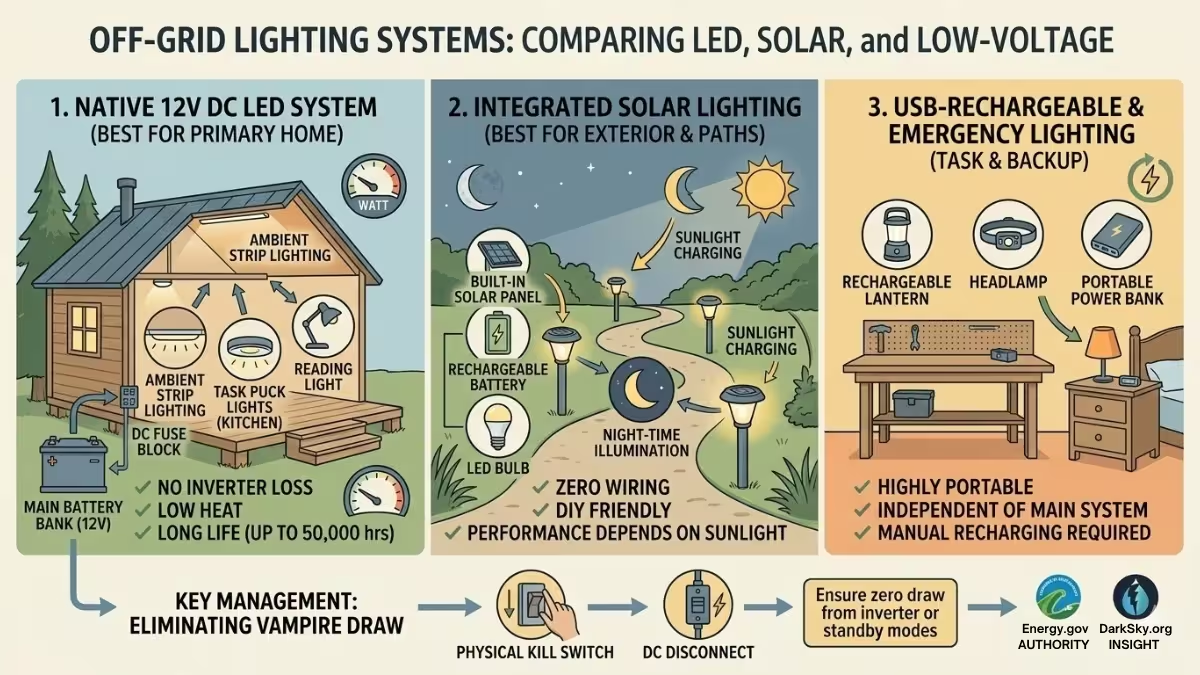
For most permanent off-grid setups, a native 12V DC (Direct Current) system is the gold standard.
-
Allows centralized battery or transformer power
e=10,0,0 data-index-in-node=0>No Inverter Needed: By running lights directly off your 12V battery bank, you avoid the inversion loss (usually 10-15%) that occurs when converting battery power to 120V/230V AC.
-
Lower Heat Output: LEDs convert almost all energy into light rather than heat, which is vital for keeping small, enclosed off-grid spaces cool in the summer.
-
Longevity: High-quality 12V LEDs can last up to 50,000 hours, meaning you may never need to replace a bulb for the life of your cabin.
Comparing Off-Grid Lighting Technologies
| System Type | Best For | Power Source | Pros/Cons |
| Native 12V LED | Primary Home Lighting | Main Battery Bank | Pros: Ultra-efficient; eliminates inverter loss. |
| Integrated Solar | Exterior & Paths | Built-in Solar Cell | Pros: Zero wiring; DIY-friendly. |
| USB-Rechargeable | Task & Emergency | Portable Power Bank | Pros: Highly portable; independent of main grid. |
| Low-Wattage AC | Retrofit Cabins | Inverter / Shore Power | Pros: Uses standard fixtures. Cons: High vampire draw. |
Not every lighting solution serves the same purpose in an off-grid environment. The most resilient off-grid lighting systems combine multiple technologies depending on efficiency, reliability, and installation complexity.
When planning remote cabins, guides on designing a stand-alone solar lighting system recommend calculating daily watt demand and battery storage before selecting lighting fixtures.
12V DC LED Lighting
Best for primary interior lighting.
-
Extremely energy efficient (often under 5–10 watts per fixture)
-
Runs directly from battery banks without inverter losses
-
Ideal for cabins, vans, and tiny homes with solar battery systems
Standalone Solar Lights
Best for outdoor paths and security zones. Most off-grid lighting systems rely on solar panels charging batteries that store electricity for nighttime use, a common principle explained in guides on how off-grid solar power systems work.
-
Self-contained units with small panels and internal batteries
-
No wiring required, reducing installation time and trenching
-
Useful for driveways, garden paths, and perimeter lighting
Low-Voltage Wired Systems (12V–24V)
Best for larger properties and landscape lighting.
-
Allows centralized battery or transformer power
-
Reliable during extended cloudy periods when paired with the main battery bank
-
Supports longer cable runs for pathways, docks, or outbuildings
In most off-grid homes, a hybrid approach works best: 12V LED circuits for interior spaces, solar units for exterior lighting, and low-voltage wiring for permanent landscape illumination. This layered strategy maximizes brightness while protecting precious battery capacity.
Self-contained outdoor solar lighting systems are popular for pathways and security lighting because they generate electricity from small solar cells and store it in batteries for nighttime use.
Layered Lighting: Task, Ambient, and Security
-
Task Lighting: Focus intense, cool-white light on work surfaces, such as kitchen counters or your off-grid laundry solutions area, to enhance visibility.
-
Ambient Lighting: Use warm-white LED strips or dimmable puck lights for general living areas to reduce eye strain and save power.
-
Security Lighting: Use motion-activated exterior solar lights. These stay off until needed, preserving battery life while acting as a deterrent in your off-grid security and safety strategy
Managing the Vampire Draw
Even when lights are off, some systems continue to sip power.
-
Inverter Overhead: If you use AC bulbs, your inverter must stay awake 24/7, which can pull 0.5A to 2.0A constantly, even with no lights on.
-
Phantom LED Glow: Some cheap LED controllers have a tiny internal light or standby mode that slowly drains batteries.
-
The Solution: Install physical kill switches on your main lighting circuits to ensure zero draw when you are away or asleep.
The Off-Grid Lighting Audit
-
Voltage Check: Have I prioritized 12V DC fixtures over AC bulbs to maximize efficiency?
-
Color Temperature: Am I using Warm White (2700K) for living areas and Daylight (5000K) for work areas?
-
Dimmers: Have I installed PWM (Pulse Width Modulation) dimmers to further reduce power draw during evening hours?
-
Exterior Paths: Are my outdoor lights self-contained solar units to avoid trenching wires?
-
Emergency: Do I have at least two high-lumen, rechargeable headlamps easily accessible for night-time repairs?
Conclusion: Lighting the Way Forward
Building effective off-grid lighting systems is about balancing technical efficiency with human comfort. By eliminating inverter losses and utilizing smart, layered LED designs, you can enjoy a bright, welcoming home that works with your solar harvest rather than against it.