Mastering off-grid refrigeration options is a cornerstone of true self-sufficiency. While a standard upright fridge can consume 400–600 watts per hour, off-grid alternatives use high-efficiency DC compressors, propane, or entirely passive thermal science to preserve food with a fraction of that energy. By diversifying your cooling strategies, using mechanical refrigeration for perishables and passive cellars for bulk produce, you can slash your solar requirements and ensure your harvest stays fresh year-round.
The Mechanical Choice: Chest Fridges vs. Propane
For items like meat and dairy that require strictly regulated temperatures (below 40°F), mechanical systems are often necessary.
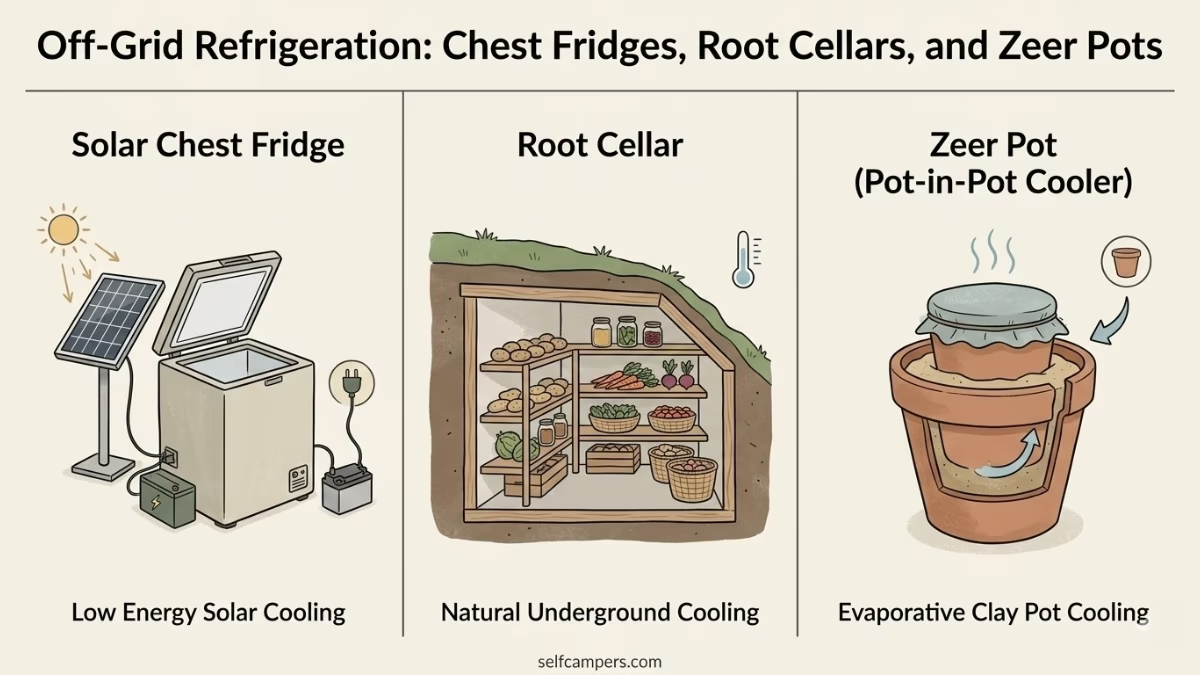
Chest Fridges (DC-Powered)
-
Energy Trapping: Because cold air is denser than warm air, it sinks and stays inside the unit when you open the lid, unlike an upright fridge, where the cold air spills out.
-
Native DC Efficiency: Many off-grid chest units run directly on 12V or 24V DC power, eliminating the 10–15% energy loss caused by an inverter.
-
Conversion Hack: Many off-grid residents convert a standard AC chest freezer into a fridge using an external thermostat to capitalize on its superior insulation.
Propane Refrigerators
-
Fuel Over Power: These use an absorption cooling cycle that requires no electricity, making them ideal for areas with limited sunlight.
-
Reliability: They operate silently and provide consistent cooling regardless of weather conditions.
-
Maintenance: They require a level surface and occasional defrosting to maintain efficiency.
Root Cellars: The Passive Earth Battery
A root cellar uses the earth’s natural thermal mass to maintain a stable temperature (typically 32°F to 40°F) and high humidity (85–95%).
-
Best For: Root vegetables (carrots, potatoes), hard-skinned fruits (apples), and canned goods.
-
Construction Essentials: Effective cellars require thermal isolation from the main house, moisture-tolerant insulation like mineral wool, and a passive ventilation system with high and low vents for air exchange.
-
Humidity Control: Maintaining high humidity is vital; a dirt or gravel floor kept damp can prevent produce from shriveling.
Zeer Pots: Ancient Evaporative Cooling
The Zeer or pot-in-pot refrigerator is a low-cost, zero-power solution that works best in hot, dry climates (humidity below 75%).
-
The Mechanism: A smaller unglazed clay pot is placed inside a larger one, with the gap filled with wet sand. As water evaporates through the outer pot’s walls, it pulls heat from the inner chamber.
-
Performance: It can lower temperatures by 8–18°C (14–32°F) below the ambient air, keeping vegetables crisp for up to two weeks.
-
Climate Warning: In high-humidity areas, evaporation slows significantly, making Zeer pots much less effective.
Off-Grid Cold Storage Audit
-
Thermal Mass: Is my fridge/freezer kept as full as possible (using water jugs for gaps) to maintain temperature during power dips?
-
Vibration & Level: Is my propane or DC fridge perfectly level to ensure the cooling cycle functions correctly?
-
Ethylene Management: In my root cellar, am I storing apples away from potatoes to prevent the ethylene gas from causing premature sprouting?
-
Ventilation: Do my passive systems (cellars and Zeer pots) have adequate airflow to prevent mold and facilitate evaporation?
-
Defrosting: Am I regularly removing ice buildup on mechanical units to prevent it from acting as an insulator and reducing cooling power?
Conclusion: Scaling Your Cold Chain
Successfully navigating off-grid refrigeration options means matching the right technology to the right food. By utilizing the high efficiency of a DC chest fridge for perishables and the zero-power reliability of a root cellar for your harvest, you create a resilient, tiered system. This approach doesn’t just save energy, it turns your kitchen into a self-sustaining powerhouse.