Passive solar heating design represents the ultimate synergy between architecture and climate, transforming your off-grid home from a simple shelter into a self-regulating thermal engine. By leveraging south-facing windows, high-density materials like stone or concrete, and precise orientation, you can capture up to 70% of the sun’s free energy and store it for nighttime warmth. Mastering this discipline eliminates the vulnerability of relying on mechanical heating systems or expensive fuels, ensuring your sanctuary remains comfortable through the long winter nights, using only nature’s innate rhythms.
In high-performance off-grid homes, passive solar heating design is rarely treated as an optional feature. Architects and building-science experts consistently emphasize orientation, thermal mass, and insulation as the foundation of energy-independent housing. When properly implemented, these principles allow homes to maintain stable indoor temperatures with minimal mechanical intervention, dramatically reducing reliance on fuel, generators, or grid electricity.
The Three Pillars: Collection, Storage, and Distribution
A complete passive solar heating design requires three distinct phases to function as a unified system.
-
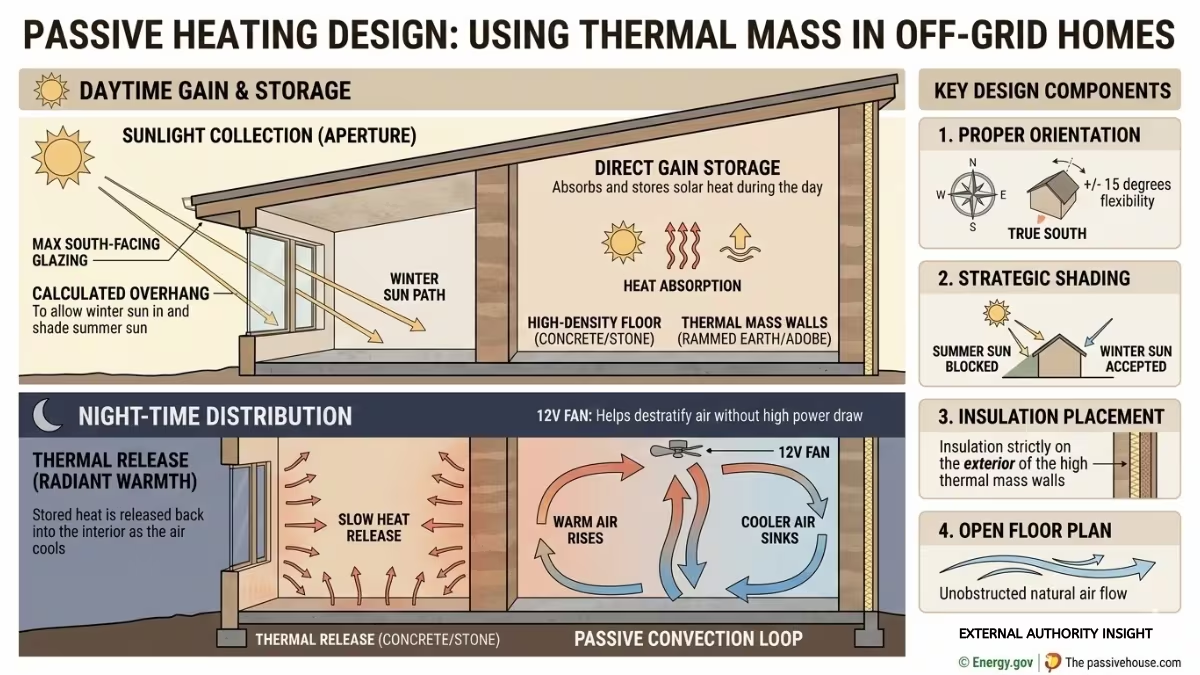
Collection (Aperture): This is the engine of your system. You must maximize south-facing glazing (windows) while minimizing east, west, and especially north-facing windows. The aperture collects short-wave solar radiation during daylight hours.
-
Storage (Thermal Mass): This is the battery. It requires dense, heavy materials such as concrete floors, brick walls, stone hearths, or even large water tanks to soak up the heat collected by the windows. These materials absorb high temperatures and release them slowly as ambient warmth.
-
Distribution: This moves the stored energy. In a passive system, this relies on natural convection, conduction, and radiation. In a tiny home, compact floor plans and open layouts naturally facilitate this distribution.
Mastering Orientation: The True South
Your passive solar heating design must begin before you even lay the foundation.
-
True South vs. Magnetic South: You must orient your home’s primary glazing axis to true south, not magnetic south. A deviation of up to 15 degrees east or west of true south is acceptable, but accuracy is paramount for maximum winter heat gain.
-
Window Ratio: To avoid overheating, total south-facing glazing should typically be about 7% to 12% of your home’s total floor area. If this ratio is higher, you must increase your thermal mass capacity proportionately.
Controlling Solar Gain: Overhang Geometry
Even the best passive solar heating design fails without seasonal solar control. Fixed roof overhangs allow low winter sun to penetrate deep into the home while blocking the higher summer sun that causes overheating.
Winter Capture: In winter, the sun sits low in the sky, allowing sunlight to pass beneath the overhang and strike interior thermal mass such as concrete floors or masonry walls.
Summer Rejection: During summer, the sun travels higher, and the overhang casts a shadow across the same windows, preventing excess heat from entering.
Design Rule: A properly sized overhang should fully shade south-facing windows at the summer solstice while allowing near-full exposure during the winter solstice.
This simple architectural element stabilizes indoor temperatures year-round without mechanical cooling, making it a critical control layer in high-performance off-grid homes.
Building Your Heat Battery: Selecting Thermal Mass Materials
The performance of your thermal mass is dependent on its specific heat capacity and thermal conductivity.
| Material | Application | Pro/Con |
| Poured Concrete | Floors or structural walls. | Pros: High mass, multi-functional. Cons: Requires foundation support. |
| Adobe or Rammed Earth | Interior partition walls. | Pros: Eco-friendly, superb comfort. Cons: Very labor-intensive. |
| Water Tanks | Placed in direct solar gain. | Pros: Water holds 4x more heat by volume than concrete. Cons: Leak risk. |
| Brick or Stone Masonry | Fireplace surrounds or feature walls. | Pros: Beautiful, excellent conductor. Cons: Slow to respond to changes. |
Distribution: The Science of Thermal Buoyancy
Once your passive solar heating design has captured and stored the heat, nature handles the distribution via convection.
-
Heat Rises: As air warms, it expands, becomes less dense, and rises. In your home, this warm air will travel to the highest point—a loft space, for example.
-
Cooling: As it loses heat to the environment, it contracts, becomes denser, and sinks, creating a continuous loop.
-
Optimizing Flow: To help this passive flow, design high ceilings (at least 9 feet) and use open-plan living. A small 12V ceiling fan or native low-voltage DC fan (as linked in our lighting article) running in reverse on low can help break up air layering without using significant power.
The Passive Solar Integration Checklist
-
Aperture: Have I prioritized south-facing windows for maximum winter gain?
-
Storage: Do I have sufficient heavy material in direct sunlight to absorb the collected heat?
-
Distribution: Is my home’s floor plan open enough to allow natural convection loops to function?
-
Control (Shading): Do I have an overhang, trellis, or deciduous trees that will shade my south windows from the intense summer sun?
-
Insulation: Have I ensured that my high thermal mass walls and floors are insulated from the exterior so they only soak up interior heat?
People Also Ask: Passive Solar Heating Design
How does passive solar heating work in an off-grid home?
Passive solar heating works by capturing sunlight through south-facing windows, storing that heat in dense materials like concrete or stone, and slowly releasing it as indoor temperatures drop. This reduces or eliminates the need for mechanical heating systems.
What materials are best for thermal mass in passive solar homes?
Concrete, stone, brick, adobe, and water tanks are the most effective thermal mass materials because they absorb heat during the day and release it gradually at night, stabilizing indoor temperatures.
Can passive solar heating work in cold climates?
Yes. In fact, passive solar heating design performs best in cold, sunny climates where winter sunlight can be captured and stored efficiently inside well-insulated structures.
Do passive solar homes overheat in summer?
Not when designed correctly. Roof overhangs, shading structures, deciduous trees, and proper window ratios prevent excessive summer heat while still allowing winter solar gain.
Conclusion: Free Energy, Every Day
Mastering passive solar heating design changes your relationship with the grid forever. By designing your home to capture and store the sun’s energy in its structure, you eliminate the constant anxiety of fuel security. The result is a home that is truly independent, a sanctuary that stays warm in winter and cool in summer using only the clever, silent science of the Earth itself.
For a deeper technical breakdown, readers can review the U.S. Department of Energy’s passive solar heating design guide to see how these principles are applied in real building plans.