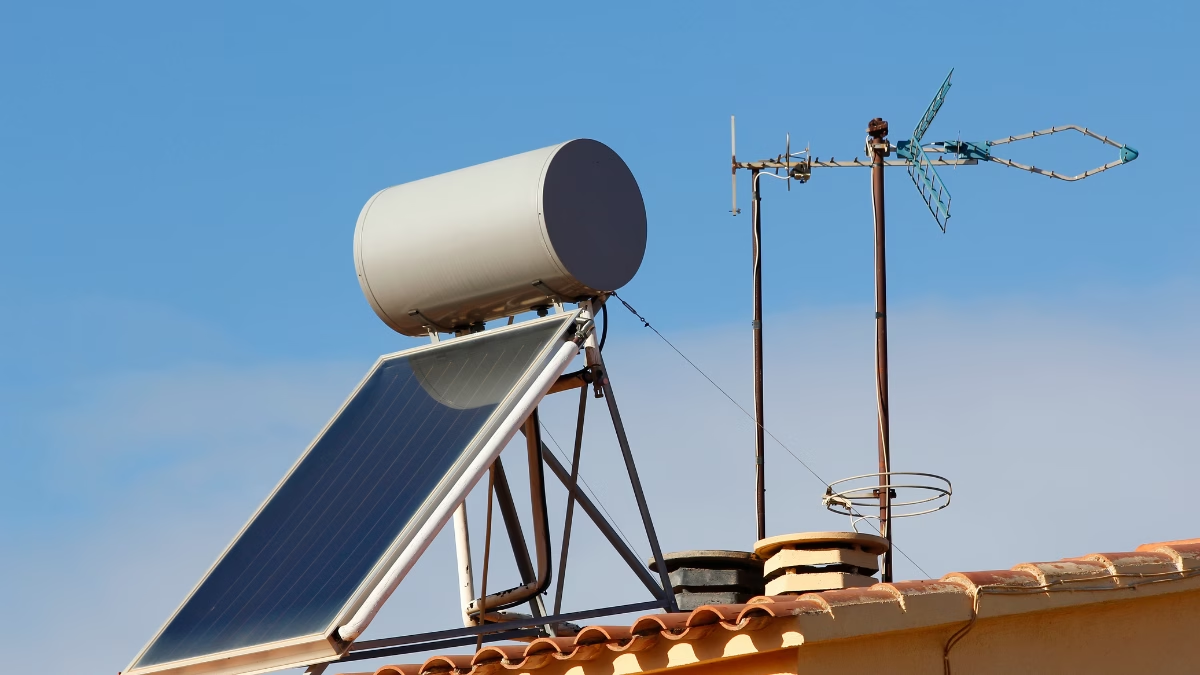
Smart controllers add another layer of protection. Temperature sensors can prevent overheating in summer and automatically prioritize backup heat during prolonged storms. Solar hot water for off-grid living transforms the sun’s thermal energy directly into comfort. Unlike photovoltaic (PV) systems that convert light to electricity, solar thermal systems use a collector to trap heat, warming your water with up to 80% efficiency. For tiny homes and cabins, this means reliable, high-temperature showers without the heavy battery drain or fuel costs associated with traditional heaters.
The Physics of Free Heat: How Solar Thermal Works
In an off-grid setting, you generally choose between two primary types of collectors based on your climate and budget.
-
Flat-Plate Collectors: These resemble standard solar panels and consist of a dark absorber plate under a glass cover. They are durable, cost-effective, and perform best in sunny, temperate climates.
-
Evacuated Tube Collectors: These consist of glass tubes with a vacuum seal that acts as a super insulator. They are highly efficient in cold or cloudy environments because they lose very little captured heat to the outside air.
For a deeper technical overview of how solar thermal collectors convert sunlight into usable heat, the U.S. Department of Energy provides a clear breakdown of system components and performance considerations.
Active vs. Passive: Choosing Your Circulation Method
How the water moves from your roof to your shower determines the complexity of your plumbing.
1. Passive Batch or Thermosyphon Systems
These rely on gravity and the fact that hot water naturally rises. By placing your storage tank higher than your solar collector, the water circulates on its own without any moving parts or electricity.
-
Best For: Simple cabin setups and summer-only use.
-
Pro: Zero maintenance and zero power draw.
2. Active Systems with 12V Circulating Pumps
If your tank must be lower than your panels (common in tiny homes), you need an active system.
-
The 12V Advantage: Modern brushless 12V DC pumps, like the US Solar Pumps S5, can be powered directly by a small dedicated PV panel.
-
Smart Operation: The pump only turns on when the sun is shining, automatically pushing hot water into your tank exactly when the collector is at its peak temperature.
DIY Solar Hot Water: The Black Pipe Solution
For those in the Self-Sufficiency Lab on a budget, a batch collector made from coiled black poly-pipe is a classic DIY win.
-
The Build: Coil 100+ feet of black UV-resistant polyethylene pipe into a shallow, glass-topped box.
-
The Result: On a sunny day, the stagnant water inside the pipe can easily reach over 60°C (140°F).
-
Heat Exchanger Tip: To prevent the main tank from getting too hot, run the solar-heated water through a copper coil (heat exchanger) inside your water cylinder.
Integrating Solar Hot Water with Backup Systems
Even the best solar hot water for an off-grid living system must account for cloudy stretches and high-demand days. True independence comes from intelligent integration, not blind reliance on one source.
The most practical approach is hybridization. A small on-demand propane heater or electric immersion element can be installed as a secondary heat source inside your storage tank. The key is sequencing: solar does the heavy lifting first, and backup only activates when water temperature drops below your comfort threshold.
For battery-based homes, a low-wattage immersion element powered during peak solar hours can serve as a controlled top-up system. This ensures your evening shower does not depend on morning sunshine.
Smart controllers add another layer of protection. Temperature sensors can prevent overheating in summer and automatically prioritize backup heat during prolonged storms.
Solar thermal provides abundance. Backup systems provide reliability. Together, they create a shower system that feels grid-connected while remaining completely self-directed.
Winterization and Maintenance Protocols
Off-grid systems face harsher environmental extremes than city units.
-
Freeze Protection: If you live in a cold climate, you must use an indirect system filled with non-toxic propylene glycol (antifreeze) or ensure the system can be completely drained before the first frost.
-
Sacrificial Anodes: If your system uses a metal storage tank, check the anode rod annually. This rod corrodes, so your tank doesn’t; replacing it every few years can double the life of your system.
-
Scale Removal: In hard water areas, mineral buildup can clog your collector. Flush the system with a mild descaling solution every 3 years to maintain efficiency.
For climate-specific guidance and sustainable system design principles, the Centre for Alternative Technology (CAT) – Solar Thermal offers practical insights into solar water heating for off-grid and low-energy homes.
The Solar Hot Water Readiness Checklist
-
Orientation: Is my collector facing within 30 degrees of True South for maximum gain?
-
Tempering Valve: Do I have an anti-scald mixing valve installed to prevent 70°C+ water from reaching the tap?
-
Insulation: Are all hot water lines wrapped in UV-rated foam to prevent heat loss during delivery?
-
Pump Check: If using a 12V pump, is it a brushless model rated for high-temperature circulation?
Conclusion: The Warmth of Independence
Investing in solar hot water for off-grid living is one of the fastest ways to improve your quality of life while reducing your energy footprint. Whether you build a simple black-pipe coil or install a high-tech evacuated tube system, the result is the same: the luxury of a hot shower, powered entirely by the sun.