American-style summer camps UK offer something that most British holiday programs simply do not: a 24-hour community built around the child, not just the activity timetable. A standard UK holiday club tends to focus on daytime childcare or specific sports coaching, then sends children home at the end of the day. The American model runs deeper than that. It is built around a holistic residential culture where the emotional and social development of the child carries just as much weight as the archery session or the swimming race.
Parents who seek out these programs are rarely looking for a convenient school-holiday solution. They want something that challenges their child, builds genuine independence, and creates memories that last longer than a week. Understanding what separates a true American-style experience from a well-branded activity camp is the first step toward making the right call.
What Makes a Camp Truly American-Style
The cabin group is where it all starts. Unlike activity centers, where children rotate between groups based on whatever sport they signed up for, a genuine American-style camp keeps children together in a consistent bunk or cabin with a dedicated counselor throughout the entire stay. That consistency is not a small detail. It is the engine of the whole experience. Real friendships form when children cannot escape each other, and a skilled counselor turns that friction into something productive.
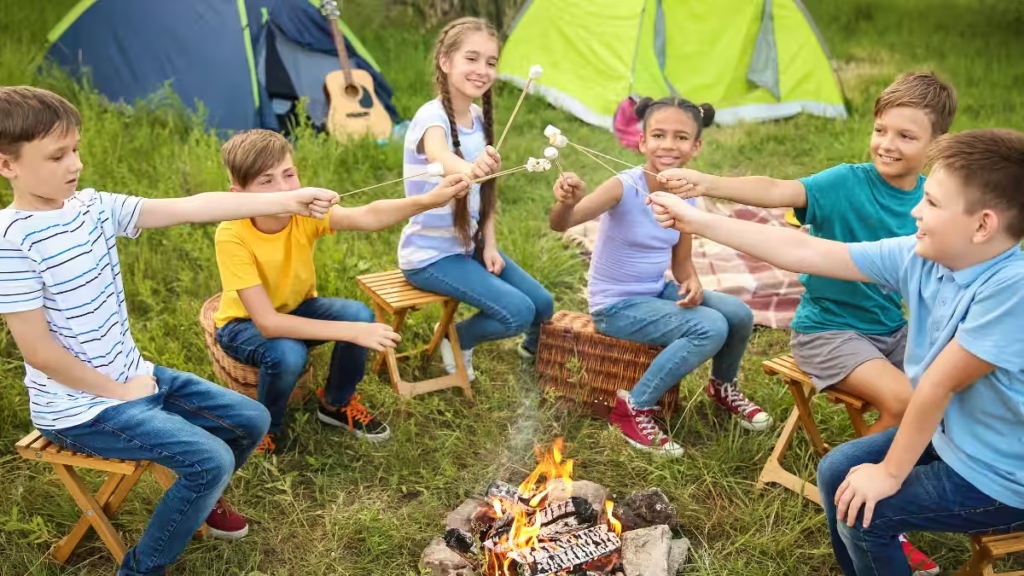
The daily schedule follows a deliberate emotional arc. High-energy morning assemblies give way to structured activity rotations that push children toward things they would never choose on their own: archery, performing arts, water sports, wilderness skills. The focus is participation and effort, not elite performance. Then the pace drops. Mid-day rest, evening campfire, songs, stories, and the kind of low-key connection that digital life rarely allows.
Tradition carries enormous weight in this model. Color wars, the multi-day team competitions that divide the entire camp into rival factions, are not just games. They create loyalty, shared stakes, and a sense of belonging to something bigger than any individual. Camp songs passed down through generations of staff contribute to the same effect. That specific blend of high-energy competition and quiet campfire culture is what separates these programs from anything the standard UK activity camp offers.
The Growing Popularity of American-Style Summer Camps in the UK
American media has spent decades painting the summer camp as a rite of passage, so the concept is not foreign to British children. But familiarity alone does not explain the genuine surge in demand across the UK. The real driver is word of mouth. Returning expats and families within international school communities who have lived the American system firsthand are actively seeking ways to give their children the same experience without the transatlantic flight.
There is also a growing recognition among parents that a three-day school trip is not long enough for real independence to develop. The child spends the first night homesick, the second day finding their feet, and then it is over. A one to two week residential stay gives a child the time to move past the initial nerves and genuinely inhabit their new environment. That duration is a defining feature of the American model, and it matters more than most parents initially realize.
The pull away from screen-based living has accelerated things further. A tech-free or low-tech environment is no longer just a quirky selling point. For many families, it has become the point entirely. Camp offers teenagers a socially acceptable reason to disconnect, replacing notifications and scrolling with physical challenges and real-world relationships. That trade tends to look obvious in hindsight, but it takes the right environment to make it possible.
What to Look For When Choosing an American-Style Summer Camps UK
Start with safeguarding and accreditation. In England, any camp providing childcare for children under eight for more than two hours a day must be registered with Ofsted. For older children, registration is often voluntary, but a high-quality program will hold itself to those standards regardless. Membership in the British Activity Providers Association or a comparable body signals that the camp has submitted to independent safety audits.
Staff-to-camper ratios are the next thing to examine. One staff member to every six or eight children is the benchmark for a program that can deliver both physical safety and genuine emotional support. Ask how counselors are recruited. The best camps hire staff who are trained in child development and conflict resolution, not just qualified in the activity they are leading. A skilled paddler who cannot support a homesick ten-year-old is only half the job.
Transparency around fees matters more than parents often expect. Many American-style programs are genuinely all-inclusive, covering meals, accommodation, equipment, and laundry in their headline price. Others add costs quietly. Ask for a written breakdown of everything included and a detailed packing list before you commit. A reputable camp produces both without hesitation.
Finally, speak with the leadership team directly. Ask how they handle homesickness. Ask what they do for first-time campers who struggle in the opening days. A camp that answers those questions honestly is a camp that has dealt with them before and built real systems around them. That is the kind of operation worth trusting with your child.
American-Style Summer Camps Across the UK: What the Landscape Looks Like
These programs operate across England, Scotland, and Wales, and they fall into two broad settings. The first uses the grounds of boarding schools or universities during the summer break. These sites offer excellent facilities, enclosed environments, and infrastructure that smaller outdoor camps cannot match: swimming pools, performance theaters, and well-maintained sports pitches. The second type operates on dedicated outdoor estates, sometimes within or adjacent to National Parks, and leans into the natural environment with woodland cabins, lakes, and terrain that encourages genuine outdoor living.
Regional character shapes the experience. Camps in the Scottish Highlands tend to focus on wilderness skills, hillwalking, and mountain activities heavily. Those along the South Coast of England lean into water sports and coastal navigation. The philosophy remains consistent across all of them, but the landscape changes what the daily schedule actually looks like.
Most programs cater to children aged seven to seventeen, with older teenagers often moving into leadership-in-training tracks that add real responsibility to the experience. Durations typically range from one week to three weeks. The one-week option is where most UK families start. The two-week block is where the real transformation tends to happen. By the end of week one, the child has settled. Week two is when they genuinely grow.
What Children Actually Gain From the Experience
The headline benefit is confidence, and it is measurable. When a child manages their own belongings without a parent checking, navigates a disagreement in the cabin without anyone intervening on their behalf, and performs in a talent show in front of three hundred strangers, something shifts. That shift is hard to manufacture at home and almost impossible to replicate in a classroom.
Social resilience develops through the intensity of cabin life. Children learn to live alongside people they did not choose, from different backgrounds, with different personalities, and different habits. That is not always comfortable. It is not supposed to be. Discomfort managed well is where genuine character gets built.
The physical dimension carries its own value. Days governed by sunlight rather than a screen, spent entirely in motion, in fresh air, on water, or in woodland, have a grounding effect that is difficult to articulate until you see it. Children come home tired in the right way. They sleep well, they talk about specific moments rather than general impressions, and they carry a quiet confidence that was not there when you dropped them off.
How American-Style Summer Camps in the UK Compare to Sending a Child to the US
The United States offers an enormous range of specialized camps and the full cultural immersion of the original experience. But for families based in the UK, the domestic option has become genuinely competitive on almost every practical measure.
| Factor | UK Camp | US Camp |
|---|---|---|
| Cost | Lower overall: no international flights, shorter durations, competitive tuition | Higher tuition plus long-haul flights, travel insurance, and visa requirements |
| Travel and Logistics | Simple drop-off, short domestic transfer, or coach collection | Complex international travel, long flights, and significant parental anxiety |
| Cultural Experience | American camp philosophy with a familiar cultural context and easy communication | Full American cultural immersion, local slang, and genuine international adventure |
The homesickness risk is worth naming directly. When a child struggles in week one at a camp in Shropshire, a parent can reach the camp by phone in minutes and drive there if necessary. That safety net does not exist when the camp is in Vermont. For a first camp experience, the UK option is almost always the wiser starting point.
Questions to Ask Before You Book
Ask for a written breakdown of accreditation and staff training before you hand over a deposit. Specifically ask about their approach to first-time campers and what happens in the first 48 hours for a child who is struggling. A vague answer to that question is a red flag.
Request a sample daily schedule. You want to see the balance between structured activity, free time, and the quieter evening periods. A program that packs every hour with programming and leaves no room for genuine rest has misunderstood what makes the American camp model work.
Clarify the communication policy. Most high-quality camps limit phone use deliberately, and that is correct. But they should have a clear protocol for parents to receive regular updates and a direct emergency contact line. Ask what that process looks like in practice.
Check the refund and cancellation terms in writing. Children get ill. Plans change. A fair, transparent refund policy is a basic marker of a professional operation. Any camp that gets defensive about that question is telling you something useful.
Frequently Asked Questions
What is an American-style summer camp?
It is a residential program built around cabin-based community living, structured activity rotations, and a 24-hour immersive camp culture. Unlike day camps or standard holiday clubs, the emphasis is on social development, independence, and shared traditions that give children a genuine sense of belonging.
Are American-style summer camps in the UK safe?
Yes, when you choose an accredited provider. Look for Ofsted registration in England and membership in recognized bodies such as the British Activity Providers Association. These organizations set rigorous standards for staff training, child protection, and activity safety.
How much do American-style summer camps in the UK cost?
Prices vary by facility and duration. Most families can expect to pay between six hundred and twelve hundred pounds per week. That figure typically covers all meals, accommodation, activities, and equipment, making it a genuinely all-inclusive arrangement for the camper.
What age are American-style summer camps suitable for?
Most programs accept children from age seven through to seventeen. Younger children usually begin with one-week introductory sessions. Older teenagers are often offered leadership-in-training tracks that add mentorship and real responsibility to the experience.
What is the difference between a UK activity camp and an American-style camp?
Traditional UK activity camps function more like structured clubs with a focus on specific skills. American-style camps are immersive residential communities where the cabin group, the campfire, and the collective traditions are as central to the experience as the activities themselves.
The Real Value of American-Style Summer Camps in the UK
The thing parents tend to underestimate before booking is how much the environment itself does the work. A well-run American-style summer camps UK does not just keep children busy for a fortnight. It puts them in a setting where growth is practically unavoidable: new people to live alongside, new challenges to face without anyone running interference, and a culture that rewards effort and belonging over performance and status.
Children who thrive at camp do not always start out as the confident ones. Some of the biggest transformations happen quietly, in the cabin after lights-out or at the end of a color war day when the losing team still shows up for the campfire. That is the part with no brochure photographs, and it is the part that matters most.
Choose carefully, ask the hard questions, and trust the process. Your child’s first camp experience sets the tone for every one that follows. For families ready to take the outdoor experience further, see our guide to family camping essentials.