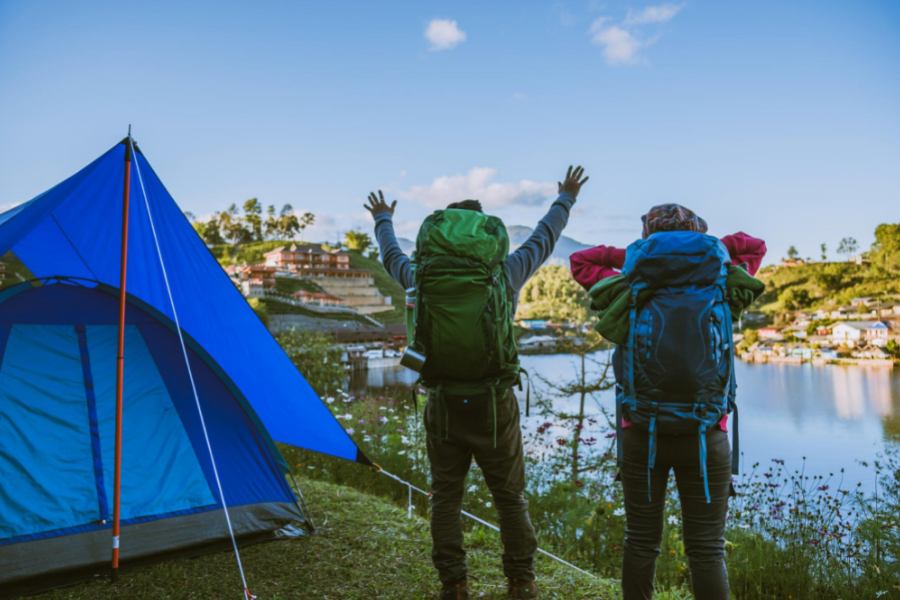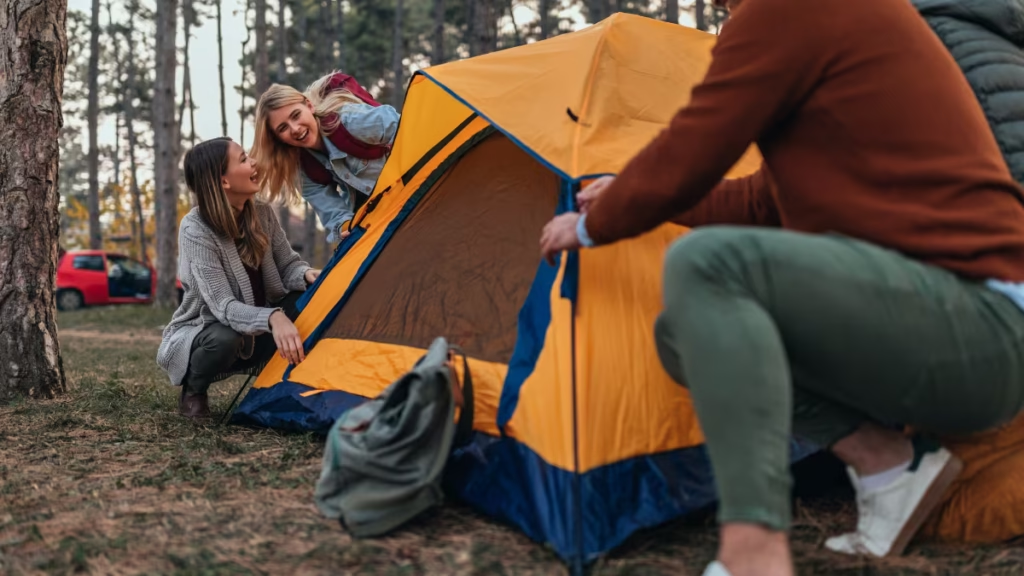
Can camping be a source of building a good relationship? Absolutely yes. Stepping away from the digital noise and into the woods is a powerful source of building a good relationship with the people who matter most.
While many view a tent or a camper as just a place to sleep, these small, shared spaces actually force us to communicate and cooperate in ways that daily life at home simply doesn’t allow. Whether it is navigating a trail together or successfully starting a campfire in damp weather, these shared challenges create a unique bond.
Camping, at its core, is a chance for friends and family to gather without the distraction of screens or schedules. It is about more than just fresh air: it is about the quiet conversations that happen around a fire when there is nowhere else to be.
By moving your interactions into the outdoors, you shift the focus from crossing off a to-do list to truly enjoying each other’s company. I have found that a single weekend in a remote campsite often results in a more meaningful connection than a month of casual dinners at home.
Does Camping Bring People Together?
Spending time in the wilderness acts as a natural reset for human connection by stripping away the daily distractions of modern life. When you leave behind the television and the constant lure of high-speed internet, you are forced to engage with those around you in a more meaningful way. This environment is a prime source of building a good relationship because it replaces passive entertainment with active cooperation.
Whether you are navigating a new trail or simply figuring out how to keep the rain out of a tent, these shared moments require a level of teamwork that rarely occurs in a traditional home setting.
The small, physical challenges of outdoor living catalyze conversation and laughter, proving that the most durable bonds are often formed when things do not go exactly as planned. Instead of retreating to separate rooms, family and friends are brought back into a communal circle where real communication can finally happen.
Why the Outdoors Facilitates Human Connection
The shift in environment acts as a natural reset for human dynamics. In a traditional household, family members often retreat to separate rooms or gravitate toward individual devices. In a campsite, the physical boundaries are smaller and the tasks are communal. This environment requires a level of teamwork that is rarely practiced in suburban life.
One of the most effective ways camping acts as a source of building a good relationship is through shared labor. Setting up a large canvas tent or leveling a travel trailer requires clear communication and physical coordination. When a sudden rainstorm hits, the group must work together to secure gear and keep the living space dry. These moments, while occasionally stressful in the heat of the moment, become the stories that people tell for years afterward. The shared victory of overcoming a small outdoor obstacle builds a sense of us against the world that strengthens trust.
The Campfire Effect
The campfire is perhaps the oldest social hub in human history. Without the blue light of a television or the constant pings of a smartphone, people naturally fall into a rhythm of storytelling and reflection. The crackle of wood and the lack of artificial lighting create a safe, intimate space where even the most reserved individuals feel comfortable sharing their thoughts.
I have noticed that children who are usually glued to tablets will sit for hours poked at embers, eventually opening up about their school life or their dreams in a way they never do at the dinner table.
The Power of the Digital Detox: Why No Wi-Fi is the Best Thing for Your Relationship
In recent times, the greatest threat to a healthy partnership is often the silent distraction of the smartphone. We spend our evenings in the same room, yet we are worlds apart, scrolling through separate digital feeds. This is exactly why camping can be a source of building a good relationship; it acts as a forced intervention against digital fatigue.
When you head into the backcountry where the signal is weak, you are forced to replace screen time with eye contact. Without the constant buzz of notifications or the temptation to check work emails, couples enter a state of soft fascination together. You begin to notice the small things again: the way the light hits the trees, the sound of the wind, and most importantly, what your partner is actually saying.
This break from the digital world allows for uninterrupted presence. Whether you are navigating a trail or just sitting in silence by the fire, you are experiencing the exact same reality at the exact same time. That shared presence is the foundation of emotional intimacy, and it is something that is nearly impossible to achieve in a house filled with high-speed Wi-Fi and smart devices.
Practical Strategies to Strengthen Bonds While Camping
If you want to ensure your trip serves as a meaningful source of building a good relationship, you must move beyond passive participation and embrace intentionality. It is not about filling every hour with a scheduled event; rather, it is about architecting the environment so that organic, high-value interactions can occur naturally.
The Ritual of the Communal Kitchen
In a modern home, meal preparation is often a solitary chore. At a campsite, it becomes a central ritual of cooperation. Instead of a single person handling the camp stove, treat the kitchen as a collaborative hub. One partner might manage the fire and temperature control, while another handles the preparation on the picnic table. This division of labor requires constant communication and active syncing, which subtly reinforces the idea that you are a functional unit capable of nourishing one another in a primitive setting.
Intentional Exploration over Strenuous Exercise
While many outdoor enthusiasts focus on the peak bagger mentality of high-mileage hikes, bond-building happens in the slow spaces. Engage in low-pressure exploration. Choose a pace that allows for side-by-side walking and open-ended conversation. When the heart rate is steady, and the scenery is changing, the brain enters a state of relaxation that makes it easier to discuss complex topics or share long-term dreams that get lost in the noise of everyday life.
There is a unique psychological benefit to shared navigation. Handing a map or a compass to a partner or a child and allowing them to lead the way, even if they take a wrong turn, is a powerful gesture of trust. It shifts the dynamic from a leader-follower relationship to one of mutual support and patience. The goal is to solve the puzzle of the landscape together, celebrating the arrivals and learning from the detours.
While the goal is a deeper connection, the reality of small-space living can occasionally lead to tension. A cramped camper van or a small tent during a sudden afternoon thunderstorm requires a specific type of emotional intelligence. The secret to maintaining a positive atmosphere is recognizing that this friction is not a failure of the relationship, but a natural part of the growth process.
Successful camping pairs understand the me time to we time ratio. Even in a small campsite, physical boundaries matter. Respecting a partner’s need for twenty minutes of quiet reflection or a solo walk away from the group isn’t a sign of distance; it is a maintenance tool for the relationship.
Just as a well-positioned roof vent in a camper prevents the air from becoming stagnant, these moments of individual space prevent the social atmosphere from becoming stifling. By allowing each person the room to breathe, everyone returns to the shared circle with a fresh perspective and a renewed capacity for empathy.
FAQ
Can camping help repair a strained relationship?
While it is not a cure-all, the removal of daily stressors like work emails and chores allows individuals to focus entirely on one another. The shared responsibility of outdoor living often forces a level of cooperation that can jumpstart better communication.
What if my family prefers different types of camping?
Compromise is key. If one person loves boondocking and another prefers a resort with a pool, try alternating styles. The act of trying something new for the sake of someone else is, in itself, a way to build a stronger bond.
How do I handle kids who are bored without electronics?
Boredom is actually the gateway to creativity and connection. Once the initial withdrawal from screens passes, children usually begin to explore the natural world, start projects with sticks and stones, and engage more deeply with the adults around them.
Finalizing Your Connection Strategy
This is ultimately about choosing people over distractions. When you step away from everyday comforts, what remains are the essentials that truly strengthen relationships: meaningful conversations, shared laughter, and the ability to rely on one another. These moments, often created around a campfire or during a quiet walk, build a level of connection that is harder to achieve in busy, screen-filled environments.
So, can camping be a source of building a good relationship? In many cases, it becomes one of the most effective ways to do it. The simplicity of outdoor living naturally encourages presence, patience, and teamwork, all of which carry over into daily life. What starts as a weekend escape can quietly shape stronger bonds, making both your trips and your life back home feel more grounded and connected.