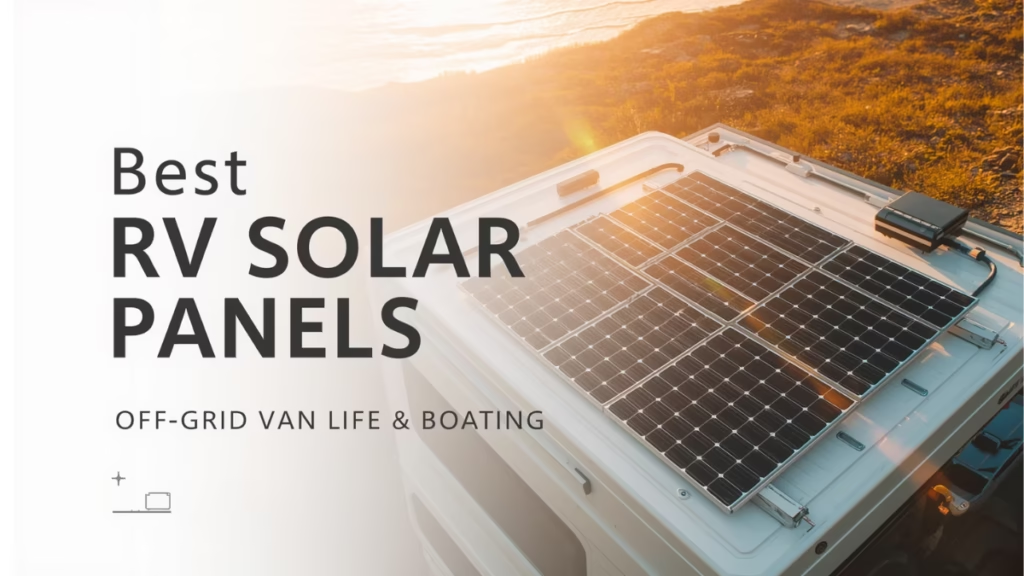
Transitioning to a life powered by the sun requires more than just buying the first glass or flexible sheet you find online. For those living in a van or spending months aboard a boat, power is the literal lifeline that keeps the refrigerator running and the navigation lights on. Choosing the best RV solar panels involves balancing space constraints, weight limits, and the harsh realities of salt spray or highway vibration.
I have spent many afternoons on a hot aluminum roof, and I can tell you that the difference between a high-quality array and a cheap one becomes clear the moment the clouds roll in. A common scenario involves a traveler parked in a remote desert wash during a heatwave. If the solar array cannot keep up with the draw of a high-efficiency 12V fridge and a couple of ventilation fans, the experience shifts quickly from a dream trip to a logistics headache. Understanding how different panel technologies handle heat and shading is the first step toward true energy independence.
How to Choose the Best RV Solar Panels
Selecting the right hardware depends heavily on your specific vehicle and where you plan to travel. While efficiency ratings are a helpful starting point, they do not tell the whole story of how a panel performs in the field.
-
Rigid vs. Flexible: Rigid monocrystalline panels are the gold standard for durability. They are encased in tempered glass and aluminum frames, making them ideal for flat RV roofs where airflow can circulate underneath to keep them cool.
-
Efficiency and Cell Type: Always look for monocrystalline cells over polycrystalline options. Monocrystalline panels are more efficient in smaller footprints, which is vital when roof real estate is limited.
-
Weather Resistance: For boaters, especially, the salt-mist rating is non-negotiable. Look for panels with high IP ratings for their junction boxes to prevent internal corrosion.
-
Shading Performance: Since a single shadow from a roof AC unit or a sailboat mast can significantly drop the output of an entire string, consider how the panels are wired.
Solar Panel Performance Comparison
This table provides a quick look at how the different technologies stack up against the real-world challenges of mobile living.
| Panel Type | Best Use Case | Durability | Heat Tolerance | Weight |
| Rigid Monocrystalline | Standard RV Roofs | Exceptional | High (with air gap) | Heavy |
| Flexible Thin-Film | Curved Vans / Biminis | Moderate | Low (traps heat) | Ultra-Light |
| Portable Suitcase | Shaded Camping | High | Excellent | Moderate |
| Small Format (50W) | Fill-in gaps | High | High | Light |
Top Rigid Solar Panels for Maximum Durability
Rigid panels remain the most popular choice for long-term travelers because they offer the best value and last for decades. These are typically mounted using Z-brackets that create a gap between the roof and the panel.
In my experience, that air gap is a secret weapon. When the sun is beating down on a roof in Baja, a panel that is bolted directly to the surface will lose efficiency as it heats up. I always prefer a raised mount that allows the breeze to pull heat away from the cells, as this maintains a higher voltage output during peak sun hours.
High-Output Monocrystalline Frames
Most standard RV installations benefit from 100-watt or 200-watt rigid frames. These units are built to withstand hail and heavy winds at highway speeds. In a practical sense, a 400-watt rooftop array is often enough to maintain a modest battery bank even on overcast days.
Flexible Solar Panels for Stealth and Curves
For many van lifers, maintaining a low profile is essential for staying unnoticed in urban environments. Flexible panels sit nearly flush with the roof, making them almost invisible from the ground.
Beyond aesthetics, flexible panels weigh significantly less than their glass counterparts. This is a major advantage for smaller builds where every pound counts toward the vehicle’s weight limit. However, because they lack an air gap, they can lose efficiency on extremely hot days. A smart workaround I have used is to apply a specialized adhesive in a pattern that allows a tiny amount of heat dissipation rather than gluing the entire surface flat.
The Field-Tested Efficiency Checklist
Before you finalize your purchase, use this checklist to ensure you are not missing the small details that cause system failures on the road:
-
Check the Bypass Diodes: Ensure the panels have quality diodes. This allows the rest of the panel to keep working if one section is shaded by a roof vent.
-
Verify the Junction Box: Look for a box that is fully potted with resin. This prevents vibration from shaking the wires loose on washboard roads.
-
Inspect the Frame Anodizing: For coastal travel, the aluminum frame must be thick and well-anodized to resist the pitting caused by salt air.
-
Wire Gauge Compatibility: Ensure the pre-installed MC4 leads are thick enough to handle the current without excessive voltage drop over long runs.
Portable Folding Kits for Shaded Camping
Sometimes the best campsite is tucked deep under a grove of trees where rooftop panels cannot see the sun. This is where portable folding kits become invaluable. A portable suitcase-style panel allows you to park your rig in the shade while placing the glass out in the direct light.
I always carry a 100-watt portable kit as a supplement to my roof array. Being able to angle a panel directly toward the winter sun can result in 30 percent more power than a flat-mounted roof panel during the shorter days of the year.
FAQ
How many watts of solar do I need for an RV?
Most weekenders find that 200 watts is sufficient for lights and water pumps. However, if you are working remotely or running a compressor fridge, 400 to 600 watts is a safer baseline to ensure the batteries stay topped up.
Can I mix different brands of solar panels?
Yes, as long as the voltage ratings are similar. It is usually best to stick with the same brand and model to ensure the internal resistance and output match perfectly, but a quality MPPT controller can handle minor variations.
Do solar panels work in the rain?
They still produce power during rainy or cloudy weather, but at a much lower rate. Expect your output to drop significantly compared to a clear sky.
Finalizing Your Mobile Energy Strategy
A robust solar setup is the foundation of a comfortable mobile lifestyle. Once the panels are installed, the next logical step is ensuring your storage capacity matches your production. Choosing the best RV solar panels is only half the battle: you also need a way to store that energy for the night.
Readers exploring solar options often also research solar energy systems and battery storage to complete their off-grid setup. This combined approach ensures that whether you are on a boat or in a van, you have the power to stay out as long as you desire.
Would you like to explore how to choose the right lithium battery bank to pair with these solar panels?