Effective emergency communication for off-grid living is the ultimate safety net for those who venture beyond the reach of traditional cell towers. When the grid goes dark, or you find yourself in a cellular dead zone, your ability to call for help or receive weather alerts can be a literal lifesaver. From satellite-linked messaging to resilient local radio networks, modern comms gear ensures that off-grid never has to mean out of touch.
The Satellite Revolution: Messaging from Anywhere
For the modern nomad or remote dweller, satellite technology has become the primary line of defense.
-
Satellite Messengers: Devices like the Garmin inReach or Zoleo allow for two-way text messaging and SOS triggers via the Iridium satellite network. They work where cell phones fail.
-
Smartphone Integration: Many modern mobile devices now include basic satellite SOS features as standard hardware, bridging the gap between everyday tech and emergency gear.
Radio Basics: Monitoring the Skies
When digital networks fail, analog radio remains the most reliable source of information.
-
NOAA Weather Radio: A dedicated weather radio with a hand-crank or solar backup is essential for receiving real-time alerts on approaching storms or wildfires.
-
GMRS and HAM Radio: For those deeper in the wild, GMRS (General Mobile Radio Service) provides excellent local communication between a base camp and hikers, while HAM radio offers long-range capabilities for those with the proper licensing.
Keeping Your Devices Powered During Outages
Communications gear is only as good as the battery behind it. A resilient comms plan must include dedicated power backups.
-
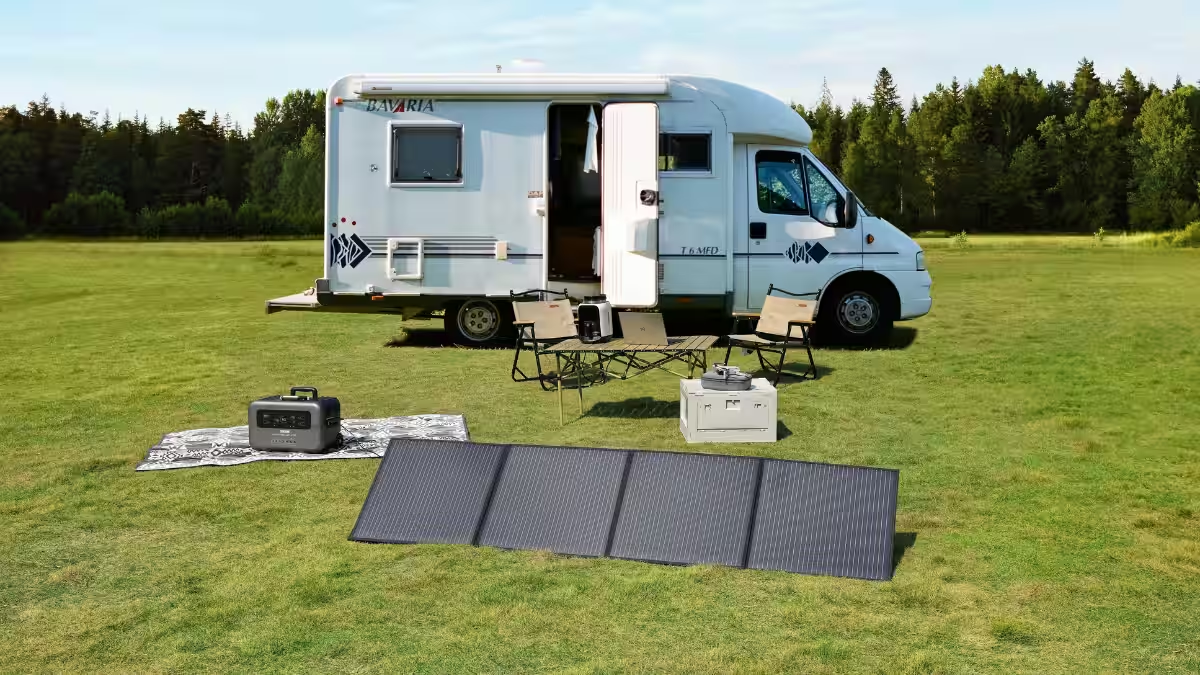
Portable Power Stations: Small, dedicated lithium power banks kept specifically for your radios and satellite devices ensure they are ready when your main house batteries are low.
-
Folding Solar Panels: High-efficiency, 20W to 60W folding panels allow you to charge small electronics directly from the sun, providing an infinite energy loop for your communication devices.
Building a Real-World Emergency Communication Protocol
Owning the right devices is only half the equation. True emergency communication for off-grid living depends on having a clear, repeatable protocol long before something goes wrong.
Start with scheduled check-ins.
If you live remotely or travel deep into low-signal areas, establish a predictable communication window with someone off-site. This could be daily, twice weekly, or aligned with weather events. Missed check-ins should trigger a pre-agreed response timeline, not immediate panic, but not indefinite waiting either.
Next, define escalation tiers.
Not every issue requires activating an SOS beacon. A layered response plan might look like this:
Minor issue: Send a standard satellite message update.
Moderate concern: Request assistance from your designated contact.
Life-threatening emergency: Trigger SOS via satellite messenger or radio distress protocol.
Clarity reduces hesitation during high-stress situations.
Message discipline also matters.
Keep emergency messages concise and standardized. Include:
-
Location coordinates
-
Nature of issue
-
Immediate needs
-
Number of people involved
In remote environments, ambiguity wastes critical time.
Finally, rehearse the system.
Test your satellite messenger quarterly. Conduct a radio check with your GMRS or HAM setup. Rotate power backups. Practice sending coordinates from your phone without cellular data. Emergency communication for off-grid living must be treated like a fire drill, not an afterthought.
The wilderness rewards preparation. A written protocol transforms your gear into a coordinated safety network.
The Off-Grid Communication Checklist
-
Redundancy: Do I have at least two different ways to send a message (e.g., Satellite and Cell)?
-
Power Check: Are my emergency radios and messengers kept at 80% charge or higher at all times?
-
Contact Plan: Have I designated a Point of Contact back on the grid who knows my check-in schedule?
-
Offline Maps: Have I downloaded local topographic and road maps to my devices for use when there is no data?
Further Reading
NOAA Weather Radio All Hazards – A government-run emergency broadcast service that provides real-time weather and civil alerts directly to radios even when other networks fail.
National Interoperability Field Operations Guide (NIFOG) – A comprehensive reference used by emergency communication professionals for disaster planning, radio frequencies, and interoperability protocols.
Conclusion: The Connected Nomad
Mastering emergency communication for off-grid living isn’t about fear; it’s about freedom. Knowing that you can reach out for help or receive critical updates allows you to push deeper into the wild with confidence. By balancing modern satellite tech with time-tested radio protocols, you ensure your sanctuary remains safe and informed.
Just as a hardened perimeter protects your physical sanctuary, a structured communication protocol protects your connection to the outside world, completing the modern off-grid safety system. Read next: How to Secure a Remote Off-Grid Site.