The self-sufficient lifestyle transition is more than a relocation or a new hobby. It is a deliberate shift from being primarily a consumer to becoming a capable producer. In an era of rising infrastructure costs, volatile supply chains, and increasing dependency on centralized systems, self-sufficiency offers something rare: stability built by your own hands.
At Selfcampers, we see this not as isolation, but integration. The skills learned from RVing, tiny homes, camping, and small-space living all converge here. This hub serves as your foundational roadmap, integrating off-grid power, regenerative food production, financial resilience, and practical skill mastery into one actionable framework.
Welcome to the bridge between lifestyle and autonomy.
The Five Core Pillars of Autonomy
A successful self-sufficient lifestyle transition is not built in a single area. It requires balanced development across five core systems.
1. Food Sovereignty
Food is your first layer of independence.
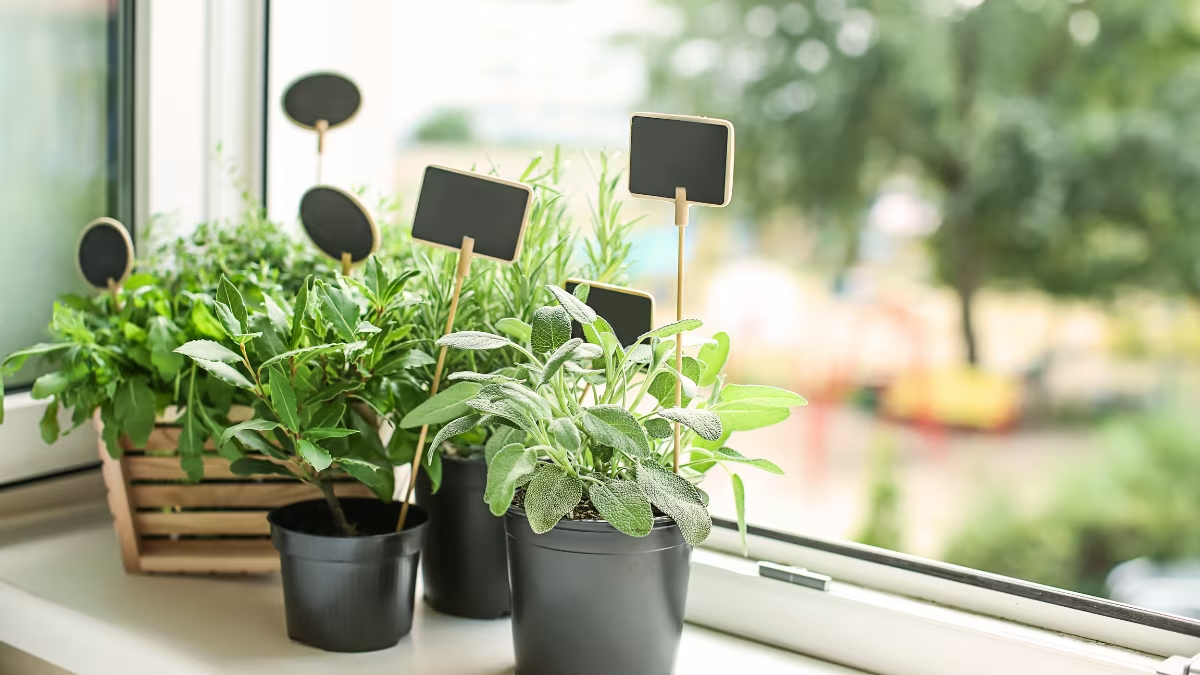
Start with easy-win crops such as leafy greens, herbs, chilies, and microgreens. These provide fast results and build confidence. Progress toward calorie-dense staples such as potatoes, beans, squash, and grains as space and skill increase.
For deeper growing systems and botanical strategy, refer to Learning with Experts: Steps to Self-Sufficiency, which offers expanded frameworks for regenerative gardening and seasonal planning.
The goal is not perfection. The goal is participation in your own food supply. Example: For those with limited space, check out our guide on the best high-calorie crops for small spaces to start growing your own food security today.
2. Water Security
Water is non-negotiable.
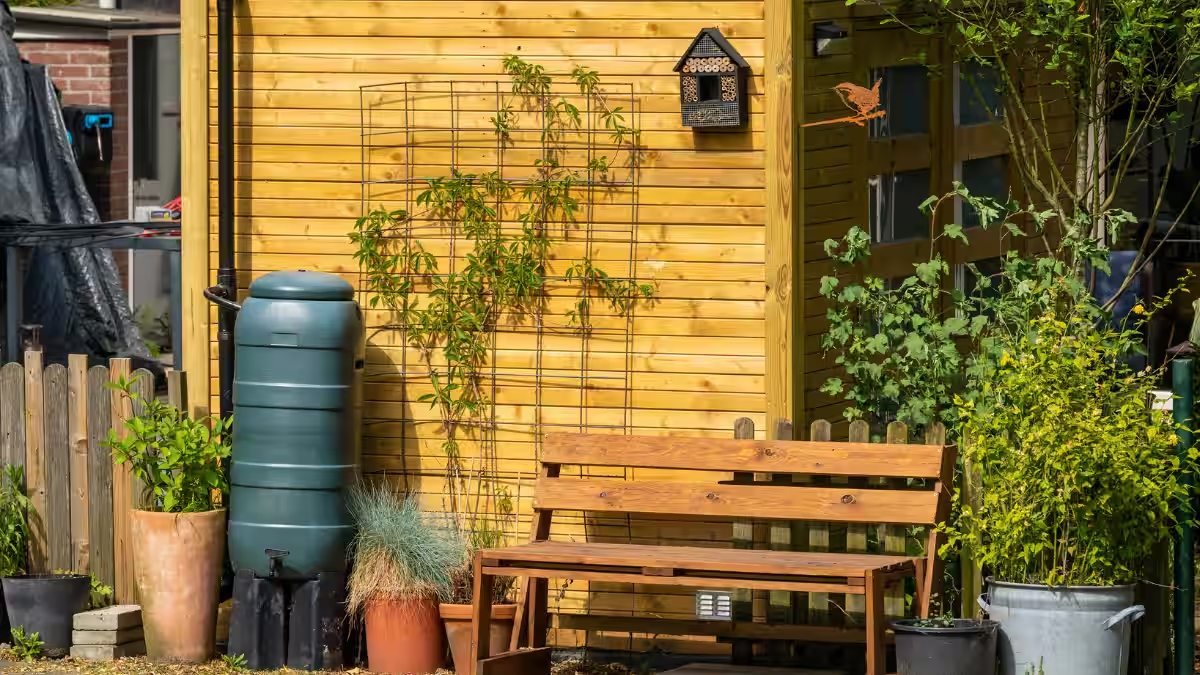
Begin small with rainwater collection systems and filtration. As you scale, explore gravity-fed spring systems, storage tanks, and redundancy planning. Even urban dwellers can reduce dependency through rain barrels and greywater awareness.
Self-sufficiency starts when you understand your own consumption patterns.
3. Energy Independence
Power determines comfort and capability.
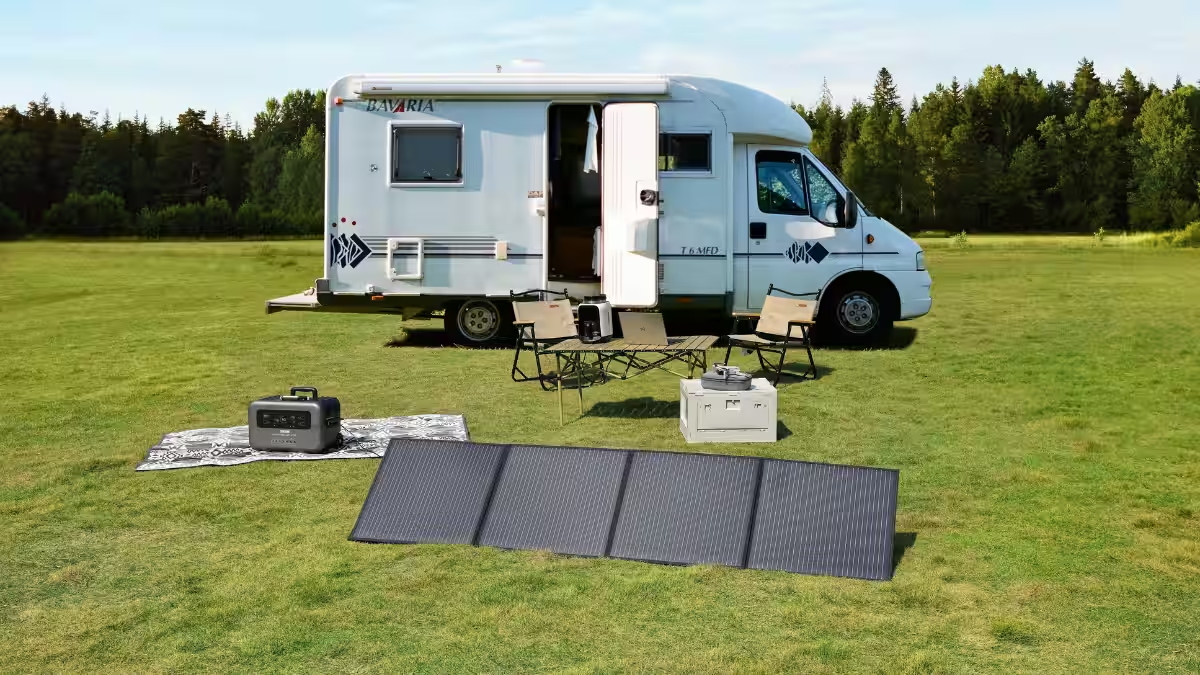
Portable solar generators, rooftop solar arrays, battery banks, and hybrid inverter systems allow you to operate outside the traditional grid. The same systems that power RVs and tiny homes scale effectively into homestead settings.
Energy independence is not about rejecting utilities. It is about building resilience and optionality.
4. Financial Frugality
No system survives under debt pressure.
The first 90 days of your self-sufficient lifestyle transition should focus on eliminating consumer debt, reducing fixed expenses, and cutting unnecessary subscriptions.
Minimalism is not aesthetic. It is strategic.
When your financial obligations decrease, your flexibility increases.
5. Skill Handiness
Autonomy depends on competence.
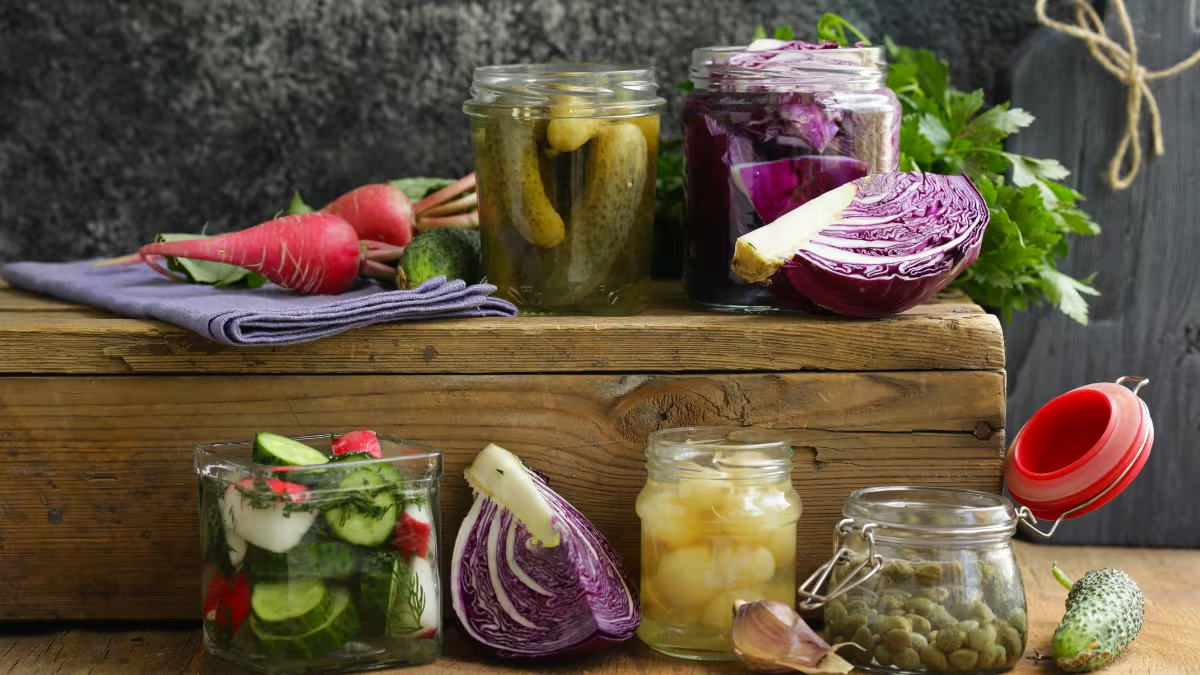
Basic mechanical repair, sewing, food preservation, first aid, tool maintenance, and troubleshooting are foundational.
For those looking to expand into herbalism and wildcraft knowledge, The Outdoor Apothecary: Resources for Beginners provides practical entry points into plant-based resilience skills.
The objective is simple: reduce the number of problems that require outside intervention.
The 12-Month Transition Roadmap
A self-sufficient lifestyle transition should be phased, not rushed.
| Phase | Focus Area | Essential First Step |
|---|---|---|
| Months 1–3 | Financial & Mental | Eliminate debt and define your autonomy goals. |
| Months 4–6 | Skill Base | Start a garden anywhere, even a windowsill. |
| Months 7–9 | Infrastructure | Install rain collection and a portable solar bank. |
| Months 10–12 | Full Integration | Learn preservation: canning, dehydrating, fermenting. |
This phased model prevents overwhelm and ensures steady momentum.
For those planning to scale toward acreage or mechanized systems, Yanmar Tractor: Creating a Self-Sufficient Homestead offers insights into equipment selection and land-based scaling strategies.
Essential Pro Tactics for New Producers
Embrace the One-In, One-Out Rule
In small spaces such as RVs and tiny homes, efficiency collapses when clutter grows. Every item must justify its presence. Replace instead of accumulate.
Eat With the Seasons
Stop fighting climate cycles. Build your meals around what is ready now. Seasonal eating reduces cost, improves nutrition, and synchronizes you with your environment.
Practice Community Barter
Self-sufficiency does not mean isolation. Trade surplus eggs for honey. Exchange carpentry skills for help during harvest. Resilience is strengthened through local networks.
Frequently Asked Questions
Do I need a farm to begin?
No. You can start in a studio apartment with vertical greens, scratch cooking, waste reduction, and portable solar tools.
Self-sufficiency is a mindset before it is acreage.
How much land is required for full food autonomy?
You can grow significant produce on one acre. Full caloric independence for a family often requires closer to five acres, depending on climate and livestock integration.
What is the hardest part of the transition?
Breaking the consumer mindset.
The reflex to buy instead of build is deeply conditioned. The shift to problem-solving through skill rather than spending is the true transformation.
The Bigger Picture
The self-sufficient lifestyle transition is not about retreating from society. It is about regaining agency within it.
Camping teaches resourcefulness.
RVing teaches system efficiency.
Tiny homes teach spatial intelligence.
Small spaces teach discipline.
The Self-Sufficiency Lab integrates them into one cohesive lifestyle model.
This is not about survivalism.
It is about sovereignty.
Explore our Free tools.