Traditional self-reliance habits are the quiet engine behind a successful off-grid life, acting as the foundation for how we approach life and travel here at Selfcampers. Long before minimalism was a trending hashtag, my grandmother lived these principles every single day out of pure necessity. We’ve found that the secret to modern freedom often lies in the common sense of the past, proving that the best gear you can own is a disciplined mindset.
Why Traditional Self-Reliance Habits Beat Modern Gadgets
In the modern world, we are taught that every problem has a product solution. If your kitchen is messy, buy a bin. If your clothes are torn, buy a new outfit. But in a tiny home, RV, or boat, you quickly realize that you cannot buy your way into organization or independence.
I’ll be honest, last year, I bought a specialized multi-tool for the RV kitchen that promised to replace 10 items. It broke in three weeks. That was my wake-up call to go back to my grandmother’s ‘Buy Once, Cry Once’ rule.
My grandmother understood that true autonomy comes from what you can do, not what you can purchase. By adopting traditional self-reliance habits, you stop being a consumer and start being a curator of your own life.
Selfcamper Pro Tip: If you want to master the specific techniques my grandmother used, check out our full guide to 10 Forgotten Skills for Self-Sufficiency Mastered.
What Traditional Self-Reliance Really Means in Modern Tiny Living
Self-reliance does not mean rejecting modern tools. It means reducing dependency on unnecessary systems.
In a tiny home, RV, or off-grid setup, every resource is limited. Power is finite, storage is intentional, and space rewards simplicity. Traditional self-reliance habits work because they shift your focus away from constant consumption and toward capability.
Instead of asking:
What should I buy to solve this problem?
You begin asking:
What skill or habit removes this problem entirely?
This mindset reduces clutter before it starts and builds resilience into your daily routine. Whether you are managing limited pantry space, maintaining gear on the road, or adapting to changing environments, the goal is not perfection. The goal is adaptability.
5 Time-Tested Traditional Self-Reliance Habits for Small Spaces
To succeed in your self-sufficient lifestyle transition, you don’t need a bigger trailer; you need better habits.
Many people exploring self-reliant lifestyles also wonder whether it’s possible to live in a camper year-round, especially in colder climates.
Here are the five pillars of her minimalist lifestyle that we still use in the Lab today.
1. Mending Over Replacing
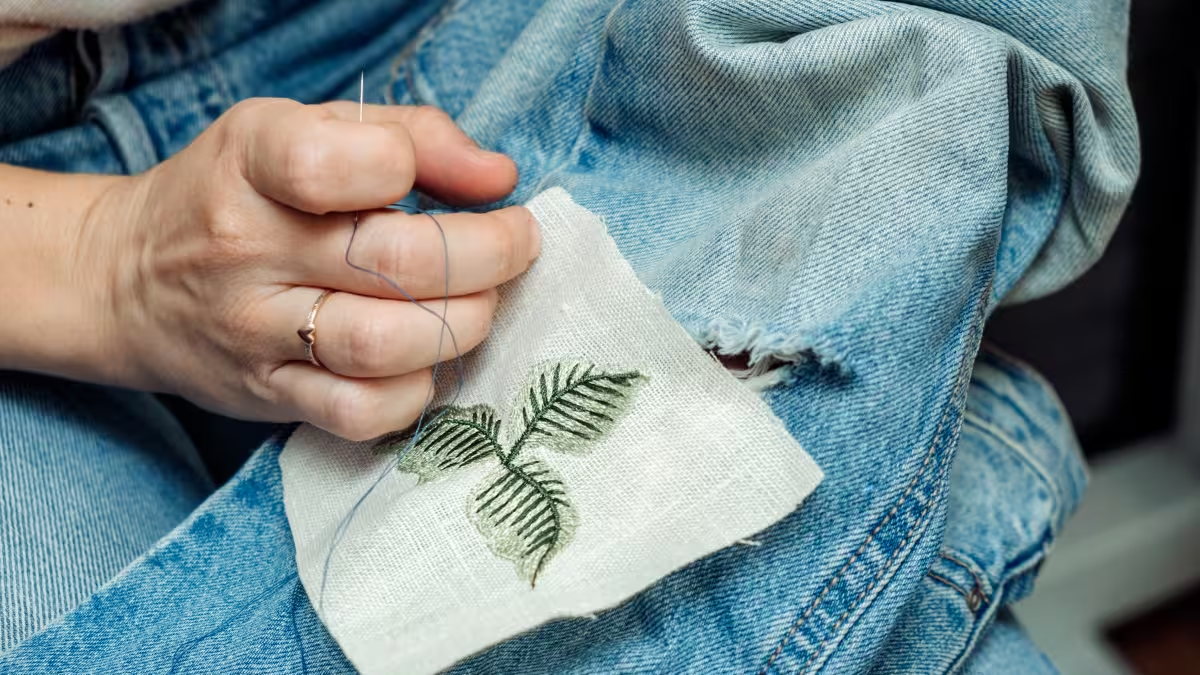
My grandmother never threw away what could be fixed. Whether it was a loose button or a leaky bucket, her first instinct was to reach for a tool, not a catalog. Today, I carry that same mindset into my own life on the road.
I recently sat on the floor of my van and mended a tear in my favorite hiking trousers instead of hitting ‘Buy Now’ on a replacement. It took 15 minutes, but that $80 stays in my travel fund. My grandmother’s voice was in my head the whole time.
This habit does more than just reduce waste; it ensures that your gear actually lasts a lifetime. In a van or RV, where space is at a premium, owning five pairs of cheap pants is a liability. Owning one high-quality pair that you know how to maintain is a superpower.
2. Seasonal Living and Food Rhythms
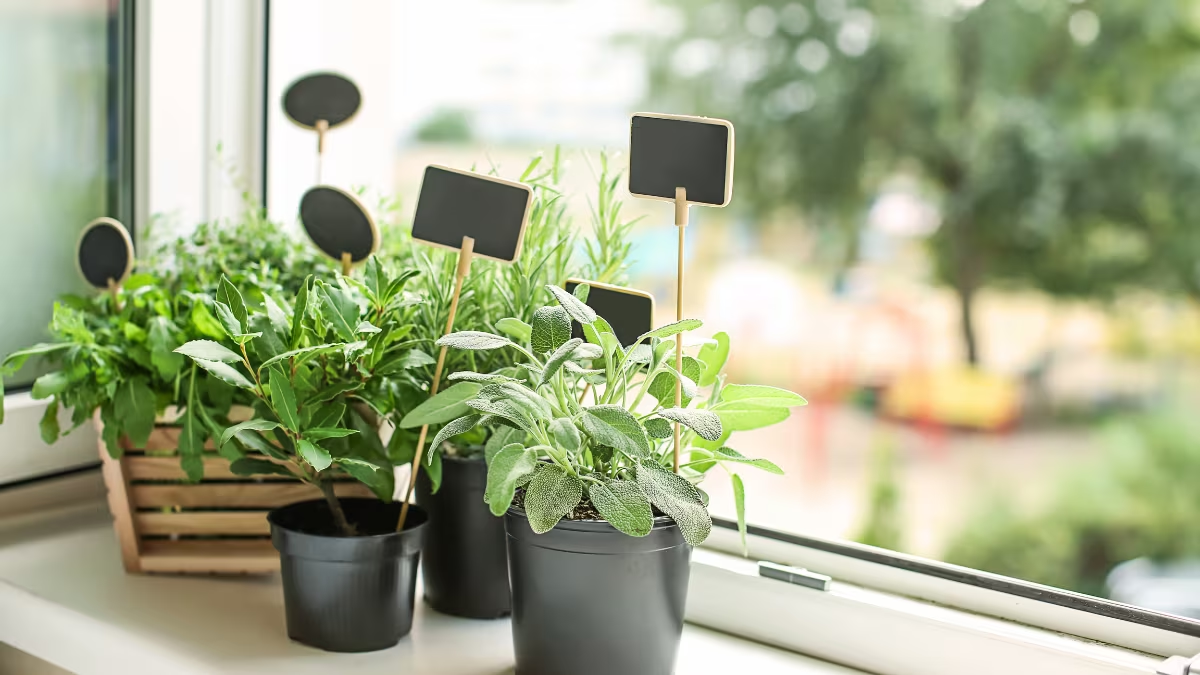
Her kitchen followed the rhythm of the garden, not the supermarket. By eating what was in season and preserving the rest, she maintained food sovereignty without needing a massive pantry.
3. Strict Inventory Discipline
She practiced minimalist organizing for small spaces long before it had a name. She knew exactly how many towels, plates, and blankets she had. If the allotted spot for an item was full, nothing new could enter.
4. Resourceful Repurposing
A glass jar was never trash in her house; it was a future storage tool for seeds or a sturdy cup for the porch. This habit teaches you to see the utility in everything you touch.

5. Investing in Quality (Buy Once, Cry Once)
She owned one cast-iron skillet that lasted her 60 years. She taught me that buying the highest quality version of an item once is always cheaper and less cluttered than buying a cheap replacement every year.
How These Habits Translate to Modern RV and Tiny Home Life
| The Old Way (Grandmother’s Era) | The Modern Struggle (Consumerism) | The Selfcampers Pro Way (Habit Reset) |
| Darning a wool sock | Tossing it and ordering a 10-pack | Mending gear to protect your travel fund |
| Pantry Inventory | Overbuying just in case | Strict One-In, One-Out discipline |
| The Heirloom Skillet | Buying 5 cheap non-stick pans | Investing in 1 piece of Buy Once gear |
Traditional habits are not nostalgia. They are practical systems that fit perfectly into mobile living.
Here’s how they show up today:
-
Mending over replacing reduces weight and saves storage space.
-
Seasonal living aligns naturally with limited fridge and pantry capacity.
-
Strict inventory discipline prevents gear overload during travel.
-
Repurposing reduces waste when resupply options are limited.
-
Investing in quality minimizes breakdowns when you are far from repair shops.
The surprising truth is that tiny living often forces us back toward older wisdom. When resources are finite, efficiency becomes instinctive.
A Quick Chat (FAQ)
Is this lifestyle too time-consuming for a modern traveler?
It actually saves time! When you have fewer things to manage and your habits are streamlined, you spend less time shopping and organizing and more time enjoying the outdoors.
How do I start building these habits?
Pick one. Start with Mending. The next time something small breaks, challenge yourself to fix it. That small win builds the self-sufficiency muscle you need for bigger off-grid challenges.
The 30-Day Self-Reliance Habit Reset (Simple Starter Plan)
If you want to build these habits without overwhelm, start small.
Week 1: Practice mending instead of replacing one item.
Week 2: Audit your inventory and remove duplicates.
Week 3: Repurpose three everyday objects instead of discarding them.
Week 4: Identify one buy once upgrade that replaces multiple items.
This gradual approach turns self-reliance into a lifestyle rather than a one-time challenge. Resourceful repurposing even applies to your utilities. I’ve used my grandmother’s principles to design my Off-Grid Lighting Setup, using items that serve dual purposes.
Conclusion: The Legacy of Less
Adopting traditional self-reliance habits isn’t about living in the past; it’s about using the past to build a better future. When we choose quality over quantity and repair over replacement, we reclaim our independence. My grandmother wasn’t just a minimalist; she was a pioneer of the intentional life we are all striving for today.