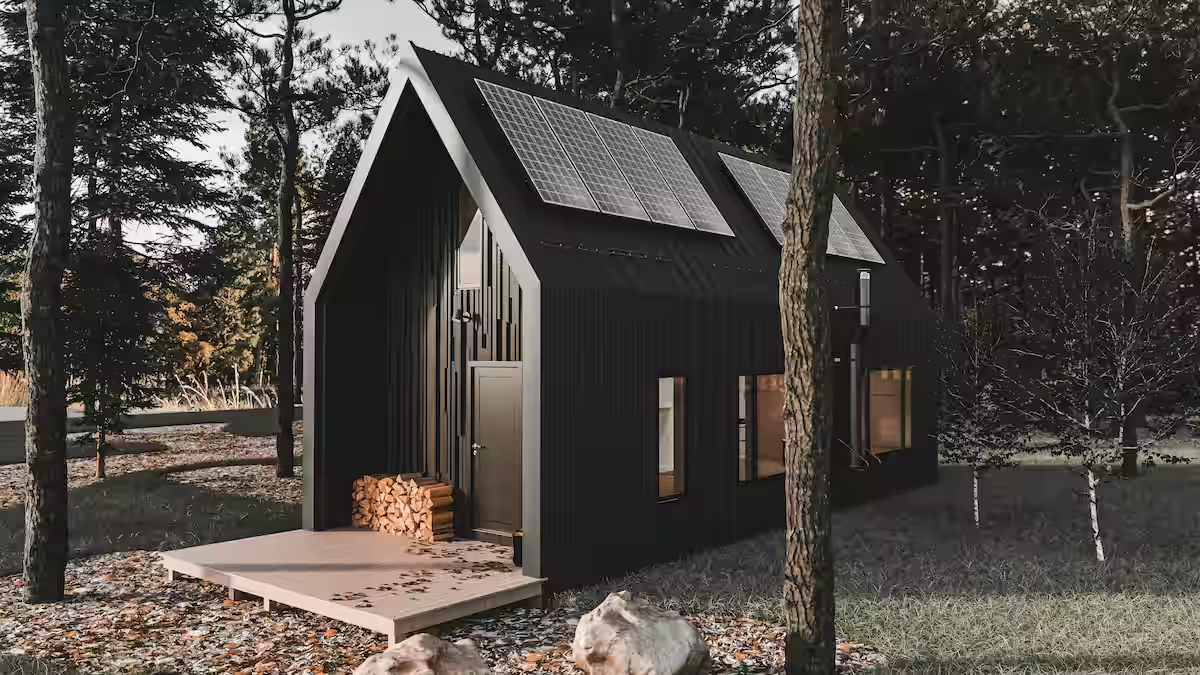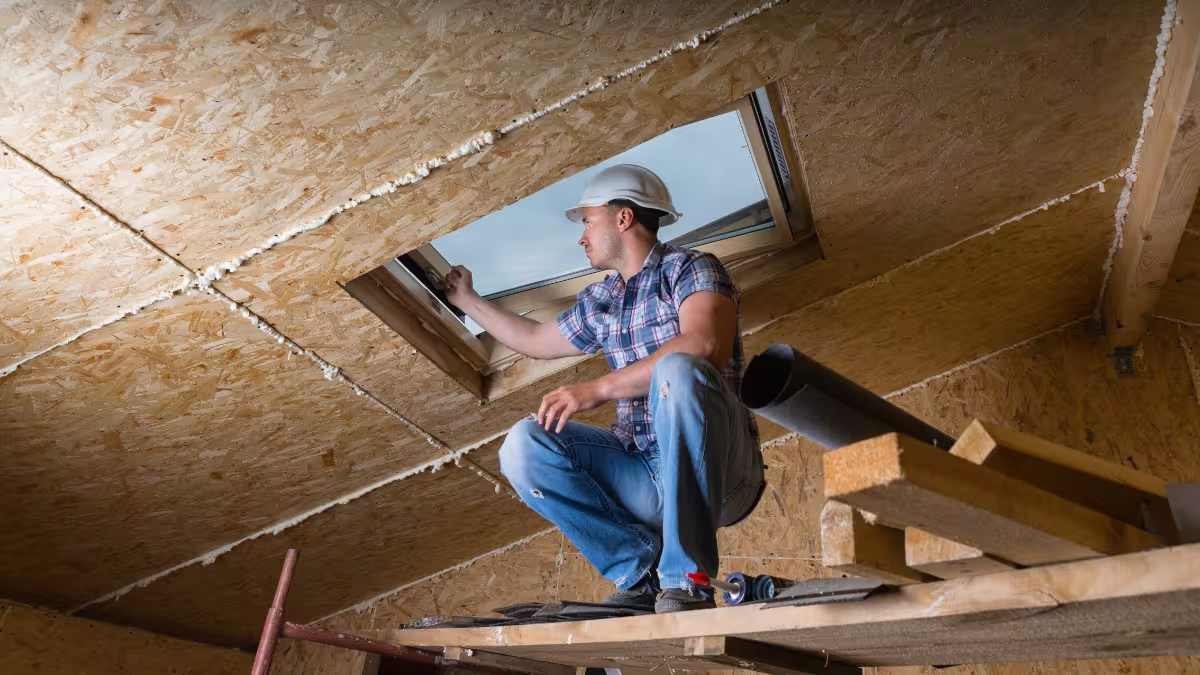
Virginia offers a compelling landscape for the tiny home movement, blending historic charm with a forward-thinking approach to modern housing. From the suburban lots of Northern Virginia to the rural expanses of the Shenandoah Valley, the state provides diverse opportunities for small-scale living. Finding the best tiny home builders in Virginia requires identifying partners who can navigate a decentralized regulatory environment while engineering homes that handle everything from humid Atlantic summers to freezing Appalachian winters.
How to Choose the Best Tiny Home Builders in Virginia
When selecting a builder in Virginia, your primary focus should be on their familiarity with the Virginia Uniform Statewide Building Code (USBC) and Appendix Q. If you plan to place your home in an urban area like Richmond or Norfolk, ensure your builder has experience with Accessory Dwelling Unit (ADU) permitting, as these cities have specific design and utility connection requirements. For those heading to the mountains, prioritize high-performance insulation like closed-cell spray foam and roof structures rated for significant snow loads. Always verify that a builder of mobile units provides RVIA or NOAH certification, which is often the only way to secure insurance and legal placement in many Virginia counties.
The Tiny Home Movement in Virginia
Virginia’s approach to tiny homes is increasingly progressive. The state was one of the first to formally adopt Appendix Q into its residential code, which provides legal standards for homes under 400 square feet on permanent foundations.
While the state sets the baseline, local jurisdictions like Fauquier County and Buckingham County have become known as some of the most accommodating regions for tiny dwellers. Furthermore, the push for affordable housing has led cities like Richmond to embrace ADUs, allowing homeowners to add small, secondary residences to their backyards.
Climate and Design: Versatility for the Mid-Atlantic
Virginia experiences a true four-season climate, demanding a versatile approach to home design.
-
Humidity Mitigation: Like much of the South, Virginia faces intense summer humidity. Professional builders in the state focus on high-quality vapor barriers and Energy Recovery Ventilators (ERVs) to maintain air quality and prevent mold in tight quarters.
-
Winter Readiness: In the Shenandoah Valley and higher elevations, winter temperatures often dip well below freezing. Reputable Virginia builders emphasize thermal breaks and high-R-value insulation to keep heating costs low and pipes protected.
-
Storm Resilience: For coastal placement near Virginia Beach or the Eastern Shore, wind resistance is paramount. Ensure your home is engineered for high wind loads and, if on wheels, equipped with a heavy-duty anchoring system.
Featured Tiny Home Builders in Virginia
1. Backyard Homes Building Company
Based in the greater Washington D.C. region, Backyard Homes specializes exclusively in detached Accessory Dwelling Units (ADUs). They offer a streamlined, professional process that includes everything from design and permitting to final utility hookups.
-
Location: serving Virginia and D.C.
-
Specialty: Detached ADUs and small second homes.
-
Why They Stand Out: They handle the complex permitting and site work that often discourages homeowners from building in suburban areas.
-
Best Suited For: Homeowners in Northern Virginia looking to add a legal, high-quality rental or family unit to their property.
2. Carbide Construction
While they are known for modular additions, Carbide Construction has become a leader in the Virginia modular tiny home market. Their homes are built in climate-controlled environments and delivered as finished units.
-
Location: Alexandria, VA (serving Northern Virginia to Richmond).
-
Specialty: Modular tiny homes and ADUs.
-
Why They Stand Out: Their modular approach allows for a faster build time and often costs significantly less than traditional site-built construction while maintaining rigorous quality standards.
-
Best Suited For: Those who want a permanent, foundation-built home with a predictable timeline and budget.
3. Wind River Built (Serving Virginia)
Wind River is a regional favorite that delivers many homes to Virginia. They are masters of the hybrid lifestyle, building homes that feel like permanent residences but maintain the mobility of a tiny home on wheels.
-
Location: Regional Delivery to Virginia.
-
Specialty: High-performance THOWs and precision-built ADUs.
-
Why They Stand Out: They use 2×4 framing and spray foam insulation as standard, making their homes some of the most energy-efficient options available for the Virginia climate.
-
Best Suited For: Individuals looking for a durable, four-season home that can be moved or placed permanently.
Zoning and Legal Realities in Virginia
Virginia’s legal landscape is balanced but decentralized.
-
Permanent Tiny Homes: These are governed by the Virginia Residential Code and Appendix Q. They must be on permanent foundations and are typically treated as real property for tax purposes.
-
Tiny Homes on Wheels (THOWs): These are generally classified as Recreational Vehicles (RVs). In counties like Buckingham, they are more freely permitted, while in urban areas, they are often restricted to RV parks or temporary use.
-
ADU Ordinances: Cities like Arlington and Richmond have established clear permitting pathways for ADUs, though they often require the unit to match the architectural style of the primary home.
Practical Insight: A homeowner in Richmond found that while the city allowed ADUs, they required a separate sewer tap for the tiny home. By working with a builder familiar with local utility codes early in the design phase, they were able to budget accurately for the $5,000 infrastructure fee before construction began.
Expected Cost Ranges in Virginia
Virginia’s market reflects its diverse economy, with pricing varying significantly between the rural south and the affluent northern counties.
| Home Type | Typical Price Range |
| DIY Shell / Basic Kit | $30,000 – $55,000 |
| Mid-Range Turnkey Build | $75,000 – $120,000 |
| Luxury / Custom Modular ADU | $150,000 – $220,000+ |
FAQ: Tiny Living in the Old Dominion
Are tiny homes legal in Virginia?
Yes. Permanent tiny homes are legal statewide under Appendix Q. The legality of tiny homes on wheels varies by county, with some being very permissive and others restricting them to RV parks.
Can I build a tiny home in my backyard in Virginia?
In many jurisdictions, yes, as an Accessory Dwelling Unit (ADU). You will need to comply with local zoning regarding setbacks, height limits, and utility connections.
Does Virginia require a foundation for tiny homes?
For a tiny home to be considered a legal, permanent primary residence, most counties require it to be positively anchored to a footing and foundation system.
Nearby Tiny Home Builder Guides
If Virginia doesn’t fit your plans, explore the builders and laws in neighboring states within the mid-Atlantic and Southeast clusters.
-
Best Tiny Home Builders in Maryland
-
Best Tiny Home Builders in West Virginia
You can also explore our complete national directory of Tiny Home Builders in the USA to compare builders by state, climate zone, and building style before making a final decision.
Exploring the Tiny Lifestyle
Transitioning to small-space living in Virginia is a journey of both design and legal discovery. To help you prepare, we recommend reviewing our guide on Tiny Home Parking Laws. If you are considering an off-grid setup in the Blue Ridge Mountains, our resource on Off-Grid Power for Tiny Homes will help you size a system for reliable year-round energy.