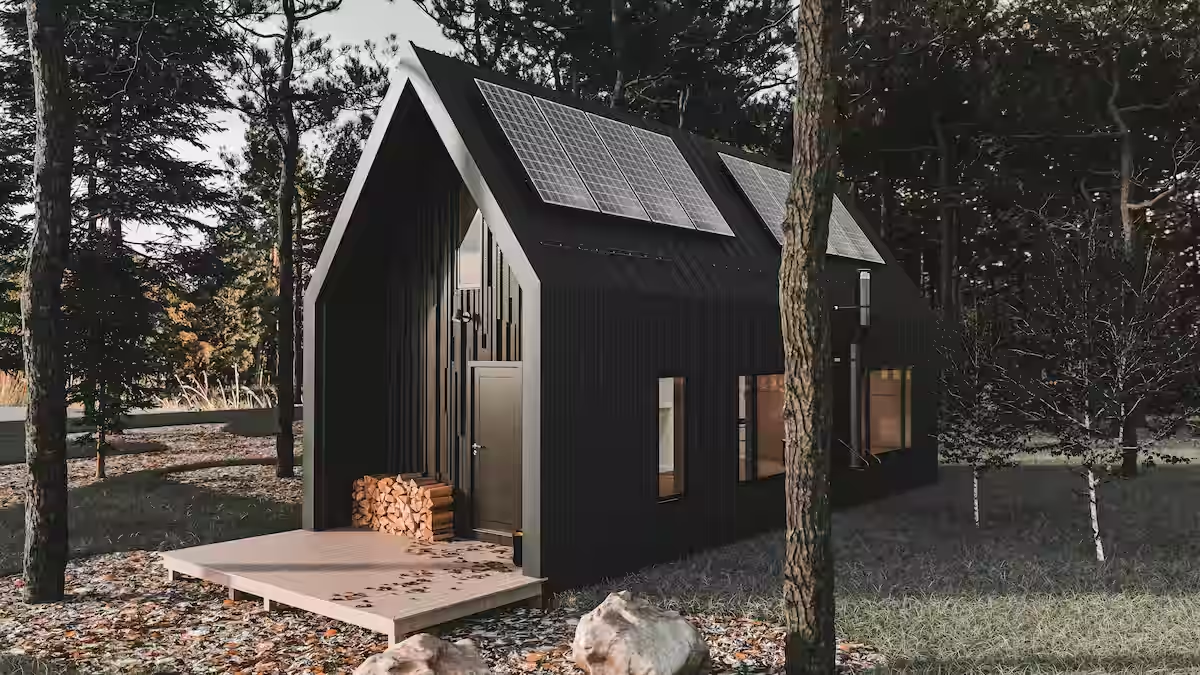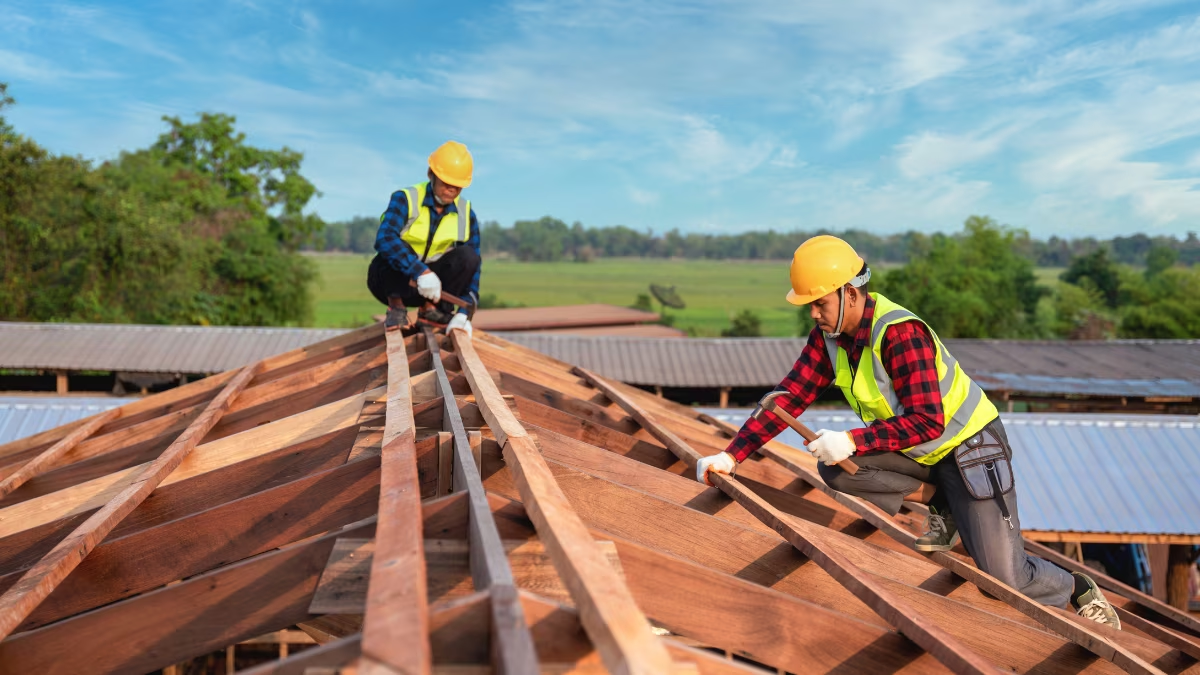
West Virginia, with its rugged mountains and vast forested valleys, is a natural fit for the tiny home lifestyle. Known as the Mountain State, it offers some of the most scenic and affordable land in the eastern United States, making it a prime location for those seeking off-grid independence or a quiet cabin retreat. Finding the best tiny home builders in West Virginia involves looking for professionals who specialize in mountain-ready durability and who understand the state’s decentralized approach to zoning and building codes.
How to Choose the Best Tiny Home Builders in West Virginia
When evaluating builders in West Virginia, your first priority is site-specific engineering. If you are building in the higher elevations of the Potomac Highlands, you must ensure your builder uses high-R-value insulation like closed-cell spray foam and roof structures rated for heavy snow loads. Because West Virginia’s building code enforcement is handled at the county level, with some rural counties opting out of state building code enforcement entirely, you need a builder who can navigate these local variations. Always check for RVIA or NOAH certification for mobile units, as these standards are often required for financing and insurance even in areas with fewer zoning restrictions.
The Tiny Home Movement in West Virginia
The movement in West Virginia is defined by a deep-seated tradition of self-reliance. While the state has adopted the International Residential Code (IRC), including Appendix Q, local governments have the final authority to implement these standards. This has led to a patchwork of regulations where one county might be a tiny house sanctuary while its neighbor remains more traditional.
Innovative pockets are emerging, however. Cities like Parkersburg have created specialized small home districts, allowing for smaller dwellings on standard city lots. Meanwhile, the state’s massive tourism industry has fueled a boom in high-quality tiny cabins used as vacation rentals near the New River Gorge and various state parks.
Climate and Design: Mountain Resilience
The West Virginia climate is beautiful but can be harsh, requiring specific design choices for year-round comfort.
-
Heavy Snow Load Engineering: In the mountainous regions, roofs must be designed to shed snow and carry heavy loads. Reputable builders in the state use steeper roof pitches and reinforced rafters as a standard practice.
-
Thermal Performance: Rapid temperature swings are common in the Appalachians. Using 2×4 framing with spray foam insulation provides a superior thermal break, preventing the cold from seeping through the walls during the deep winter months.
-
Rugged Siding Materials: To handle the damp forest environment and fluctuating temperatures, many West Virginia builders recommend low-maintenance materials like LP SmartSide or locally sourced hemlock and cedar, which resist warping and decay.
Featured Tiny Home Builders in West Virginia
1. Almost Heaven Tiny Homes
Based in Morgan County, Almost Heaven is a true local specialist. Founded by a licensed contractor with deep roots in the state, they focus on both modular tiny homes and mobile units.
-
Location: Morgan County, WV
-
Specialty: Custom modular homes and tiny homes on wheels.
-
Why They Stand Out: They prioritize a connection to the land and offer a builder’s space for those who want to be involved in the construction of their own home.
-
Best Suited For: Dreamers looking for a locally built, highly personalized home from a builder who understands the West Virginia terrain.
2. Mountain State Log Homes
If you are looking for that classic Appalachian cabin look, Mountain State Log Homes provides a variety of small-scale floor plans that fit the tiny home definition while utilizing traditional log construction.
-
Location: Jane Lew, WV
-
Specialty: Log cabin kits and small-scale modular cabins.
-
Why They Stand Out: They offer a variety of tiny ranch and loft models that provide the durability and timeless aesthetic of a log home in a compact footprint.
-
Best Suited For: Those who want a permanent mountain retreat with a rustic, traditional feel.
3. Trailhead Cabins
Trailhead Cabins focuses on sustainable modular log homes that are perfectly suited for use as tiny houses or hunting cabins. Their modular approach ensures that the home is built in a controlled environment, away from the unpredictable mountain weather.
-
Location: Regional Delivery to West Virginia.
-
Specialty: Modular log cabins and sustainable tiny homes.
-
Why They Stand Out: Their homes are engineered to exceed traditional building codes, utilizing reinforced structures that are as sturdy as they are efficient.
-
Best Suited For: Buyers who want the speed of modular construction without sacrificing the rustic elegance of a mountain cabin.
Zoning and Legal Realities in West Virginia
West Virginia is a decentralized state, which offers a great deal of freedom if you know where to look.
-
Appendix Q Adoption: The state residential code includes Appendix Q for homes under 400 square feet, but you must verify that your specific county or municipality has adopted this ordinance.
-
County-Level Freedom: Several rural counties in West Virginia do not enforce a formal building code for residential structures. This provides significant flexibility for tiny home placement, though safety and sanitation permits from the local health department are still required.
-
Tiny Homes on Wheels (THOWs): These are generally classified as RVs and must be titled and registered with the West Virginia DMV. They are most easily placed in RV parks or on private land in counties with no zoning restrictions.
Practical Insight: A resident in Berkeley County found that by placing their tiny home in a shaded area and adding a wrap-around deck, they were able to reduce their summer cooling costs by 15% while nearly doubling their usable living space during the fair-weather months.
Expected Cost Ranges in West Virginia
West Virginia remains one of the most affordable regions for small-space living, with lower land costs and competitive building rates.
| Home Type | Typical Price Range |
| Prefab Cabin Kit / Shell | $20,000 – $40,000 |
| Mid-Range Turnkey Build | $60,000 – $95,000 |
| Luxury / Custom Modular Home | $110,000 – $150,000+ |
FAQ: Tiny Living in the Mountain State
Are tiny homes legal in West Virginia?
Yes. However, because there is no unified state law, you must check with your local planning or zoning department. Many rural areas are extremely permissive.
How do I handle utilities on a remote West Virginia lot?
Most rural builds require a well for water and a septic permit from the local health department. Off-grid solar is also popular in the state, provided your site has a clear southern exposure.
Can I build my own tiny home in West Virginia?
In many counties, yes. If the county has not adopted the state building code, you have significant freedom to stick-build your own structure, provided you follow basic health and safety standards for wastewater.
Nearby Tiny Home Builder Guides
If West Virginia doesn’t meet all your requirements, compare the builders and laws in our neighboring mid-Atlantic and Southeast states.
You can also explore our complete national directory of Best Tiny Home Builders in the USA, where we compare trusted builders, zoning considerations, and construction styles across every region of the country.
Exploring the Tiny Lifestyle
Achieving independence in the Mountain State is a rewarding challenge. To help you plan, we recommend reviewing our guide on Tiny Home Parking Laws. If you are heading deep into the woods, our resource on Off-Grid Power for Tiny Homes will help you design a system that works even during the cloudy Appalachian winters.