Off-grid composting toilets have evolved from rustic necessities into high-performance biological reactors. By moving away from the flush and forget mentality, you can transform human waste into nutrient-rich humus, closing the ecological loop of your home. This waterless technology not only saves thousands of liters of freshwater annually but also eliminates the need for expensive and environmentally damaging septic systems.
The Biology of the Dry Process
Unlike septic systems that rely on anaerobic (low-oxygen) conditions, composting toilets use aerobic decomposition.
-
The Microbial Workforce: Naturally occurring aerobic bacteria and fungi break down organic matter under controlled, oxygen-rich conditions.
-
Volume Reduction: A properly maintained system can reduce waste volume by 10% to 30% of its original size as it transforms into an oxidized, soil-like material called humus.
-
Pathogen Destruction: The primary goal is to immobilize or destroy pathogens through competition and heat, making the end product safe for handling.
Choosing Your System: Continuous vs. Batch
| System Type | How It Works | Best For |
| Continuous | Waste is added to the top; finished compost is removed from the bottom. | High-use residential homes. |
| Batch | Multiple bins are filled and then allowed to cure without new waste added. | Smaller cabins or seasonal use. |
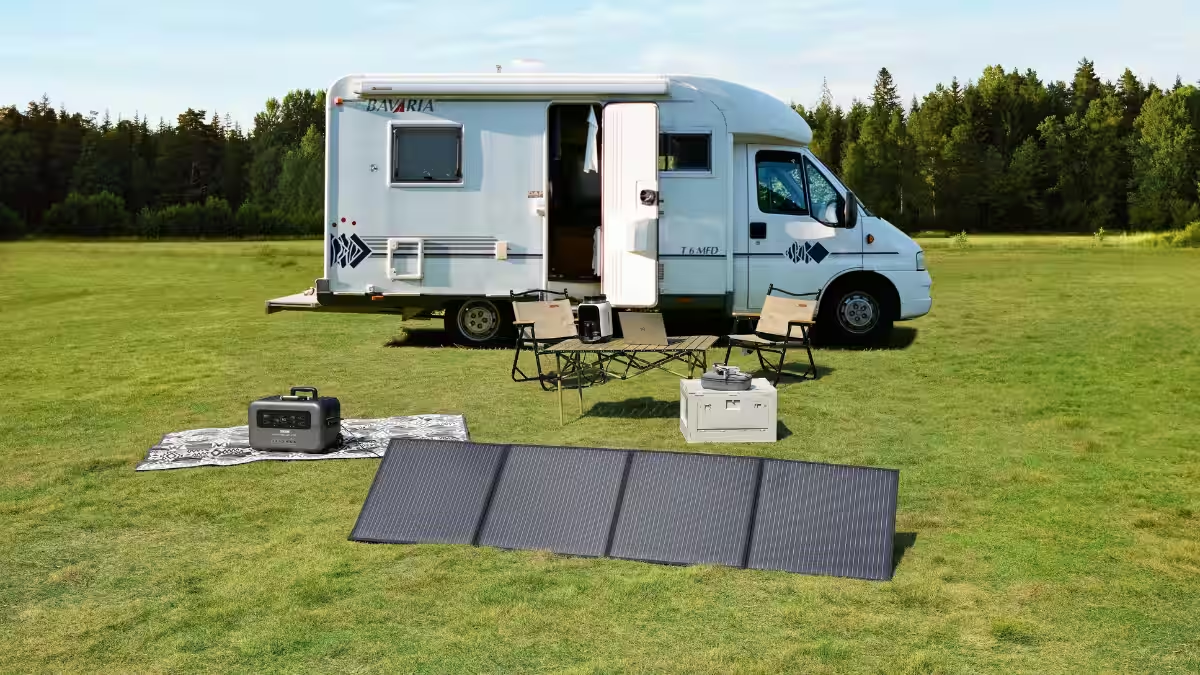
| Self-Contained | A small appliance where the composting happens directly in the unit. | Tiny homes and mobile vans. |
Master the Three Pillars of Odor Control
If an off-grid composting toilet smells, something is out of balance.
-
Liquid Separation: Many modern designs use urine diversion to separate #1 from #2. Keeping solids dry prevents the anaerobic conditions that cause sewage smells.
-
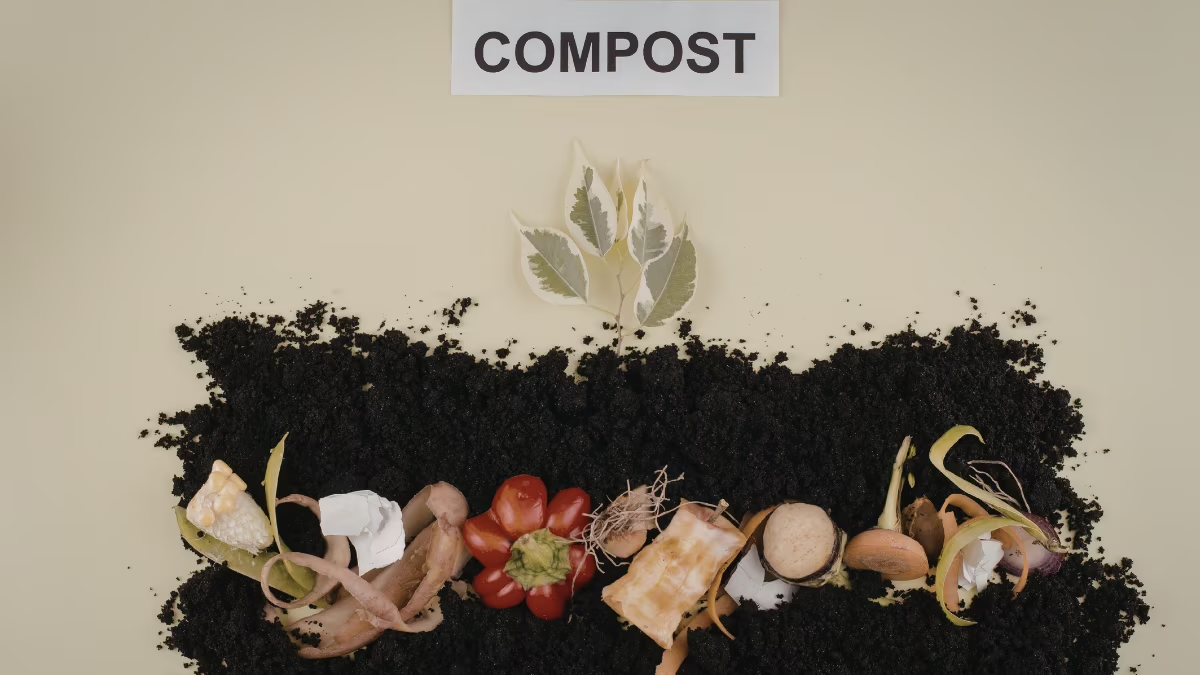
Carbon-to-Nitrogen Ratio: After each use, adding a bulking agent like coconut coir, sawdust, or hemp creates air pockets for bacteria and balances the nitrogen in the waste.
-
Venting and Fans: A small 12V or 120V fan provides constant negative pressure, pulling air across the waste and expelling odors and moisture through a roof vent.
Global Legalities: US, CA, UK, and AU
Legality is the most common concern for the Self-Sufficiency Lab. While rules vary by local county, there are general patterns:
-
The NSF 41 Standard: In the US, many states look for NSF/ANSI 41 certification, which verifies that a unit handles waste hygienically and controls odors.
-
Fixed vs. Mobile: Rules are often more relaxed for RVs and vans than for permanent homes on foundations.
-
Secondary Septic: Some rural areas allow composting toilets but still require a small septic system or dry well to handle greywater from your sinks and showers.
-
Local Approval: In Australia and parts of the UK, prefabricated models often have state-level health department approval for owner-builders.
The Waterless Sanitation Audit
-
Moisture Level: Is the compost moist but not soggy (ideally 40–60% moisture)?
-
Bulking Material: Am I using only 100% biodegradable carbon sources?
-
Ventilation: Is the fan screen clear of dust and debris?
-
Emptying Cycle: For urine-diverting models, am I emptying the liquid tank every 2 days to prevent ammonia smells?
-
Final Cure: Is my finished humus allowed to cure for at least 3–12 months before being used as a garden soil conditioner?
Safe End-Use: Where the Finished Compost Belongs
Advanced off-grid composting toilets are only complete when the end product is handled responsibly. Even after proper curing, finished humus should be treated with caution and ecological awareness.
Best practice is a non-food application. Use the cured material around ornamental trees, windbreak hedges, or soil restoration zones rather than directly on annual vegetable beds. Perennial fruit trees and nut trees are generally considered lower risk when compost has fully cured for 12 months or longer.
Never apply fresh or partially composted material to edible crops. Time and temperature are what transform waste into stable organic matter.
In some regions, regulations require burial trenches or designated compost zones rather than open application. Always align your use with local environmental health guidance.
The goal of off-grid composting toilets is not just independence. It is ecological responsibility. When handled correctly, the system becomes a true nutrient cycle rather than a liability.
Conclusion: Closing the Nutrient Cycle
Shifting to off-grid composting toilets is a fundamental cultural move from seeing waste as filth to seeing it as a resource. By mimicking the natural circular economy of the earth, you reduce your environmental footprint while gaining total independence from the grid.