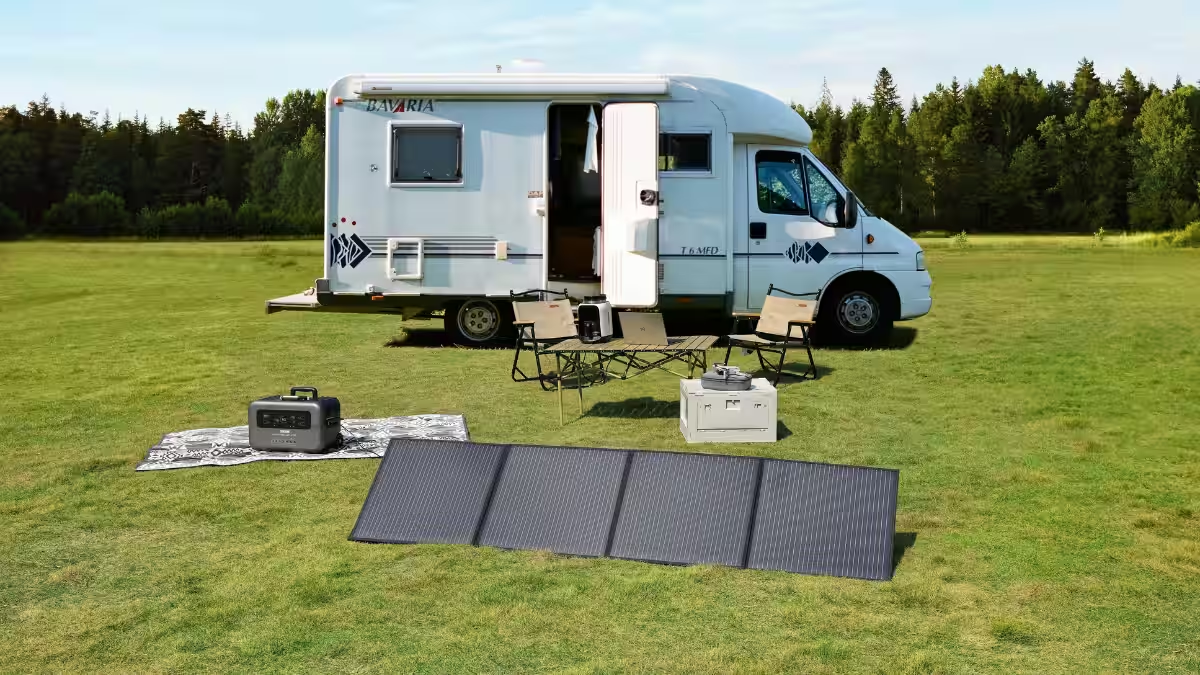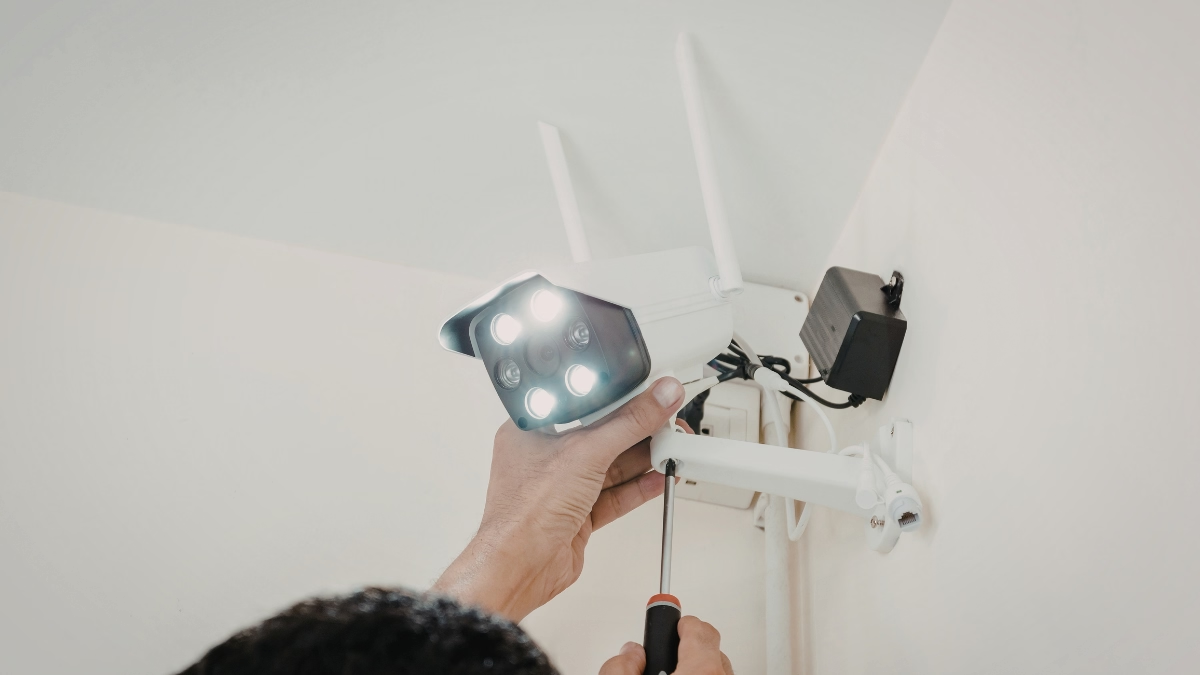
Off-grid security and safety are the foundation of true peace of mind when your home isn’t anchored to a foundation. In 2026, the line between home and vehicle is blurred, meaning your security mindset must travel with you. From 4G cellular cameras that monitor remote locations to life-saving environmental sensors in tight spaces, protecting your retreat requires a mobile-first defense strategy built on redundancy, power awareness, and physical deterrence.
The Silent Threat in Tiny Spaces (Safety Case Study)
Safety is not just about intruders. It is about the air you breathe.
In early 2025, investigations into manufacturing defects revealed how quickly Carbon Monoxide (CO) can accumulate inside confined living spaces. Even in high-end 2026 builds, a blocked vent or faulty heater can turn comfort into an emergency.
The Golden Rule: Never sleep with a fuel-burning portable heater running. Always rely on a dedicated, battery-powered CO detector that works independently of your main power system.
Carbon Monoxide is the only one confined-space risk. Lithium battery banks, propane systems, and diesel heaters introduce fire hazards unique to off-grid builds.
Every rig should include:
-
Two ABC-rated fire extinguishers
-
A fire blanket near the kitchen
-
Separate smoke and CO detectors
-
Clear, unobstructed emergency exits
In compact builds, fire spreads rapidly due to material proximity. Detection and suppression must be immediate.
Physical Security Layers That Actually Work
Electronics detect intrusion. They do not prevent it.
A serious off-grid security plan includes physical delay measures:
-
Reinforced strike plates secured with 3-inch structural screws
-
Door jamb armor kits
-
Hitch locks or wheel clamps for towable rigs
-
Security window film to delay smash entry
-
120+ decibel sirens that activate locally
Your goal is deterrence and delay. Most theft attempts are opportunistic. Make your rig take time to breach.
Top 3 Off-Grid Security Systems for 2026
| System | Best For | Key Features | Power Source |
|---|---|---|---|
| SimpliSafe | RV & Rental | No-contract monitoring; adhesive setup | Battery / Wired |
| Arlo Go 2 | Full Mobile | LTE/4G + Wi-Fi connectivity | Rechargeable Battery |
| Eufy SoloCam S340 | Solar Reliability | 3K resolution; integrated solar panel | Solar / Battery |
Off-grid surveillance principles: expert overview of how off-grid security cameras operate without mains power to keep remote locations secure. Guide to off‑grid security cameras and power solutions.
Power Budget Considerations
Security systems draw power continuously. Even efficient devices add up.
Before installing:
-
Calculate daily amp-hour consumption
-
Confirm solar output exceeds total system draw
-
Ensure battery bank supports 48 hours of low-sun operation
-
Choose devices with deep sleep modes
Security should never compete with refrigeration, ventilation, or medical systems.
Essential Off-Grid Security Tech
1. 4G Solar-Powered Cameras
In remote areas without Wi-Fi, cellular cameras are essential. They transmit alerts via LTE networks and can operate continuously with solar charging.
However, cellular coverage is not guaranteed. Your system should include:
-
Local SD card recording backup
-
Audible on-site alarms
-
A secondary communication device, such as a satellite messenger
If your system requires internet to function at all, it is not fully off-grid secure.
2. Smart Environmental Sensors
Tiny homes benefit from comprehensive sensor networks.
Install sensors for:
-
Water leaks
-
Humidity spikes
-
Temperature fluctuations
-
Battery compartment overheating
These prevent structural damage and system failure before they escalate.
3. GPS Tracking for Mobile Homes
If your home has wheels, it can be stolen.
Hidden GPS trackers allow you to monitor location through mobile apps. Choose models that:
-
Operate independently from your main power
-
Offer geofencing alerts
-
Provide long battery standby
Data Privacy & Cloud Storage
Before choosing any smart system, verify:
-
Whether footage is encrypted
-
If local-only storage is possible
-
Who owns and accesses your data
-
Subscription requirements for full access
Security should not compromise privacy.
The Off-Grid Security and Safety Checklist
- Test all alarms monthly; road vibration can cause failures
- Confirm battery backup for detectors works independently
- Install motion-activated exterior lighting
- Upgrade door hardware and add hitch or wheel locks
- Install window coverings to limit interior visibility
- Replace CO detectors every 5–7 years
- Photograph interior and systems quarterly for insurance
- Store serial numbers and receipts in cloud backup
Insurance & Asset Documentation
Security is also financial risk management.
To protect your investment:
-
Notify your insurer of installed security systems
-
Keep digital copies of major equipment receipts
-
Document system upgrades
-
Maintain updated photos of your build
Recovery is faster when documentation exists.
Conclusion: Peace of Mind in the Wild
Off-grid security and safety are the foundation of true peace of mind when your home isn’t anchored to a foundation. In 2026, the line between home and vehicle is blurred, meaning your security mindset must travel with you. From 4G cellular cameras that monitor remote locations to life-saving environmental sensors in tight spaces, protecting your retreat requires a mobile-first defense strategy built on redundancy, power awareness, and physical deterrence.
Mastering off-grid security and safety means preparing for both external threats and internal hazards. The strongest systems combine physical deterrence, power-aware electronics, redundancy planning, and fire prevention.
Independence does not mean vulnerability. It means designing your security to operate without assumptions. Explore the Carbon Monoxide safety guidance and alarm requirements, a government-level safety info on why dedicated CO detection matters for off-grid living.