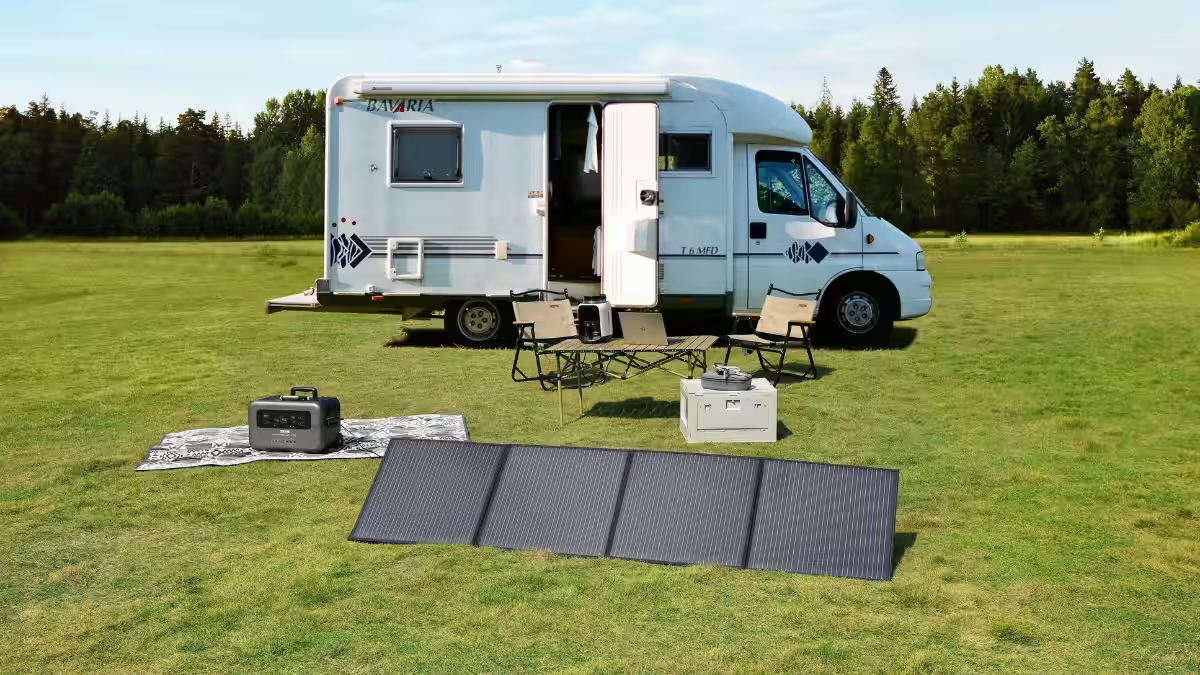
Securing a remote off-grid site requires a layered defense strategy that starts long before someone reaches your front door. Unlike urban security, which relies on proximity to neighbors and police, off-grid safety is about deterrence, detection, and delay. By creating a hardened perimeter, you buy yourself the most valuable resource in any security situation: time.
The Psychology of the Perimeter: Deterrence First
Most security breaches are crimes of opportunity. If a site looks difficult or high-risk, a potential intruder will likely move on.
-
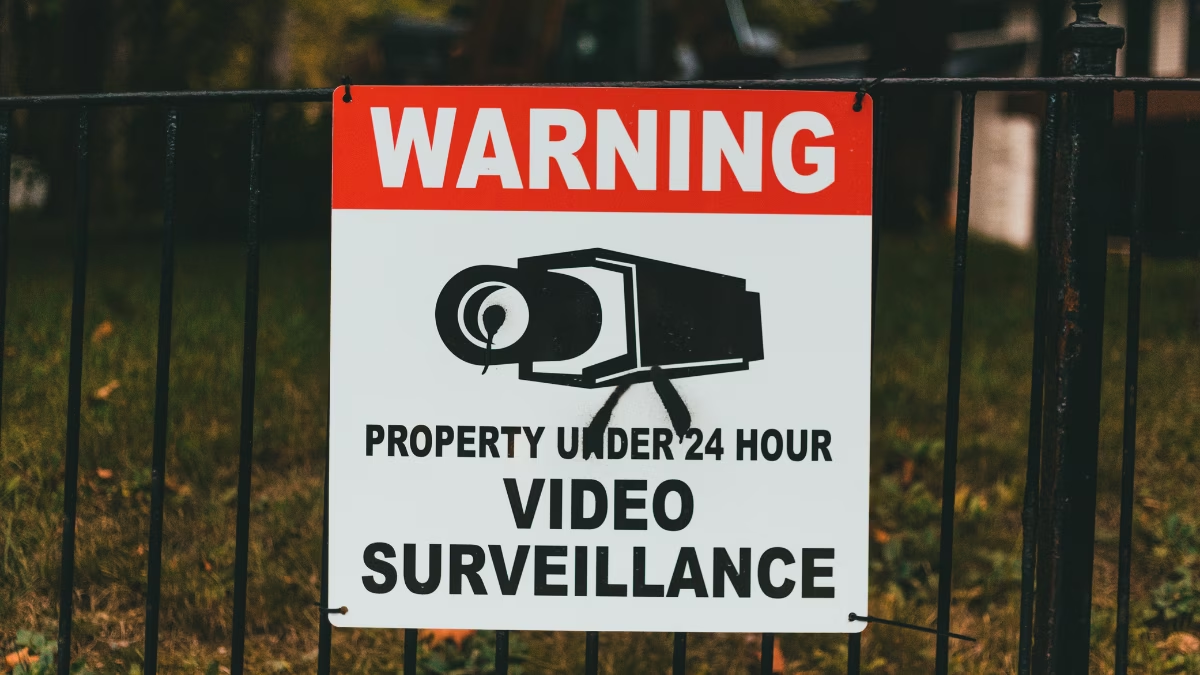
Signage: Use Private Property or CCTV in Operation signs. Even if you don’t have cameras in every corner, the psychological barrier is real.
-
Natural Fencing: Thorny hedges (like Hawthorn or Berberis) are a living security fence that requires no power and actually improves your local ecosystem.
-
Lighting: Motion-activated LED floodlights are the ultimate deterrent. They signal to an intruder that they have been detected without draining your battery bank 24/7.
Layered Defense: The Three-Ring Model
A professional-grade remote off-grid site security plan uses three distinct rings of protection.
| Ring | Focus | Essential Gear |
| Outer Ring | The Boundary | Gates, natural barriers, and driveway alarms. |
| Middle Ring | The Yard/Site | Motion lights and 4G solar security cameras. |
| Inner Ring | The Structure | Deadbolts, window film, and internal sensors. |
Tech Spotlight: Long-Range Driveway Alarms
In a remote setting, you want to know a vehicle is approaching before it reaches your home.
-
PIR Sensors: Passive Infrared sensors detect heat and motion. Look for models with a 1/2 mile range that can transmit through dense forest.
-
Solar Receivers: Ensure your base station is solar-compatible so your perimeter alert stays live even during power outages.
Physical Hardening for Remote Structures
If you leave your site for weeks at a time, you need static security.
-
Window Security Film: A clear laminate that makes glass almost impossible to shatter, preventing smash and grab entries.
-
Steel Door Frames: Most wood frames can be kicked in; a steel-reinforced frame makes the door a true barrier.
-
Hinge Guards: Prevent intruders from simply popping the pins on out-swinging doors.
Operational Security (OPSEC): The Threat You Don’t See Coming
A remote off-grid site is only as secure as the information surrounding it. In many real-world breaches, intruders did not discover a property by accident; they learned about it through casual conversations, social media posts, contractor visits, or predictable routines.
This is where Operational Security, often shortened to OPSEC, becomes critical.
If you regularly post your location in real time, share detailed exterior photos that reveal entry points, or announce extended absences online, you are unintentionally weakening your perimeter before anyone ever reaches it. A hardened gate means little if someone already knows exactly when you are away.
Remote living requires intentional information discipline.
Contractors and delivery drivers should never be given full access beyond what is necessary. If you hire work out, supervise it. Do not casually disclose how long you will be gone or where your backup power systems are located. Battery banks, fuel storage, and generator sheds are high-value targets in isolated areas.
Routine is another vulnerability. Leaving at the same time every Friday and returning Sunday evening creates predictability. In remote regions where traffic is rare, patterns stand out quickly. Vary your schedule when possible, especially if your property is visible from a public access road.
Digital security matters just as much. Many 4G security cameras use default passwords that are never changed. Weak credentials allow remote access to your system. Secure remote off-grid site protection must include strong, unique passwords and encrypted connections. Your perimeter is not just physical; it is digital.
Finally, be selective about who knows the exact location of your retreat. The fewer people who can draw a map to your gate, the stronger your invisible outer ring becomes.
A remote sanctuary thrives on discretion. Silence is not only peaceful. It is protective.
The Remote Site Security Checklist
-
Gate Check: Is my primary entrance locked with a high-grade weatherproof padlock?
-
Blind Spots: Have I cleared brush away from my structure to eliminate hiding spots?
-
Camera Angles: Do my cameras have overlapping fields of view to prevent blind approach?
-
Connectivity: Is my 4G signal strong enough at the perimeter to send instant alerts?
-
Emergency Exit: Is there a secure, unblocked path out of the property if the primary gate is compromised?
Conclusion: The Quiet Guardian
The best remote off-grid site security is the kind you don’t have to think about every day. By setting up a layered system of natural barriers and smart tech, you create a sanctuary that protects itself while you enjoy the silence of the wild.