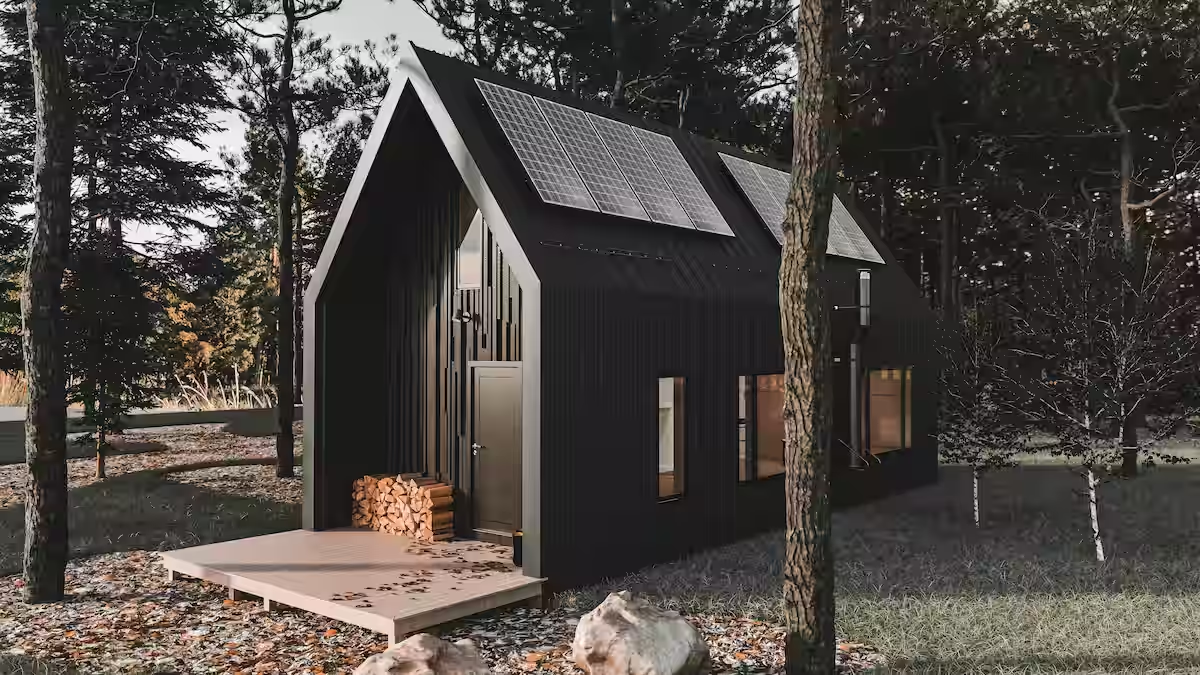
You’ve designed the perfect layout, picked your finishes, and finalized your budget. But there is a hard truth every enthusiast must face: the most beautiful tiny home in the world is just a very expensive shed if you have nowhere to park it. Before you commit to a build, you must account for tiny house land rental costs, as this monthly expense will be the largest recurring item in your lifestyle budget.
Recently, finding land has become the second job of the tiny homeowner. As traditional housing remains out of reach for many, land rental prices have shifted. Landowners are no longer just helping out; they are realizing the immense value of their underutilized backyards, paddocks, and farms.
If you are currently mapping out your 12-Month Tiny House Build Timeline, understanding the land market is your first step toward a realistic, sustainable budget.
Calculating Your Global Tiny House Land Rental Costs
Rental costs are no longer one-size-fits-all; the price is dictated primarily by Infrastructure. A dry plot (no utilities) will always be significantly cheaper than a plug-and-play site with high-speed internet and sewage hookups.
United States
The US market has split into Luxury Tiny Resorts and Private Backyard ADUs.
-
RV Parks / Tiny Resorts: $650 – $1,300 per month. (Usually includes water, sewage, and 50-amp power).
-
Private Backyards: $450 – $950 per month. (Popular in Tiny Friendly states like Oregon and Florida).
-
Rural Acreage / Farms: $300 – $600 per month. (Often requires off-grid systems like solar and composting toilets).
United Kingdom
With recent planning reforms, the UK has seen a surge in Garden Annex rentals.
-
Garden Annex / Private Land: £400 – £700 per month.
-
Equestrian / Grazing Land: £250 – £450 per month. (Warning: Check 2026 planning rules for Change of Use).
-
Established Communities: £500 – £850 per month. (Includes shared amenities and legal protection).
In the UK, the legal framework for parking a tiny house often hinges on the Caravan Sites and Control of Development Act. This act defines the size and mobility requirements needed for a structure to be legally classed as a caravan rather than a permanent dwellinghouse.
Canada
Canadian costs are heavily influenced by Winter-Proofing. Land with heated water lines commands a premium.
-
Tiny House Villages (BC/Ontario): $800 – $1,200 CAD.
-
Rural / Farm Leases: $450 – $800 CAD.
Australia
-
Rural Lifestyle Leases: $175 – $400 AUD per week.
-
Urban Backyard / Side-Access: $220 – $450 AUD per week.
Infrastructure: The Hidden Costs of Your Lease
When you see a land listing for a set price, that is rarely your final number. The Setup Fee can rival the home’s deposit. Before deciding between a DIY and a professional Tiny House, you must ask who is paying for the infrastructure.
-
The Power Connection: Most tiny homes are power hungry. If the land doesn’t have a dedicated outlet, you may need an electrician to run a sub-meter ($400–$900).
-
Wastewater Management: If the site is dry, you may pay $150 per visit for a honey-wagon service.
-
Ground Stabilization: A 14,000lb tiny home will sink into soft grass. Expect to spend $1,500 – $3,000 on a 4-inch deep gravel pad. If you want to avoid these hidden site costs, look into the Tiny House Shell Savings strategy to keep more cash for your land development.
Strategic Networking: Where the Good Land Is
The best spots for tiny homes are never listed on the big real estate portals like Zillow or Rightmove. You have to find them through Active Networking.
-
Niche Facebook Groups: Search for Tiny House Land in your region.
-
The Farmer Outreach Strategy: Many local farmers have unproductive corners. A professional approach, offering a Land Lease Proposal, can secure a spot for 50% less than an RV park.
Factors That Impact Your Monthly Budget
Proximity to urban centers and legal security are the primary drivers of rent. To understand how these fees fit into your overall project, check our comprehensive Tiny Home Cost Breakdown.
The Tiny Land Red Flag Checklist
Never move your home without a written contract. Since tiny house dwellers are often not covered by standard residential tenancy acts, using a specialized Tiny House Land Lease Agreement is essential to protect your rights regarding rent increases, pets, and notice periods. Before you sign a lease or move your home, check for these deal-breakers:
-
Access & Turning Radius: Can a professional driver actually get your 30-foot home through that narrow farm gate?
-
The Neighbor Factor: In a backyard setup, ensure the landowner has talked to the neighbors.
-
Zoning Compliance: Are you relying on a Caravan/RV loophole, or is the land formally permitted?
Understanding local zoning is the most critical hurdle in your land search. Many municipalities are now adopting specific Zoning Reforms for Tiny Homes to allow for moveable tiny houses as legal secondary dwellings, provided they meet specific health and safety standards.
Frequently Asked Questions
Is it legal to rent land for a tiny house?
Yes, it is generally legal to rent the land. However, the legality of living in a tiny house on that land depends on local zoning. Many jurisdictions now recognize tiny homes as Accessory Dwelling Units (ADUs), while others still classify them as temporary moveable dwellings.
How much should I pay for a tiny house land deposit?
Typically, landowners require a deposit equal to one month’s rent, plus any upfront costs for utility installation if the landowner is doing the work. Ensure you have a written agreement before any money changes hands.
Conclusion: Building a Foundation for Freedom
Success in the alternative living movement requires a mental shift: you are trading a lifetime mortgage for a flexible lease, and square footage for unprecedented freedom. Tiny house land rental costs are the gatekeeper to your minimalist lifestyle. By accurately projecting these site fees and vetting your location for infrastructure needs, you ensure that your dream doesn’t become a financial nightmare.
The most successful minimalist are those who treat land acquisition with the same precision as their home build. Secure your spot, stabilize your foundation, and start living on your own terms. We’ll see you out there.