Living in an RV full time isn’t just a travel trend anymore. For digital nomads, retirees, seasonal workers, and families chasing more freedom (and fewer bills), it’s become a legitimate way to live, if you approach it like a system, not a spontaneous road trip.
Many people also ask whether it’s possible to live in a camper year-round, especially when dealing with winter temperatures, limited space, and long-term comfort.
This guide is built for real full-time RV life: the costs that don’t show up on Instagram, the logistics that make or break your sanity, and the practical strategies that keep the lifestyle sustainable long-term.
Is Living in an RV Full Time Right for You?
Full-time RVing trades square footage for everywhere footage. But it also trades convenience for responsibility. Your home moves, shakes, bounces, and breaks because it’s a house built on a vehicle frame.
Before you sell your house or end your lease, run these three stress tests:
1) The Space Test
Can you live in under 400 square feet with your partner, kids, or pets during a full week of bad weather, without feeling trapped?
2) The Utility Test
Are you willing to learn basic troubleshooting for:
-
electrical (12V + 120V)
-
propane systems
-
plumbing leaks
-
HVAC quirks
You don’t have to be a mechanic, but you do need problem-solving tolerance.
3) The Social Test
Are you prepared for the loneliness that can creep in once the novelty wears off, especially if you’re not intentionally building community on the road?
Reality check: The happiest full-timers aren’t the ones who escape life. They’re the ones who build a better life—on purpose—inside the constraints.
The 2026 Monthly Cost of Full-Time RV Living
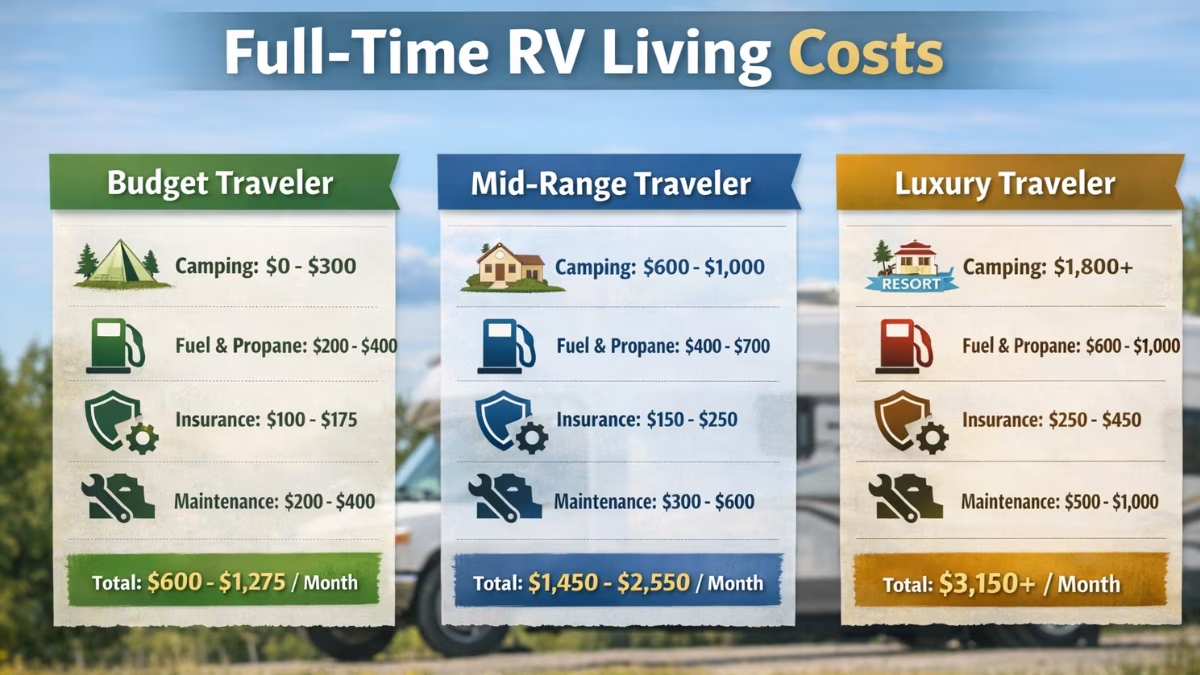
Here’s the truth: full-time RVing can be cheaper than renting, but it’s not automatically cheap. Your costs depend on three main factors:
-
How often you move
-
Where you park
-
How comfortable you want to be
Monthly Budget Breakdown (Typical Ranges)
| Expense Category | Budget Traveler (Boondocking + Low Fees) | Mid-Range (State Parks + Memberships) | Comfort / Resort Style |
|---|---|---|---|
| Camping / Parking | $0–$300 | $600–$1,200 | $1,800–$3,000+ |
| Fuel + Propane | $200–$500 | $400–$800 | $600–$1,000+ |
| RV Insurance | $100–$175 | $150–$300 | $250–$450+ |
| Internet | $100–$250 | $150–$300 | $150–$350 |
| Maintenance Fund | $200–$400 | $300–$600 | $500–$1,000 |
| Estimated Total | $600–$1,625 | $1,600–$3,200 | $3,800–$6,250+ |
The hidden cost most people miss: repairs aren’t if, they’re when. If you don’t budget maintenance monthly, you’ll end up paying for it emotionally and financially later.
2026 pricing reality: Many campgrounds now price weekends, holidays, and peak seasons like a mini airline industry. The cheapest full-timers use a simple strategy: move mid-week, book longer stays, and avoid peak weekends when possible.
Pro Tip: In 2026, campsite surge pricing is real. Use apps like Campendium or The Dyrt to book mid-week stays to save up to 30% on nightly rates.
The Two Full-Time RV Lifestyles (Pick One or You’ll Bleed Money)
Most people fail at full-time RV budgeting because they accidentally mix these two lifestyles:
Lifestyle A: Slow Travel (Best for Budget + Sanity)
-
Stay 2–6 weeks per location
-
Use monthly rates
-
Drive less
-
Spend less on fuel + stress
Lifestyle B: Fast Travel (Best for Adventure, Not Budget)
-
Move every 2–5 days
-
Pay nightly rates
-
Burn fuel constantly
-
Increase wear-and-tear dramatically
Rule of thumb: If you want full-time RV life to cost less than renting, you usually need to travel slower than your imagination wants to.
Choosing the Right RV for Full-Time Living (This Matters More Than the Floorplan)
The wrong rig turns RV life into a maintenance marathon. When you’re full-time, you want fewer weak points.
Best RV Types for Full-Time Life (Quick Overview)
Travel Trailer / Fifth Wheel
-
Easier to leave the house at camp with a truck
-
Great for slow travel and long stays
-
Fifth wheels generally feel more stable and residential
Class A
-
Most comfortable rolling home
-
Often better storage + tank capacity
-
Higher maintenance complexity and cost
Class C
-
Easier to drive than Class A
-
Good balance for families
-
Still has engine maintenance + house maintenance
Van / Campervan
-
Extremely flexible for stealth + cities
-
Limited space, water, and storage
-
Best for minimalists and solo travelers
Full-Time Must-Haves (Don’t Skip These)
-
Good tank capacity (fresh/gray/black) for fewer stress cycles
-
Insulation + heated underbelly if you’ll see cold weather
-
Solid roof and slide maintenance history (water intrusion is the silent killer)
-
Payload and towing limits that actually fit your life (not just the brochure)
Chief editor note: In 2026, a lot of rigs look premium but are still built lightweight. Full-time durability is more about build discipline than appearance.
Essential Systems for Year-Round Comfort (2026 Setup)
If you want RV living to feel stable—not chaotic—you need to get three systems right: power, climate, and connectivity.
1) Power Autonomy (Solar + Batteries)
For many full-timers, lithium batteries (LiFePO4) are now the standard because they’re lighter, more efficient, and deliver deeper usable capacity than old lead-acid setups.
A common sweet spot for moderate off-grid living:
-
400Ah lithium battery bank
-
600W+ solar
-
a quality inverter/charger
-
smart monitoring (so you don’t guess your power)
If you work remotely, build your power system around your actual daily load (laptop, monitor, Starlink, fridge, heating fans, etc.). Under-building power is one of the fastest paths to frustration.
2) Climate Control (Heat + Cold Without Misery)
For cold weather:
-
enclosed/heated underbelly helps prevent freezing
-
heated hose + hose insulation
-
skirting makes a huge difference in deep cold
-
dehumidifier or moisture control is non-negotiable
For heating efficiency, many full-timers prefer diesel heaters for dry heat and reduced propane dependency. But every heating method has trade-offs—what matters is redundancy.
Full-time rule: Always have a backup heat option and a mobile food preservation handy.
3) Internet and Connectivity
In 2026, reliable internet is the difference between freedom lifestyle and I can’t work because there’s no signal.
Most full-timers use a combination of:
-
a primary RV internet solution
-
a cellular backup (hotspot/router)
-
campsite Wi-Fi only as a last resort
The goal is redundancy. You don’t want a single-point failure when your income depends on connectivity.
Reliable internet is the backbone of the modern nomad lifestyle. Most full-timers now rely on Starlink Roam, which offers high-speed, low-latency satellite coverage even in the most remote boondocking locations.
Where You Sleep: Campgrounds, Boondocking, and Real-World Strategy
There’s no single right way to park; only the way that fits your budget and tolerance.
Options Full-Timers Use Most
-
RV parks (convenient, expensive, consistent power/water)
-
state parks (best value, often limited hookups)
-
national park areas (popular, competitive, seasonal)
-
boondocking (free/cheap, requires power/water planning)
-
seasonal workamping (reduces costs, adds structure)
The biggest mistake new full-timers make: They plan their travel like a vacation. Full-time life needs a rhythm.
A realistic rhythm looks like:
-
lock in a base stay
-
do shorter weekend exploring loops
-
return to your home spot
That saves money and keeps your systems stable.
Legal Logistics: Domicile, Mail, Taxes, and Residency
Even if you live on the road, you still need a legal home base for:
-
driver’s license
-
vehicle registration
-
insurance
-
taxes
-
voting
-
medical systems
This is called your domicile.
Popular Domicile Choices for Full-Timers
Many RVers choose states known for:
-
simplified residency rules
-
no state income tax (depending on your situation)
-
strong mail-forwarding infrastructure
The key point: domicile is a legal decision. Choose it based on your real needs, insurance access, healthcare, vehicle registration rules, and your income situation, not just what everyone else does.
Mail Forwarding (The Practical Solution)
Most full-timers use a mail-forwarding service that:
-
provides a physical address
-
scans envelopes (and often contents)
-
forwards packages to where you’ll be next
Navigating state residency can be a legal minefield. For a deep dive into the specific requirements for the ‘Big Three’ states, the Escapees RV Club domicile guides provide the most up-to-date legal frameworks for full-timers.
Healthcare: The Final Boss of Full-Time RV Living
Healthcare is the most complicated piece of the lifestyle, especially if you’re not on Medicare.
-
prioritize plans that work across state lines (if you travel)
-
understand what’s in-network when you move
-
build an emergency plan: urgent care, ER strategy, medical records access
-
keep digital copies of key documents and prescriptions
The goal isn’t perfection. The goal is to avoid getting stuck in the worst-case scenario with no plan.
Maintenance Reality: Your RV Is a Moving House (Budget and Routine Required)
Full-time RV maintenance isn’t optional; it’s a lifestyle tax. The good news? A simple routine prevents most disasters.
A Simple Full-Time Maintenance Rhythm
Weekly
-
check tire pressure (especially before travel days)
-
inspect seals quickly (roof edges, slides, windows)
-
look for water leaks under sinks and around toilet
Monthly
-
test smoke/CO/propane alarms
-
clean AC filters
-
flush and treat tanks properly
-
inspect battery connections and power readings
Seasonally
-
reseal trouble areas
-
service bearings/brakes (towables)
-
inspect roof thoroughly
-
winterize or de-winterize correctly
Editor’s truth: Most RV nightmares start as small leaks or small neglect. Catch issues early, and you stay in control.
Safety, Security, and Peace of Mind on the Road
Full-time RV living is safe for most people—but safety comes from habits.
-
choose parking with good lighting and normal foot traffic
-
trust your instincts (if it feels off, leave)
-
carry a basic tool kit and emergency supplies
-
have a plan for breakdowns (roadside assistance + savings buffer)
-
keep your rig’s weight within limits (overloading causes failures)
The Real Emotional Side of Full-Time RV Life
Here’s what doesn’t get said enough:
You can be free and still feel overwhelmed.
The lifestyle is amazing, but it can also expose stress points:
-
decision fatigue (where to go next? where to park?)
-
relationship pressure (no personal space)
-
loneliness (especially for solo travelers)
The antidote is structure:
-
a weekly rhythm
-
community (meetups, RV groups, faith communities, hobby groups)
-
intentional downtime
Full-time RV life is more sustainable when it feels like life, not nonstop travel.
Frequently Asked Questions
How do I get mail while living in an RV full-time?
Most full-timers use a professional mail-forwarding service. It gives you a real street address, lets you view mail digitally (depending on service), and forwards packages to where you’ll be next, often to a local post office (General Delivery) or a pickup locker option in town.
Can I live in an RV on my own land?
Sometimes, but it depends on local zoning and enforcement. Many counties have camping limits even on private land. Before buying property for an RV homestead, check zoning classifications and written ordinances, and confirm what’s enforced in practice.
Is full-time RV living cheaper than renting an apartment?
It can be, especially if you travel slowly and secure monthly rates. But if you move frequently, nightly campground fees and fuel can exceed apartment costs quickly. The biggest cost-control lever is how often you drive.
What’s the best RV for full-time living?
The best RV is the one that matches your travel style and tolerance for maintenance. Slow travelers often thrive in fifth wheels or travel trailers with a capable tow vehicle. Frequent movers may prefer motorhomes for convenience. What matters most is build condition, weight limits, insulation (if needed), and a layout you can live in during bad weather.
How much money should I have saved before going full-time?
A practical baseline is:
-
one month of living expenses
-
plus a dedicated repair buffer
Because when big repairs hit (tires, brakes, roof, slide issues), they rarely wait for a convenient time.
Final Word: The Smart Full-Timer Mindset for 2026
Full-time RV living is absolutely doable in 2026, but the winners treat it like a real lifestyle, not a permanent vacation.
If you want this to work long-term:
-
travel slower than you think
-
budget maintenance like rent
-
build redundancy into power + internet + heat
-
choose a legal domicile intentionally
-
create routines that protect your mental health
Do that, and RV life stops being chaotic… and starts feeling like what it’s supposed to be:
Freedom with stability.
Explore the full collection of free tools: Selfcampers Resource Vault.