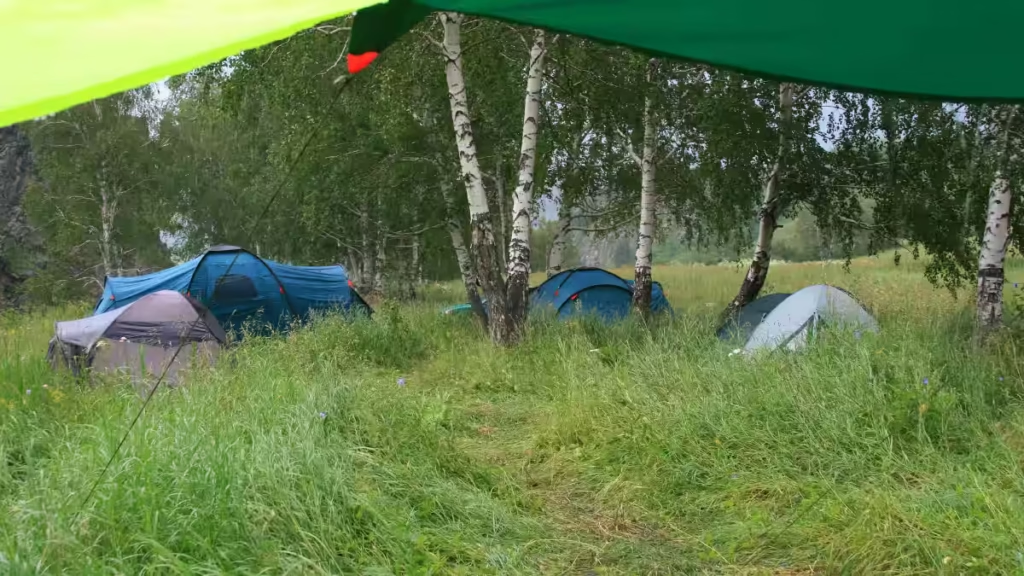
Choosing the right spot to pitch a tent involves more than just finding a flat surface with a good view. For the self-sufficient camper, the ground cover underfoot provides critical information about the environment, safety, and ecological impact. Understanding what is the purpose of grasses and sedges density when camping allows you to read the landscape, ensuring your site is well-drained, durable, and respectful of the local habitat.
While grasses and sedges may look similar at a glance, their density and variety act as natural indicators of soil moisture and ground stability. Recognizing these patterns is a foundational skill for anyone venturing into dispersed or primitive camping areas.
Identifying Grasses versus Sedges
To understand the purpose of their density, you must first be able to distinguish between these two common ground covers. An old botanical rhyme serves as a perfect field guide: sedges have edges, and grasses have nodes.
Sedges typically have triangular stems that feel distinct when rolled between your fingers, whereas grasses have round, hollow stems with swollen joints or nodes. In a camping context, the presence of dense sedge populations often indicates a high water table or poor drainage, as sedges thrive in saturated soils. Grasses, conversely, are often found in better-drained, sunnier upland areas.
Ecological Protection and Site Selection
The density of ground cover is a direct reflection of a site’s resilience. In high-traffic areas, the thickness of the vegetation determines how well the land can support the weight of a tent and human activity without becoming a mud pit or a dust bowl.
Soil Stabilization and Erosion Control
A high density of root systems from grasses and sedges binds the soil together. When you camp on a site with sparse vegetation, your footsteps can easily break the topsoil, leading to erosion during the next rainstorm. Choosing a site with a healthy, established density of resilient grasses ensures that your presence doesn’t lead to long-term scarring of the landscape.
Reading Moisture Levels through Density
If you notice an area where sedges are particularly thick and lush compared to the surrounding terrain, it is a sign that the area collects water. This is a critical observation for a camper. High sedge density often warns of a site that may flood during a midnight downpour or one that harbors a higher population of insects like mosquitoes and midges due to the standing moisture.
Practical Benefits of Grasses and Sedges Density When Camping
Beyond ecological concerns, the physical makeup of the ground cover directly impacts your comfort and gear longevity.
Natural Insulation and Cushioning
A thick, dense carpet of dry grass provides a layer of natural loft between your tent floor and the cold earth. While you should never clear or pull up vegetation to create a bed, utilizing an area where the density is already high offers a softer surface that protects your sleeping pad from sharp rocks or sticks hidden beneath the surface.
Practical Scenario: When scouting a site in a meadow, you might find a patch of tall, dense grass next to a patch of thin, patchy turf. Setting up on the denser, resilient grass, provided it is permitted in that area, often results in a warmer night’s sleep because the trapped air within the thick vegetation acts as a secondary thermal barrier.
Gear Protection
A high density of ground cover prevents your gear from coming into direct contact with raw dirt or mud. When you pack up a tent that has been sitting on thick grass, the underside is usually much cleaner and easier to maintain than a tent pitched on bare, silty soil. This reduces the amount of grit that gets into your zippers and extends the life of your waterproof coatings.
Leave No Trace and Vegetation Management
While density is a benefit, the fragility of that vegetation must be respected. In many alpine or desert environments, grasses and sedges grow very slowly.
-
Avoid Fragile Meadows: If vegetation density is low, it means the plants are struggling, or the environment is fragile. In these cases, it is better to camp on a durable surface like rock, gravel, or established bare ground.
-
Rotate Your Pitch: If you are staying in one spot for more than two nights, consider moving your tent a few feet. This prevents the dense grasses from being permanently crushed and allows them to recover more quickly.
-
Stick to Established Paths: High-density vegetation can be easily damaged by repeated trampling. Use existing trails to reach your camp to preserve the integrity of the meadow.
FAQ
Why do sedges matter more than grasses for drainage?
Sedges are almost always associated with wetlands or wet feet. If you see a dense patch of sedge, the soil is likely too damp for a comfortable tent site and may lead to heavy condensation inside your shelter.
Is it okay to camp on tall grass?
In many areas, camping on tall, resilient grass is acceptable because it springs back. However, in protected wilderness areas, you should look for impact-resistant surfaces or areas where the grass density is high enough to withstand a night of compression without dying.
How does vegetation density affect wildlife?
Dense grasses and sedges provide cover for small mammals and nesting birds. When choosing a site, ensure you aren’t placing your tent directly on a wildlife corridor or a known nesting area.
Final Insights on Landscape Reading
Ultimately, understanding what is the purpose of grasses and sedges density when camping turns a simple hiker into a steward of the land. By reading the density of the plants underfoot, you can predict drainage issues, protect the soil from erosion, and find a more comfortable, insulated place to rest.
Campers who pay attention to these subtle environmental cues often find themselves excelling in other areas of woodcraft, such as identifying safe water sources or mastering low-impact fire building techniques.