When you realize camping can also be done indoors, that specific heartache of a cancelled trip or a rainy weekend forecast suddenly loses its sting. We’ve all been there: the gear is staged by the door, the cooler is prepped, and then the weather turns or life’s logistics pull the emergency brake.
You can almost feel the phantom weight of a pack on your shoulders and the scent of pine needle smoke in your hair, only to be met with the sterile glow of your living room lights.
But the walls of your home don’t have to be a cage for your outdoor spirit. In fact, the distance between the trailhead and your coffee table is much shorter than you think. By shifting your perspective and leaning into the sensory details, you can reclaim that sense of displacement and wonder that makes a night under the stars so restorative.
Whether you are navigating a brutal winter, managing a tight urban apartment, or just need a Tuesday night to feel like an expedition, the wilderness is a mindset you can cultivate right where you are.
The Art of the Living Room Expedition
Indoor camping often gets dismissed as a childhood game for rainy afternoons, but for those of us who live for the trail, it is a legitimate tool for decompression. The secret to a successful stay-in trip isn’t just about where you sleep; it’s about sensory immersion.
If you leave the television on and crash on the couch, it is just another night at home. However, if you commit to the gear, the primitive lighting, and the acoustic landscape, the experience becomes a genuine escape.
Camping Can Also Be Done Indoors: 10 Creative Ways to Unplug
Transforming your space requires more than a blanket fort; it requires a commitment to the camp life ritual. Here are ten ways to ensure your indoor setup feels like a genuine departure from the everyday.
1. The Authentic Tent Pitch
If your floor plan allows, actually pitch your backpacking tent. There is a psychological trigger in the sound of snapping poles and the specific mechanical whir of a tent zipper. For those in smaller apartments, a simple A-frame created with a clothesline and a canvas drop cloth provides that essential feeling of being under cover without the bulk of a dome tent.
2. Ditch the Mattress for the Pad
To make this feel like a real expedition, the bed is off-limits. Rolling out your sleeping pad and mummy bag on the floor changes your physical perspective of the room. Being closer to the ground alters how you perceive the ceiling height and the space around you, mimicking the low-profile reality of a backcountry site.
3. Landscape the Atmosphere with Sound
Silence in a house feels empty, but silence in the woods is heavy with texture. Use a high-quality soundscape to mask the hum of the refrigerator or distant sirens. Look for specific recordings like High Sierra Wind or Boundary Waters Rain. This creates an acoustic bubble that separates your campsite from the rest of your home.
4. Recreate the Campfire Glow
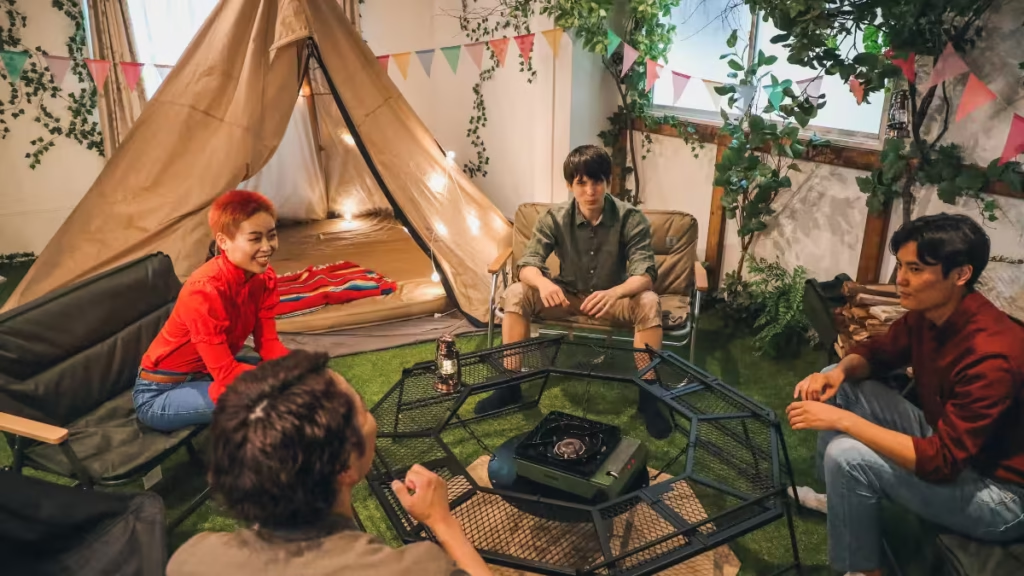
Safety means no real flames, but you can still capture that hypnotic amber flicker. Gather a cluster of battery-operated candles or warm LED fairy lights inside a circle of real stones or decorative logs. The goal is to create a singular, warm light source that draws everyone toward the center of the room, just as a real fire does.
5. Tactical Meal Preparation
Part of the allure of the trail is the simplified, rugged menu. Skip the oven and prepare a one-pot meal on the stove, then serve it in enamelware mugs or stainless steel mess kits. Eating with your hands or camping utensils while sitting on the floor breaks the domestic routine and reinforces the primitive vibe.
6. The Digital Blackout
The most important piece of gear you can bring to an indoor campsite is the Off switch. Put all phones and tablets in a dedicated dry bag and hide them in a drawer. Without the lure of the infinite scroll, you are forced to engage with your environment, your book, or your companions. This is where the actual mental restoration happens.
7. Indoor Stargazing
For city dwellers who rarely see the Milky Way, a star projector can cast a rotating galaxy across your ceiling. When the house is otherwise pitch black, and you are looking up from your sleeping bag, the visual expansion makes the walls feel like they have completely disappeared.
8. Scent-Mapping the Wilderness
Olfactory memory is our strongest link to the outdoors. Light a candle or use an essential oil diffuser with scents of cedar, balsam, or campfire smoke. Scenting the air is the fastest way to convince your brain that you aren’t just in your house, you are in a grove of ancient trees.
9. Backyard-to-Indoor Transitioning
If you have a balcony or a window that catches the evening breeze, open it slightly to let the fresh air in. That slight drop in temperature and the smell of the night air coming through the screen provide a final layer of realism that makes the warmth of your sleeping bag feel earned.
10. The Rest Hour Ritual
In the backcountry, we spend a lot of time just being. Use your indoor camp to reclaim the lost art of the rest hour. Focus on slow, tactile activities: reading a physical map, journaling by headlamp, or a game of cards. These electricity-free moments are the heartbeat of a real camping trip.
Why Indoor Camping Matters for Modern Explorers
For families, indoor camping is a low-stakes training ground to introduce kids to gear and outdoor rules without the stress of a three-hour drive or a midnight storm. For solo adventurers, it is a form of gear therapy that keeps your skills sharp and your equipment inspected.
But on a deeper level, it is a reminder that adventure is not a destination; it is a way you choose to inhabit your surroundings. When life feels heavy or the weather is unforgiving, remember that camping can also be done indoors. You don’t need a permit or a clear sky to find a moment of peace; you just need the willingness to move the coffee table and roll out your bag.
Conclusion: Finding the Wild Inside
At the end of the night, when you click off your headlamp and listen to the artificial wind rustling through your imaginary trees, you’ll find that the feeling of getting away is remarkably accessible. Indoor camping isn’t a substitute for the great outdoors, but it is a powerful bridge that keeps us connected to our wilder selves when we are forced to stay put.
Next time you feel the walls closing in, don’t wait for your next vacation. Pitch the tent, dim the lights, and rediscover the comfort of the primitive right in your own sanctuary.