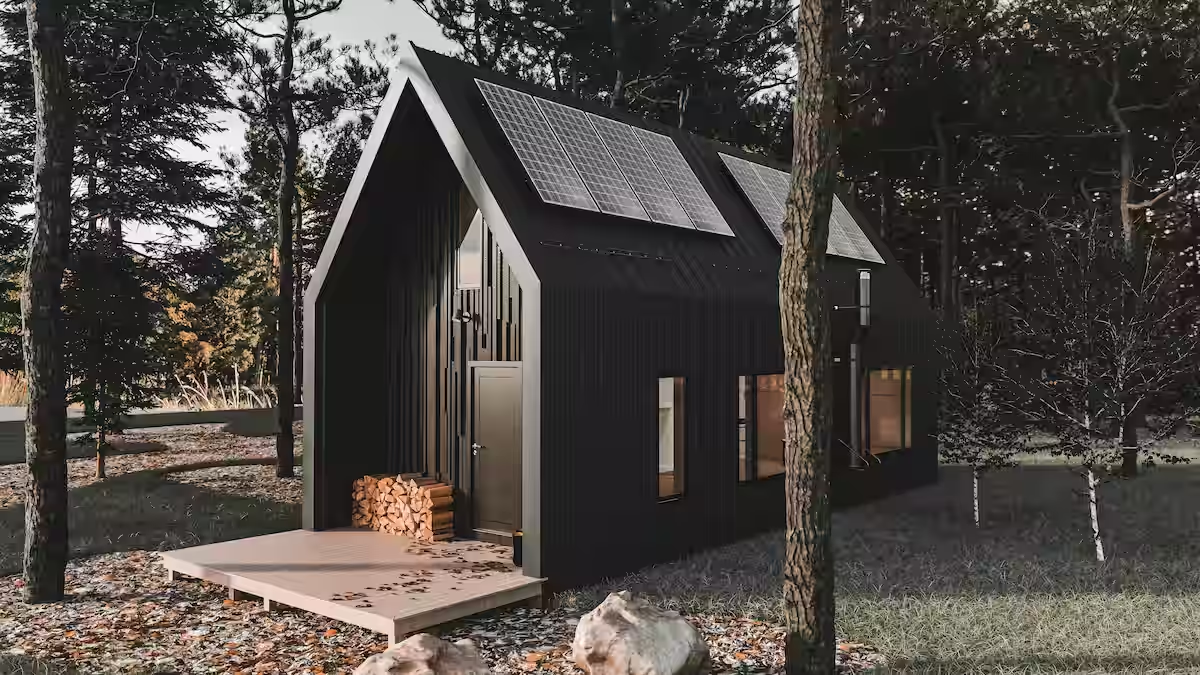
Alaska is the ultimate testing ground for the tiny home movement. With its extreme sub-zero temperatures, seismic activity, and vast remote stretches, the Last Frontier requires a level of engineering that far exceeds standard residential construction. Finding the best tiny home builders in Alaska means identifying specialists who understand that a small home here isn’t just a lifestyle choice; it is a critical survival vessel designed to maintain warmth and structural integrity in one of the world’s harshest climates.
How to Choose the Best Tiny Home Builders in Alaska
Selecting a builder in Alaska requires a primary focus on thermal performance and utility protection. Standard four-season insulation packages from the lower 48 are often insufficient for the Alaskan interior. Your builder must be an expert in the Alaska Building Code and seismic requirements, ensuring the structure can handle both heavy snow loads and ground movement.
For mobile tiny homes, RVIA or NOAH certification is vital for insurance, but you must also ensure the chassis is engineered for extreme cold to prevent metal embrittlement. Furthermore, because many Alaskans live off the traditional utility grid, prioritize builders who offer advanced arctic-grade off-grid systems, including solar-wind hybrids and high-capacity water storage.
The Tiny Home Movement in Alaska
The movement in Alaska is defined by a deep-seated culture of self-reliance and the practical need for affordable, efficient housing. In urban centers like Anchorage and Fairbanks, there is a growing push for Accessory Dwelling Units (ADUs) to address housing shortages and provide dense, warm living options.
Beyond the cities, the tiny home movement serves as a lifeline for remote villages and homesteaders. Because Alaska has vast areas with minimal zoning, the primary hurdles are often logistical rather than legal. Builders must often plan for barge delivery or specialized bush-hauling to get a home to its final destination. This unique landscape makes Alaska a pioneer in high-performance, autonomous small dwellings.
Climate and Design: Built for the Arctic
Alaska’s climate demands a passive house approach to ensure comfort and prevent catastrophic utility failures during prolonged cold snaps.
-
Extreme Thermal Envelopes: Professional Alaska builders often utilize 2×6 or 2×8 framing filled with high-density closed-cell spray foam or Structural Insulated Panels (SIPs). This creates an airtight seal with R-values typically exceeding R-40 for walls and R-60 for roofs.
-
Triple-Pane Glazing: Windows are the primary source of heat loss. Best-in-class Alaskan builders use triple-pane, argon-filled windows with specialized coatings to trap heat while standing up to high winds and heavy snow pressure.
-
Thermal Siphoning and Pipe Protection: To prevent plumbing from freezing at -40°C, pipes are often kept entirely within the heated envelope of the home. Builders also utilize arctic entries or small mudrooms to act as a thermal buffer when the door is opened.
Featured Tiny Home Builders in Alaska
Alaska’s vast landscapes and remote living conditions make it a unique but rewarding environment for tiny homes. With a strong culture of self-reliance and off-grid living, builders in the region focus on durability, insulation, and systems that can perform in extreme cold. The tiny home builders featured below represent some of the most trusted options for creating resilient, well-designed homes suited for life in Alaska.
1. Stitt Construction
Based in Anchorage, Stitt Construction is a leader in high-performance Alaskan building. They specialize in custom small homes and ADUs that are specifically engineered for the seismic and thermal demands of the region.
-
Location: Anchorage, AK
-
Specialty: High-performance custom small homes and ADUs.
-
Why They Stand Out: They are experts in Alaskan building science, focusing on airtightness and moisture management. Their builds are designed to be heirloom-quality structures that can handle the Last Frontier’s most extreme seasons.
-
Best Suited For: Homeowners in urban or accessible rural areas seeking a permanent, foundation-based tiny home with elite energy efficiency.
2. Tundra Homes (Modular Division)
Tundra Homes provides professionally engineered modular solutions that are built in a controlled environment and shipped throughout the state. They focus on durability and rapid site installation.
-
Location: Regional delivery throughout AK.
-
Specialty: Modular arctic-grade small homes.
-
Why They Stand Out: Their factory-built process ensures that every seal and insulation layer is perfectly applied away from the elements. Their homes are designed for plug-and-play utility connections, which is essential for the short Alaskan building season.
-
Best Suited For: Individuals in remote or semi-remote locations who need a high-quality, move-in-ready home delivered and set up quickly.
3. Alaska Tiny Homes
This specialized builder focuses on the unique aesthetics and mobility needs of Alaskan dwellers. They offer custom tiny houses on wheels that are winterized far beyond industry standards.
-
Location: Serving South-Central Alaska.
-
Specialty: Custom winterized tiny houses on wheels.
-
Why They Stand Out: They understand the mobile homesteader lifestyle. Their homes often feature wood-burning stoves and off-grid utility bays designed to remain functional in sub-zero temperatures.
-
Best Suited For: Buyers who value mobility and want a cozy, cabin-style home that is truly capable of year-round Alaskan living.
Zoning and Legal Realities in Alaska
Zoning in Alaska is some of the most unique in the nation, ranging from highly regulated to completely non-existent.
-
Anchorage ADU Progress: The Municipality of Anchorage has modernized its ADU ordinances to encourage backyard cottages, recognizing them as a vital housing resource for the city’s workforce.
-
The Unincorporated Frontier: In much of Alaska’s unorganized borough, there is no local zoning. This provides maximum freedom for tiny home placement, though residents must still adhere to state environmental regulations for waste management.
-
Seismic and Snow Load Permits: In regulated areas like the Mat-Su Valley or Fairbanks, you must provide engineering proof that your tiny home can handle specific ground acceleration and local snow accumulation levels.
Practical Insight: A homesteader near Willow found that by utilizing a steel-skid foundation rather than wheels, they were able to legally classify their home as a temporary structure while enjoying the thermal stability of a foundation-based build.
Because zoning and environmental laws vary greatly, always verify current regulations with your local borough or state health department before building.
Expected Cost Ranges in Alaska
Alaska pricing is significantly higher than the lower 48, reflecting the premium cost of arctic-grade materials, specialized labor, and complex shipping logistics.
| Home Type | Typical Price Range |
| Custom Shell / DIY Kit | 55,000 to 85,000 dollars |
| Standard Turnkey Build | 120,000 to 200,000 dollars |
| Elite Arctic / Custom ADU | 250,000 to 450,000 dollars plus |
FAQ: Tiny Living in the Last Frontier
Is it legal to live in a tiny home full-time in Alaska?
Yes. In rural, unincorporated areas, it is largely unregulated. In cities like Anchorage or Fairbanks, it is legal if the home is placed on a foundation and meets all local building and ADU codes.
How do you keep a tiny home warm in -40°C?
Success depends on a continuous thermal bridge-free envelope, R-40+ insulation, and a reliable heat source. Many Alaskans use a combination of a high-efficiency mini-split and a backup diesel or wood-burning stove.
Can tiny homes on wheels handle Alaskan roads?
Only if they are built on specialized, heavy-duty trailers. The Alcan Highway and local gravel roads are notoriously punishing; a standard RV-grade trailer may not survive the vibration and frost heaves.
Nearby Tiny Home Builder Guides
If the Last Frontier is just the start of your journey, it is worth exploring how nearby U.S. regions approach tiny home living, especially in areas with similar climates and remote conditions.
You can also explore our nationwide guide to trusted tiny home builders across the United States, where we compare regional options and highlight what to consider before choosing a builder.
Exploring the Tiny Lifestyle
Building a tiny home in Alaska is less about minimalism and more about resilience, preparation, and self-reliance. With remote locations, limited infrastructure, and extreme seasonal conditions, every decision, from materials to systems, plays a direct role in how well your home performs.
Before moving forward, it is important to understand where your tiny home can legally be placed. Regulations can vary across boroughs and remote areas, so reviewing your placement options early will help you avoid logistical challenges later on.
Energy and logistics are two of the biggest factors in Alaska. Reliable power systems, fuel planning, and insulation are essential for long-term comfort. Our guide on Off-Grid Power for Extreme Cold walks through how to design systems that can handle sustained low temperatures, while our Shipping a Tiny Home resource explains what to expect when transporting a structure into remote or hard-to-reach locations.