Arizona is a land of dramatic landscapes, from the towering saguaros of the Sonoran Desert to the cool, pine-covered plateaus of the north. As housing costs in major hubs like Phoenix and Tucson continue to rise, the Grand Canyon State has emerged as a premier destination for the tiny home movement. Finding the best tiny home builders in Arizona requires partnering with experts who understand the unique challenges of desert living, specifically extreme heat management, high-UV durability, and water conservation.
How to Choose the Best Tiny Home Builders in Arizona
In Arizona, the sun is your primary structural adversary. When selecting a builder, prioritize thermal performance above all else. A tiny home in the desert must be engineered to stay cool when external temperatures exceed 110°F. Your builder should be an expert in Appendix Q compliance for foundation-based units and should ideally offer specialized desert packages that include upgraded insulation and reflective roofing.
For those pursuing a mobile lifestyle, verify that the builder holds RVIA or NOAH certification. This is critical for securing insurance and for placing your home in the state’s numerous year-round tiny home villages, specialized RV resorts, or private land where local zoning permits.
The Tiny Home Movement in Arizona
A push for urban infill and off-grid freedom defines the movement in Arizona. Cities like Phoenix and Tucson have introduced progressive zoning updates to allow Accessory Dwelling Units (ADUs). In Tucson, specifically, recent policy discussions have significantly eased the path for backyard cottages, recognizing them as a vital tool for affordable housing and multi-generational living.
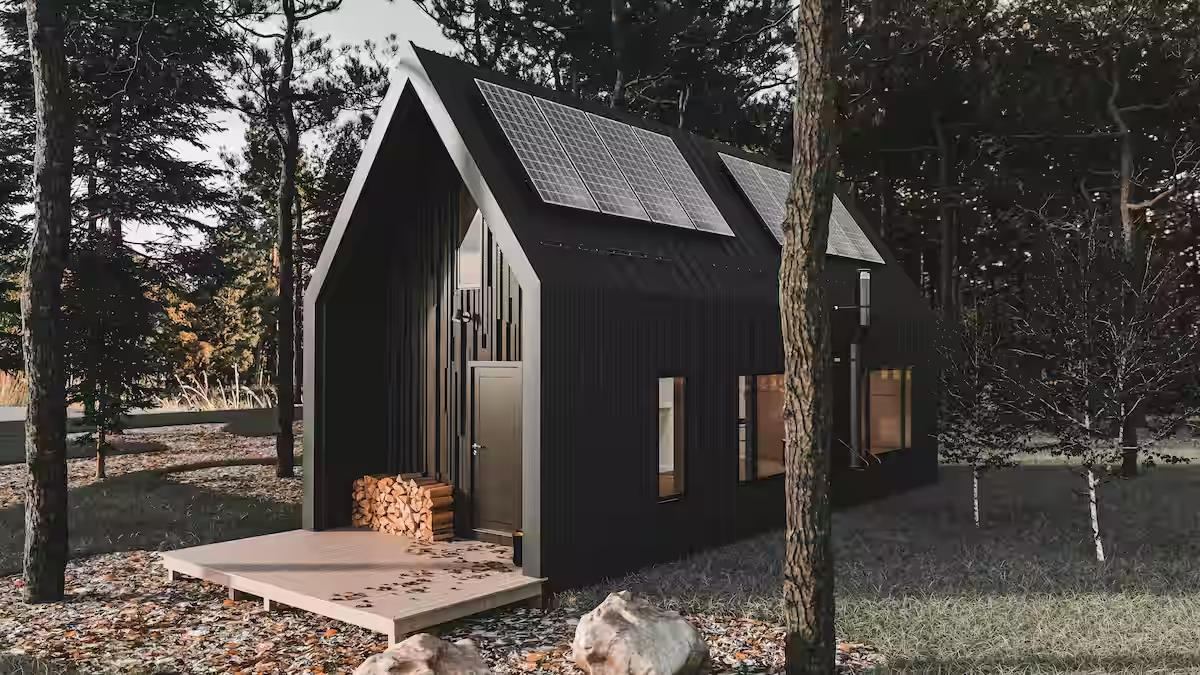
Beyond the cities, Arizona is a world leader in off-grid innovation. From the high-desert retreats of Sedona to the wide-open spaces of Cochise County, many dwellers utilize Arizona’s consistent sunshine to power their homes entirely via solar energy. This combination of urban ADU success and rural off-grid potential makes Arizona one of the most flexible states for the tiny lifestyle.
Climate and Design: Engineering for the Desert
Arizona’s climate demands a building strategy focused on heat reflection and passive cooling.
-
Extreme Heat Mitigation: Top builders utilize closed-cell spray foam insulation to create a high-performance thermal barrier. Combined with light-colored, reflective roofing (Cool Roofs), this significantly reduces the energy required to maintain a comfortable interior.
-
UV-Resistant Materials: The intense Arizona sun can degrade standard building materials quickly. Professional builders favor steel framing, high-quality stucco, or treated metal siding over traditional wood to ensure long-term structural integrity.
-
Solar-Ready Infrastructure: Given the abundance of sunshine, the best builders in Arizona pre-wire their homes for robust solar arrays and battery storage, allowing for maximum energy independence.
Featured Tiny Home Builders in Arizona
Arizona’s wide-open landscapes, warm climate, and growing interest in alternative housing make it a natural fit for the tiny home movement. From desert retreats to backyard ADUs in expanding cities, builders across the state are creating compact homes designed for durability, energy efficiency, and year-round comfort. The tiny home builders featured below represent some of the most trusted options for high-quality tiny homes in Arizona.
1. Uncharted Tiny Homes
Based in Phoenix, Uncharted Tiny Homes is known for building rugged, high-quality homes that are specifically designed to handle the rigors of the road and the desert heat.
-
Location: Phoenix, AZ
-
Specialty: RVIA-certified tiny houses on wheels and custom desert-ready models.
-
Why They Stand Out: They offer a variety of floor plans that focus on livability and storage. Their builds utilize residential-grade materials and are engineered for maximum durability and thermal efficiency.
-
Best Suited For: Individuals seeking a proven, mobile tiny home from a builder with deep roots in the Arizona market.
2. Cavco Industries (Tiny House Division)
A giant in the systems-built housing industry, Cavco is headquartered in Phoenix and offers professionally engineered tiny homes and park models that meet rigorous national standards.
-
Location: Phoenix, AZ
-
Specialty: Park models and modular tiny homes.
-
Why They Stand Out: Because of their scale, they offer highly predictable pricing and a wide array of designs. Their homes are built in climate-controlled environments and are specifically engineered for the variable Arizona terrain.
-
Best Suited For: Buyers looking for a reliable, factory-built home with a strong warranty and a wide range of interior options.
3. LuxTiny
Based in the White Mountains, LuxTiny created Arizona’s first dedicated tiny home community. They focus on providing a complete lifestyle solution, offering both the home and a legal place to park.
-
Location: Lakeside, AZ
-
Specialty: Custom tiny homes and tiny home community development.
-
Why They Stand Out: They are pioneers in the community space, helping clients navigate the legalities of tiny living. Their homes are built to handle both the desert heat and the snow of Arizona’s higher elevations.
-
Best Suited For: Those looking for a turnkey experience that includes a spot in a managed, tiny-home-specific community.
Zoning and Legal Realities in Arizona
Arizona’s legal landscape is evolving rapidly to accommodate small-scale dwellings.
-
Tucson ADU Ordinance: Tucson allows ADUs on residential lots, with rules that focus on maintaining neighborhood character while providing flexible housing options.
-
Appendix Q Adoption: Most major Arizona municipalities have adopted Appendix Q, providing a clear path for legal lofts and compact stairs in permanent tiny homes.
-
Rural Land Freedom: In many rural counties, such as Cochise, Owner-Builder opt-outs and flexible zoning allow for more experimentation with off-grid and alternative tiny home structures.
Practical Insight: A resident in Pima County found that by building their tiny home as a permanent ADU, they were able to use their existing solar system to power both units, effectively eliminating their electricity bill for both structures.
Because zoning laws continue to evolve, always verify current regulations with your local planning department before building.
Expected Cost Ranges in Arizona
Arizona offers a competitive market for tiny living, reflecting its status as a hub for both custom craftsmen and large-scale manufacturers.
| Home Type | Typical Price Range |
| Custom Shell / DIY Kit | 35,000 to 60,000 dollars |
| Standard Turnkey Build | 80,000 to 140,000 dollars |
| Luxury / Custom Modular ADU | 160,000 to 280,000 dollars plus |
FAQ: Tiny Living in the Grand Canyon State
Is it legal to live in a tiny home full-time in Arizona?
Yes. Permanent tiny homes on foundations are legal as primary residences or ADUs in many jurisdictions. Tiny homes on wheels are generally treated as RVs and are most easily parked in specialized communities, RV parks, or on rural land with flexible zoning.
How do you keep a tiny home cool in the Arizona summer?
Success depends on a Cool Roof, high-R-value spray foam insulation, and a properly sized mini-split HVAC system. Shading your home with awnings or desert landscaping is also highly effective.
Can I put a tiny home in my backyard in Phoenix?
Yes. Phoenix zoning supports ADUs, provided they meet specific size requirements and setbacks relative to the primary residence.
Nearby Tiny Home Builder Guides
If Arizona is just one stop on your journey through the Southwest, explore the builders and laws in our neighboring states.
You can also explore our nationwide guide to the best tiny home builders across the United States, where we compare trusted companies and regional factors to help you choose the right fit.
Exploring the Tiny Lifestyle
Choosing the tiny lifestyle in Arizona is often about gaining independence, reducing costs, and making the most of a climate that supports year-round living. From desert land setups to compact backyard homes in growing cities, the state offers a practical path into small-space living with fewer limitations than many other regions.
Before getting started, it is important to understand where a tiny home can legally be placed. Local zoning rules can vary, so reviewing our guide on Tiny Home Parking Laws will help you identify suitable locations and avoid delays during the planning stage.
Energy planning is especially important in Arizona, where sunlight is one of your greatest advantages. Many homeowners design their systems around solar power to reduce reliance on the grid. Our Tiny Home Solar Guide walks you through how to build a reliable setup that supports a comfortable, self-sufficient lifestyle in the desert.