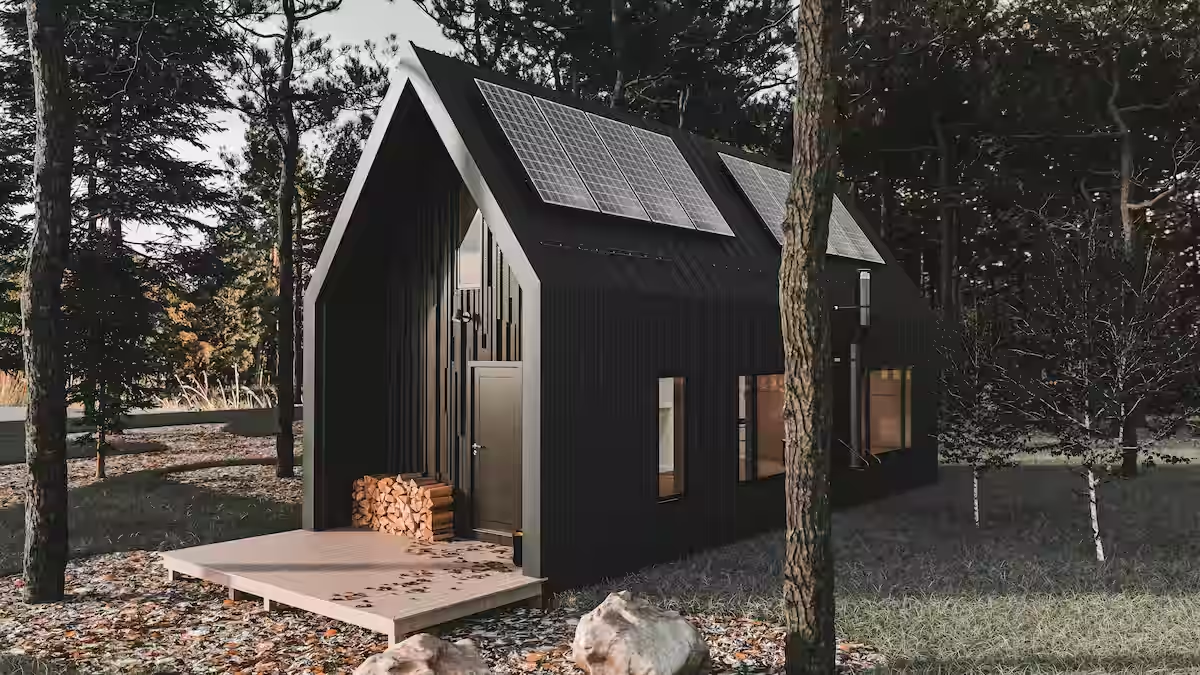
California has become the national benchmark for tiny homes and accessory dwelling units (ADUs). Driven by housing demand and state-level policy changes, the state has created one of the most accessible legal pathways for small-scale living in the country.
Finding the best tiny home builders in California means working with companies that understand more than design. The right builder must navigate complex permitting, meet strict structural standards, and deliver homes built for seismic activity and wildfire exposure. In this environment, experience and regulatory knowledge matter just as much as craftsmanship.
Why California Leads the Tiny Home Movement
California’s advantage comes from its legal framework. State policies have made it possible to build ADUs on most residential lots, removing many of the traditional zoning barriers that exist in other states.
This has opened the door for:
-
Backyard homes in dense cities
-
Rental income opportunities for homeowners
-
Faster housing solutions in high-demand areas
Infill development is now a major part of the housing strategy in cities such as Los Angeles, San Diego, and San Jose. For homeowners, this means a tiny home is no longer an alternative concept; it is a practical and legally supported housing option.
How to Choose the Best Tiny Home Builders in California
Choosing a builder in California requires a focus on compliance, safety, and long-term durability.
Regulatory Expertise
California allows ADUs by right in many areas, but the process still involves detailed permitting. A qualified builder should understand the California Residential Code (CRC), local planning requirements, and utility connections.
Fire-Resistant Construction
In wildfire-prone areas, homes must comply with Wildland-Urban Interface (WUI) standards. This includes non-combustible materials, ember-resistant vents, and fire-rated exterior assemblies.
Seismic Engineering
Earthquake resilience is essential. Builders should use reinforced foundations, proper anchoring systems, and structural designs that meet seismic safety requirements.
Certification for Mobile Units
For tiny homes on wheels, ensure the builder offers RVIA or ANSI certification. This improves access to insurance, financing, and legal placement options.
Featured Tiny Home Builders in California
California is at the forefront of the tiny home movement, driven by strong demand for flexible, small-scale housing and supportive ADU policies. Across the state, builders are creating compact homes designed for urban density, energy efficiency, and long-term durability. The tiny home builders featured below represent some of the most trusted companies delivering high-quality tiny homes in California.
1. Abodu
Location: Statewide service across California
Specialty: Prefabricated ADUs and backyard homes
Abodu focuses on simplifying the ADU process through pre-approved designs and streamlined project delivery. Their approach reduces permitting complexity and shortens build timelines.
Why they stand out
-
Pre-approved designs that reduce permitting delays
-
Fixed pricing with clear project scope
-
Full-service delivery from design to installation
Best suited for
Homeowners looking for a predictable, efficient way to add a high-quality backyard home.
2. Samara
Location: California statewide
Specialty: Architect-designed prefab ADUs
Samara builds high-performance backyard homes with a strong focus on design, sustainability, and long-term efficiency. Their units prioritize natural light, clean layouts, and all-electric systems.
Why they stand out
-
Strong architectural design focus
-
Energy-efficient, all-electric homes
-
High-quality materials and finishes
Best suited for
Buyers who want a modern, design-driven tiny home that adds long-term value to their property.
3. Roof and Realm
Location: Serving California
Specialty: Steel-framed modular ADUs
Roof and Realm specializes in steel-built homes designed for durability and fire resistance. Their construction approach focuses on long-term structural integrity in high-risk environments.
Why they stand out
-
Steel framing for added strength and fire resistance
-
Focus on safety in wildfire-prone regions
-
Durable materials designed for long-term performance
Best suited for
Homeowners in fire-prone areas who prioritize safety, resilience, and structural longevity.
Climate and Design: Built for California Conditions
California’s environment varies widely, but builders must consistently account for fire risk, seismic activity, and regional climate differences.
Fire-Resistant Materials
Builders commonly use fiber-cement siding, metal roofing, and tempered glass to reduce fire risk and improve durability.
Seismic Stability
Homes are anchored to engineered foundations designed to withstand ground movement. Structural reinforcement is a standard requirement rather than an upgrade.
Efficient Urban Design
In high-density areas, builders maximize vertical space, hidden storage, and open layouts to make compact homes feel larger and more functional.
Zoning and Legal Realities in California
California offers one of the most favorable environments for tiny homes on foundations.
ADU Access
State law allows at least one ADU and one junior ADU on most single-family lots. This applies across many cities, regardless of local zoning restrictions.
Reduced Fees
Many jurisdictions reduce or eliminate impact fees for smaller ADUs, making compact homes a cost-effective option.
Tiny Homes on Wheels
Some cities allow tiny homes on wheels as permanent backyard dwellings if they meet safety standards and utility requirements. In other areas, they are typically limited to RV parks or designated zones.
Because regulations can still vary by city and county, always confirm requirements with your local planning office before building.
Expected Cost Ranges in California
California has higher building costs due to strict regulations, labor rates, and engineering requirements.
| Home Type | Typical Price Range |
|---|---|
| DIY shell or basic build | $45,000 – $75,000 |
| Standard turnkey ADU | $120,000 – $195,000 |
| High-end prefab or custom ADU | $220,000 – $450,000+ |
Costs vary depending on site preparation, design complexity, and permitting requirements.
FAQ: Tiny Living in California
Is it legal to live in a tiny home full-time in California?
Yes. Tiny homes on foundations are widely permitted as ADUs. Tiny homes on wheels are allowed in some cities but are often restricted to RV parks or designated areas.
Do tiny homes need to meet fire safety standards?
Yes. Homes in fire-prone areas must meet WUI requirements, including fire-resistant materials and construction methods.
Can I build a tiny home myself?
Yes, but you must still meet all building, fire, and structural codes. Most homeowners work with experienced builders to ensure compliance.
Nearby Tiny Home Builder Guides
If you are exploring options beyond California, consider nearby states.
You can also explore our nationwide guide to the best tiny home builders across the United States, where we compare trusted builders and regional considerations.
Exploring the Tiny Lifestyle
Building a tiny home in California is a practical way to adapt to one of the most competitive housing markets in the country. Whether you are creating a rental unit, housing for a family, or a private living space, success depends on planning ahead.
Start by understanding where your tiny home can legally be placed. Reviewing a guide on Tiny Home Parking Laws will help you navigate local requirements and avoid delays during the approval process.
It is also important to plan your budget carefully. Costs in California can vary widely depending on design, permitting, and site conditions. Our Tiny Home Cost Breakdown outlines the key expenses, helping you make informed decisions and build a home that supports long-term value.