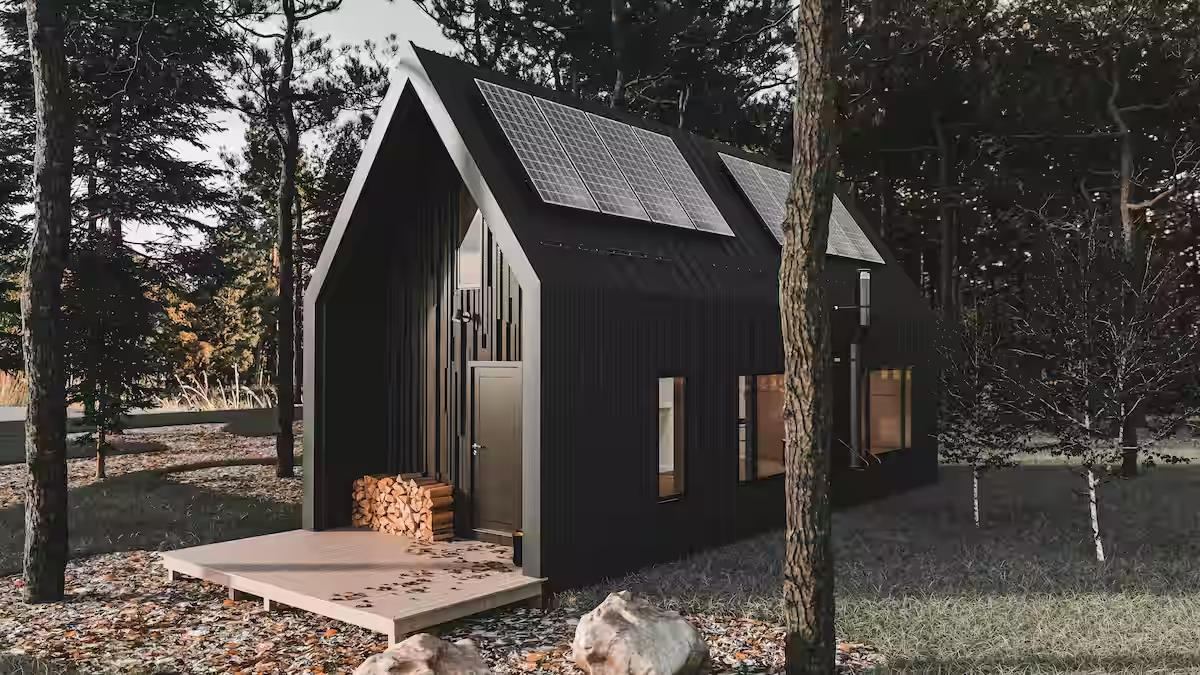
Hawaii is the ultimate setting for the tiny home lifestyle, offering a culture deeply rooted in the concept of malama ʻaina (caring for the land). With its tropical climate, high cost of traditional real estate, and limited land mass, the Aloha State has become a global leader in innovative, small-scale housing. Finding the best tiny home builders in Hawaii means identifying experts who can engineer structures to handle high humidity, salt-air corrosion, and volcanic seismic activity while navigating some of the most unique zoning laws in the United States.
How to Choose the Best Tiny Home Builders in Hawaii
Selecting a builder in Hawaii requires attention to material durability and local compliance. The tropical environment is unforgiving; standard materials used on the mainland often succumb quickly to mold, termites, and rust. Your builder should be an expert in the Hawaii State Residential Code and Appendix Q, which provides the safety framework for compact dwellings.
For those interested in a mobile lifestyle, verify that the builder holds RVIA or NOAH certification. While tiny homes on wheels face stricter placement regulations in Hawaii than in other states, these certifications are often necessary for insurance and for placing units in specific agricultural or transitional housing zones. Additionally, prioritize builders who utilize sustainable, locally sourced materials that can withstand the intense Pacific sun.
The Tiny Home Movement in Hawaii
A push for agricultural sustainability and social responsibility defines the movement in Hawaii. On the Big Island (Hawaii County), tiny homes have become a primary tool for sustainable homesteading, allowing residents to live off-grid on agricultural land.
In more urbanized areas like Honolulu and Maui, the focus has shifted toward Accessory Dwelling Units (ADUs) and Ohana units. These structures are vital for multigenerational living, a cornerstone of Hawaiian culture, allowing families to remain together on the same property. Recent legislative efforts across all islands have aimed to simplify the permitting process for these small homes to combat the state’s housing crisis.
Climate and Design: Engineering for the Tropics
Hawaii’s climate demands a design philosophy that prioritizes airflow, moisture resistance, and indoor-outdoor integration.
-
Passive Cooling and Ventilation: Best-in-class Hawaii builders utilize open floor plans, lofted ceilings, and jalousie windows to maximize trade wind cross-ventilation. This reduces or eliminates the need for expensive air conditioning.
-
Corrosion and Pest Resistance: To combat the humid salt air and Formosan termites, top builders favor light-gauge steel framing, pressure-treated lumber, and marine-grade stainless steel hardware.
-
The Lanai Lifestyle: In Hawaii, the lanai (porch) is an essential living space. Builders often design tiny homes where the outdoor deck effectively doubles the usable square footage, blurring the line between the interior and the tropical landscape.
Featured Tiny Home Builders in Hawaii
Hawaii offers a unique setting for the tiny home lifestyle, where limited land, high housing costs, and a strong connection to nature are driving interest in smaller, more efficient living spaces. Across the islands, builders are creating compact homes designed for ventilation, durability, and coastal conditions. The tiny home builders featured below represent some of the most trusted options for high-quality tiny homes in Hawaii.
1. Bamboo Living
Based on the Big Island but shipping worldwide, Bamboo Living is a pioneer in high-performance bamboo architecture. Their homes are not only stunningly beautiful but are engineered to be exceptionally strong.
-
Location: Pahoa, HI (Big Island)
-
Specialty: Pre-fabricated bamboo tiny homes and cottages.
-
Why They Stand Out: Bamboo has a higher tensile strength than steel and is naturally resistant to many pests. Their homes are designed to withstand 160 mph winds and significant seismic events, making them perfect for the Hawaiian islands.
-
Best Suited For: Buyers seeking an eco-friendly, architecturally unique home that perfectly matches the Hawaiian aesthetic.
2. Habitat for Humanity (Hawaii Divisions)
While a non-profit, Habitat for Humanity in Hawaii has been at the forefront of the tiny home movement, developing micro-unit communities and ADUs to provide affordable housing solutions for local families.
-
Location: Multiple Islands (Oahu, Maui, Kauai, Big Island)
-
Specialty: Affordable tiny homes and community-based housing projects.
-
Why They Stand Out: They are experts in navigating local county codes and specialized permitting. Their projects focus on high-density, low-impact living that respects local culture.
-
Best Suited For: Individuals interested in community-centric living and those looking for resources on affordable, permitted small-scale housing.
3. Fabmac Homes
Fabmac specializes in high-quality modular and steel-framed homes delivered throughout the islands. They focus on modern, durable designs that can be rapidly deployed and installed on permanent foundations.
-
Location: Maui / Statewide Delivery
-
Specialty: Steel-framed modular tiny homes and ADUs.
-
Why They Stand Out: Their use of light-gauge steel makes their homes termite-proof and highly resistant to salt-air corrosion. They offer turnkey solutions that include the complex logistics of inter-island shipping.
-
Best Suited For: Homeowners looking for a modern, durable ADU or Ohana unit that adds permanent value to their property.
Zoning and Legal Realities in Hawaii
Zoning in Hawaii is unique because it is governed by four distinct county governments, each with its own specific rules.
-
Hawaii County (Big Island): Generally the most flexible for tiny homes, particularly on agricultural land, though recent updates have tightened rules around unpermitted structures.
-
The Ohana Unit Law: Statewide legislation encourages the construction of secondary units for family members, provided they meet specific size and setback requirements.
-
ADU Permitting: In Honolulu and Maui, ADUs are legal but require a rigorous permitting process that includes proof of adequate water and wastewater capacity, which can be a challenge in older neighborhoods.
Practical Insight: A family on Kauai found that by building their tiny home as a permitted ADU on a permanent foundation, they were able to secure a mortgage and legally house three generations of their family on a single residential lot.
Because zoning and coastal zone management laws are complex in Hawaii, always consult with your specific county planning department before starting a project.
Expected Cost Ranges in Hawaii
Hawaii has the highest building costs in the nation due to the need to import almost all materials and the high cost of skilled local labor.
| Home Type | Typical Price Range |
| Custom Shell / DIY Kit | 60,000 to 95,000 dollars |
| Standard Turnkey Build | 140,000 to 230,000 dollars |
| Luxury / Custom Modular Ohana | 275,000 to 450,000 dollars plus |
FAQ: Tiny Living in the Aloha State
Is it legal to live in a tiny home full-time in Hawaii?
Yes, if it is built on a permanent foundation and permitted as a primary residence or an Accessory Dwelling Unit (ADU). Tiny homes on wheels are subject to illegal camping or RV laws and are generally only permitted in specialized parks or as temporary structures.
How do you handle wastewater for a tiny home in Hawaii?
This is a major hurdle. Most counties require a connection to a municipal sewer or an approved individual wastewater system (IWS) like a septic tank or aerobic treatment unit. Composting toilets are allowed in some rural areas but require specific Department of Health approval.
Can tiny homes withstand hurricanes in Hawaii?
Yes, if they are engineered correctly. Permanent modular homes and bamboo structures in Hawaii are built to high-wind standards (often 130–160 mph) and must be securely anchored to a foundation.
Nearby Tiny Home Builder Guides
While Hawaii is isolated, the movement here shares many design principles with other warm-weather and coastal regions across the United States.
You can also explore our nationwide guide to trusted tiny home builders across the United States, where we compare regional options and highlight what to consider before choosing a builder.
Exploring the Tiny Lifestyle
Building a tiny home in Hawaii often comes down to living more intentionally within the limits and advantages of island life. With higher land costs and limited space, compact homes offer a practical way to create a comfortable living environment while staying connected to the outdoors.
Before starting your build, it is important to understand where a tiny home can legally be placed. Zoning and land use regulations can vary across the islands, so reviewing your options early will help you plan with clarity and avoid delays.
Climate plays a major role in how these homes are designed. Ventilation, moisture control, and energy efficiency are essential for long-term comfort. Our guide on Solar Power for Tropical Climates explains how to build a reliable system suited for consistent sunlight, while our Rainwater Harvesting for Tiny Homes resource explores practical ways to manage water in a self-sufficient setup.