The Self-Sufficiency Lab

Welcome to The Self-Sufficiency Lab, the definitive hub for mastering the skills of modern independence. Whether you are living in a tiny home, traveling full-time in an RV, or simply looking to reduce your reliance on external systems, this category provides the practical blueprints you need to become a “producer” rather than just a consumer.

In the Lab, we move beyond theory to provide actionable, step-by-step guides on the five pillars of autonomy: Food Sovereignty, Water Security, Energy Independence, Financial Frugality, and Skill Handiness. Here, you will find our latest research and field-tested advice on everything from building high-yield windowsill gardens in small apartments to engineering off-grid solar power systems for life on the road.

Our mission is to help you bridge the gap between traditional outdoor living and a fully self-sustained lifestyle. Explore our deep dives into food preservation, rainwater harvesting, and DIY repair skills designed to save you money while building a more resilient future. The journey to self-sufficiency starts with one small change. Start yours here in the Lab.

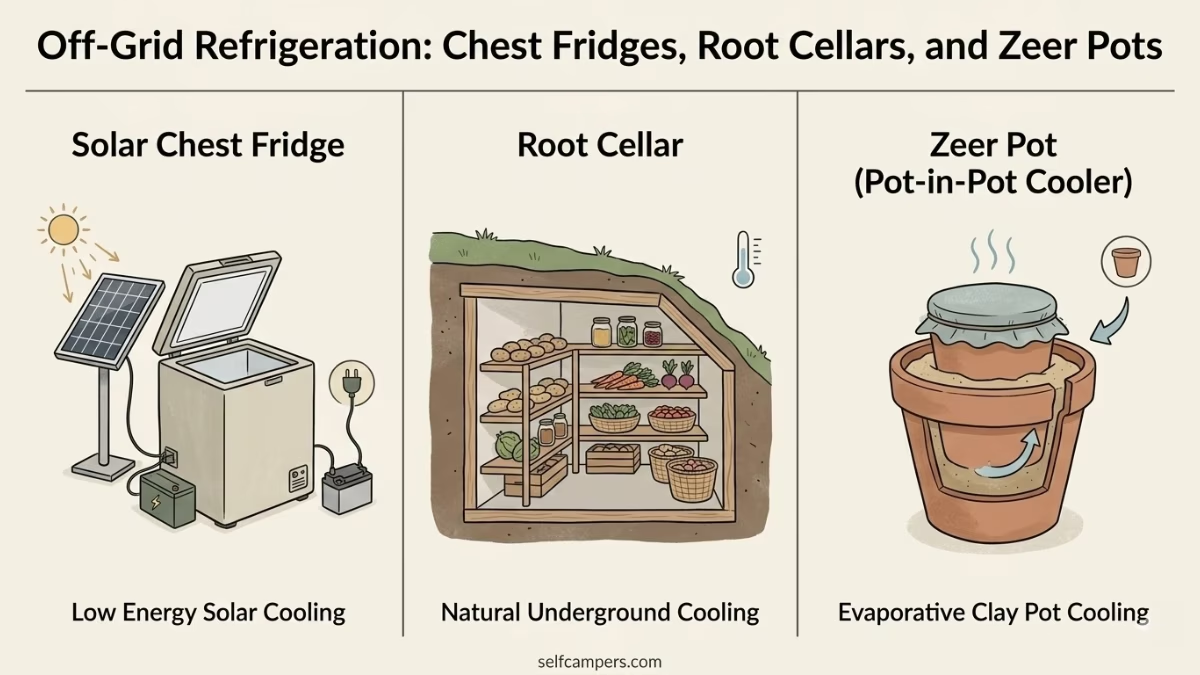
An educational diagram illustrating three off-grid refrigeration options in a clean, hand-drawn infographic style. The first panel shows a low-energy Solar Chest Fridge powered by a panel and battery. The middle panel is a cross-section of a Natural Underground Root Cellar filled with bulk produce. The third panel depicts an Evaporative Clay Pot Zeer Pot maintaining cooling through evaporation. A light, uncluttered background features soft grey and earthy brown tones.

Off-Grid Refrigeration Options: Chest Fridges, Root Cellars, and Zeer Pots

Mastering off-grid refrigeration options is a cornerstone of true self-sufficiency. While a standard upright fridge can consume 400–600 watts per hour, off-grid alternatives use high-efficiency DC compressors, propane, or entirely passive thermal science to preserve food with a fraction of that energy. By diversifying your cooling strategies, using mechanical refrigeration for perishables and passive cellars […]

Off-Grid Refrigeration Options: Chest Fridges, Root Cellars, and Zeer Pots Read More »

A close-up of a modern, portable induction cooktop in a bright kitchen, representing efficient off-grid cooking solutions. A copper-colored pot sits on the sleek black glass surface with steam rising from boiling water, while a hand adjusts the temperature dial, illustrating precise heat control for energy-conscious remote living.

Off-Grid Cooking: Comparing Propane, Solar, and Wood-Fired Stoves

Selecting the right off-grid cooking solutions is a balancing act between fuel density, seasonal availability, and heat management. While a standard electric range is often too power-hungry for a typical solar array, specialized alternatives allow you to prepare gourmet meals using everything from fossil fuels to direct sunlight. By diversifying your cooking methods, you ensure

Off-Grid Cooking: Comparing Propane, Solar, and Wood-Fired Stoves Read More »

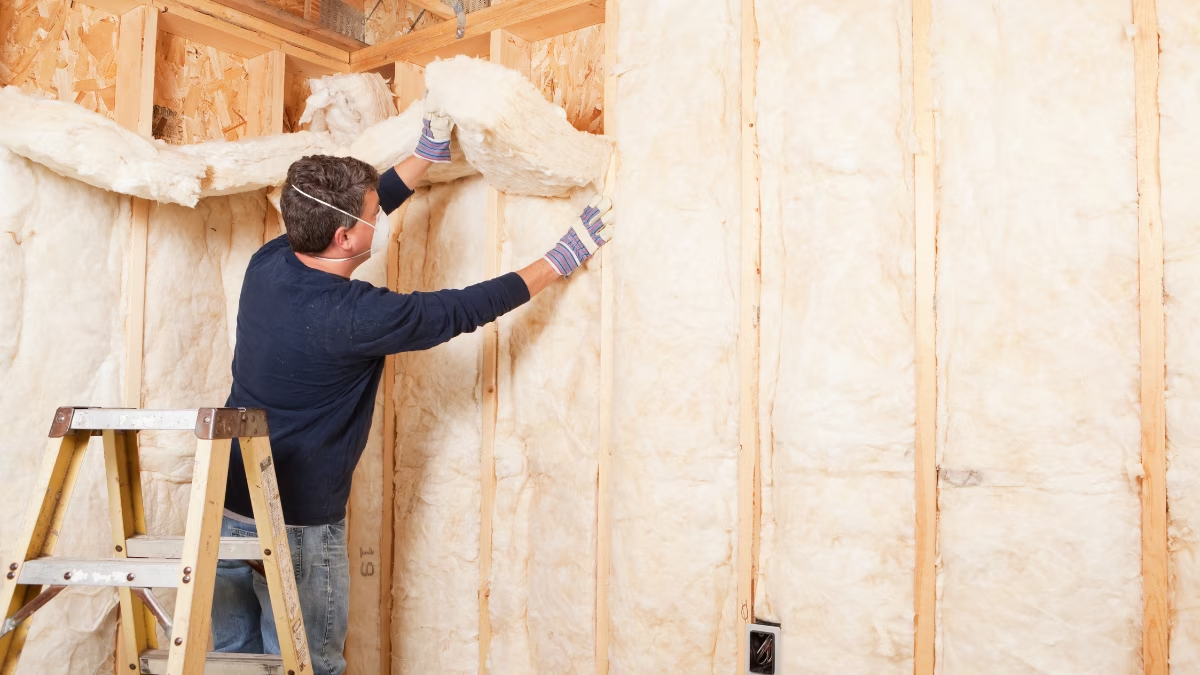
A person wearing a protective face mask and gloves installs high-performance insulation materials into the wooden wall studs of a remote building. The image shows the thick, fibrous mineral wool being meticulously fitted to eliminate air gaps, emphasizing the technical importance of a well-sealed building envelope for extreme weather efficiency.

High-Performance Insulation: Selecting the Best Materials for Extreme Weather

High-performance insulation materials are the critical first line of defense for any off-grid sanctuary, separating a cozy interior from the brutal reality of extreme temperatures. In a remote, non-grid-tied home, insulation isn’t just about comfort; it is your ultimate strategy for energy conservation. By matching advanced materials like polyiso or specialized mineral wool to your

High-Performance Insulation: Selecting the Best Materials for Extreme Weather Read More »

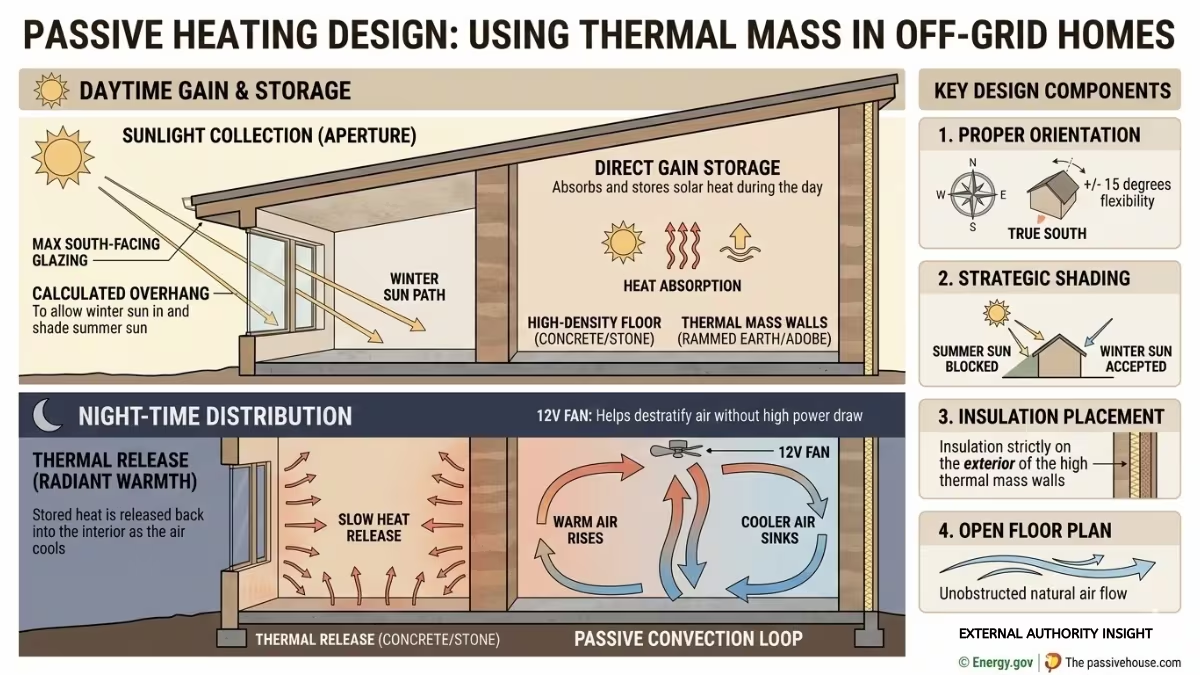
An educational infographic on passive solar heating design for off-grid homes. The diagram is split into "Daytime Gain" showing sunlight collection through south-facing windows into thermal mass walls, and "Night-time Distribution" showing heat release and passive convection loops. Side panels detail key design components: proper orientation to true south, strategic shading, exterior insulation placement, and open floor plans. The bottom includes authority insights from Energy.gov and The passivehouse.com.

Passive Heating: Designing Your Off-Grid Home for Thermal Mass

Passive solar heating design represents the ultimate synergy between architecture and climate, transforming your off-grid home from a simple shelter into a self-regulating thermal engine. By leveraging south-facing windows, high-density materials like stone or concrete, and precise orientation, you can capture up to 70% of the sun’s free energy and store it for nighttime warmth.

Passive Heating: Designing Your Off-Grid Home for Thermal Mass Read More »

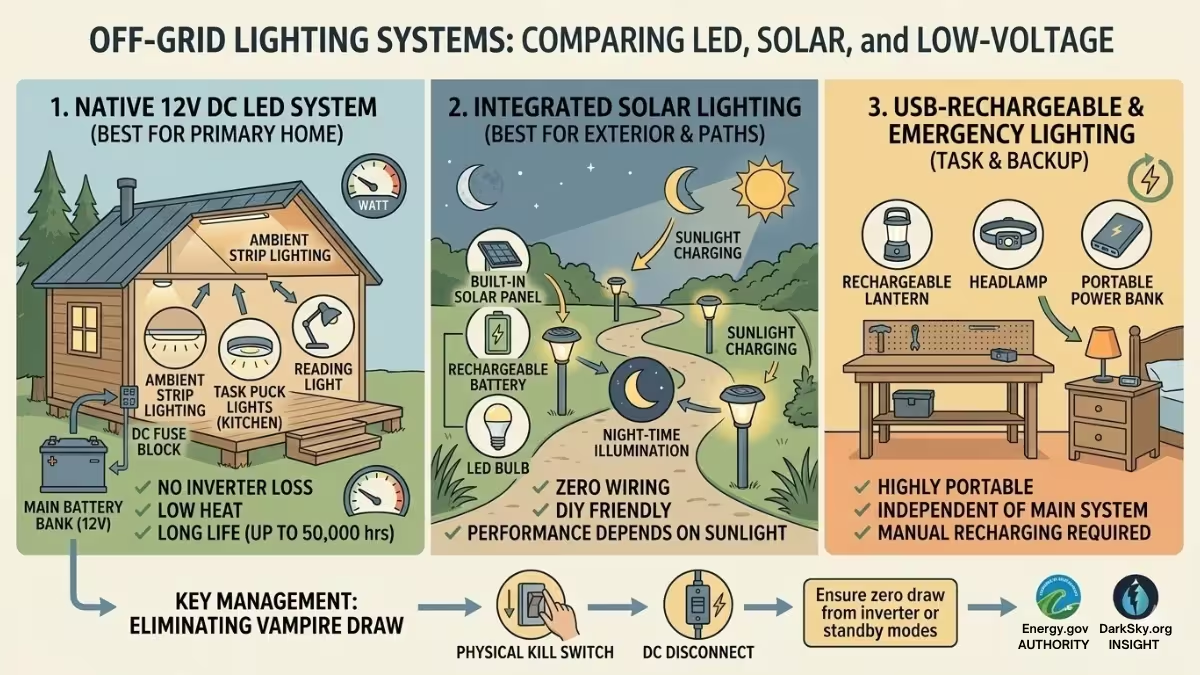
An educational diagram comparing different off-grid lighting systems broken into three columns: Native 12V LED, Integrated Solar, and USB-Rechargeable. The visual illustrates the workflow for each, from power generation (solar panel, battery bank) to application (task, ambient, or path lighting). Critically, the diagram includes authority insights from global leaders, Energy.gov and DarkSky.org, which are linked to at the bottom-right for external verification.

Off-Grid Lighting Systems: How I Cut Energy Use by 80% for Under $100

Designing efficient off-grid lighting systems is the key to making a remote cabin or tiny home feel like a sanctuary rather than a cave. In a world where every watt counts, shifting from traditional AC lighting to advanced 12V LED and dedicated solar circuits can reduce your lighting energy consumption by over 80%. Whether you

Off-Grid Lighting Systems: How I Cut Energy Use by 80% for Under $100 Read More »